Storage in a Nursery: Shelves, Chests, Wardrobes and Units at a Child's Level
- Storage in a child's room: shelves, dressers, wardrobes and bedside tables at a child's level
- The guiding principle: at the child's level
- Open shelves: in sight and within reach
- Dressers: low and growing with the child
- Wardrobes: a low rail at shoulder height
- Bedside tables: from nursery to teenage room
- Frequently asked questions
Storage in a child's room: shelves, dressers, wardrobes and bedside tables at a child's level
"Tidy up your toys" only works as long as the child can reach the shelf they're meant to go on. The whole magic of self-managed order isn't about discipline — it's about the height of the furniture.
So the real question about storage in a child's room isn't "where to hide things" but "how to make it easy for a child to take things out and put them back on their own". Let's go through it by furniture type: open shelves, dressers, wardrobes and bedside tables — plus one thing about safety you mustn't skip.
The guiding principle: at the child's level
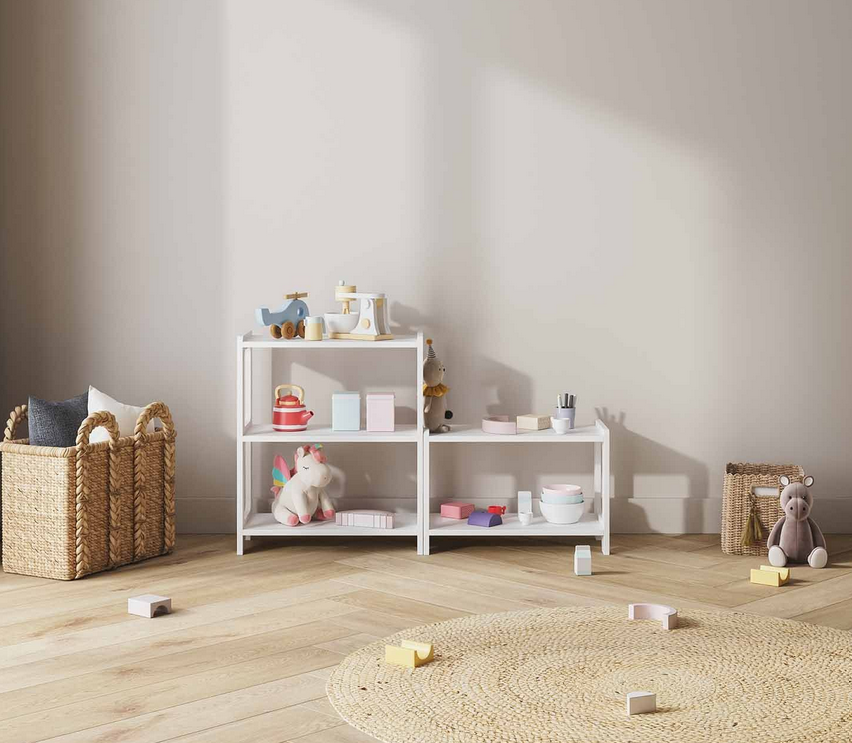
At the heart of practical children's storage lies a simple idea from the Montessori approach: the furniture stands low, things are open and within reach, and only a few items are on display at once rather than everything at the same time. What this means in practice: the child can see for themselves what's there, take things out and put them back — no "pass me that" or "get that down". And a limited number of toys on the shelf (the rest kept out of sight and rotated from time to time) helps a child play more attentively, because their eyes aren't pulled in every direction.
Hence the rule for choosing: look first not at capacity, but at height and accessibility. Furniture built around Montessori principles is convenient precisely because it's made to fit a child's height, not an adult's convenience.
Open shelves: in sight and within reach
An open shelving unit is the main tool for "self-managed order" when it comes to the things a child uses actively, every day. Its advantage is that everything is in view and within reach, so the same cycle applies — take it out, play, put it back. The downside is just as honest: open storage doesn't tolerate overloading, or it turns into visual noise. That's why you keep only a little on the shelves, and stow seasonal or bulky items away out of sight.
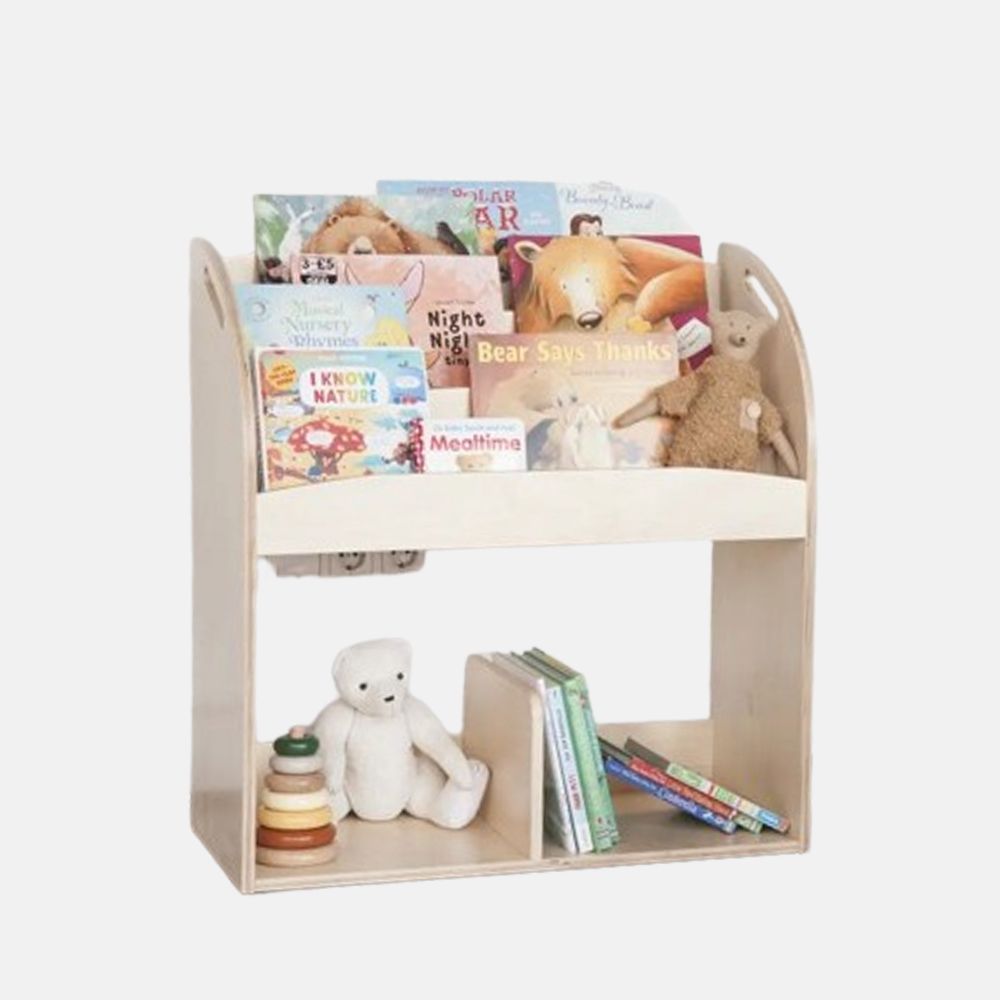
Books deserve a special mention. For little ones who can't yet read, shelves where the book stands cover-facing work better: the child recognises and chooses a book by its picture rather than its spine — and reaches for reading more readily on their own.
Dressers: low and growing with the child
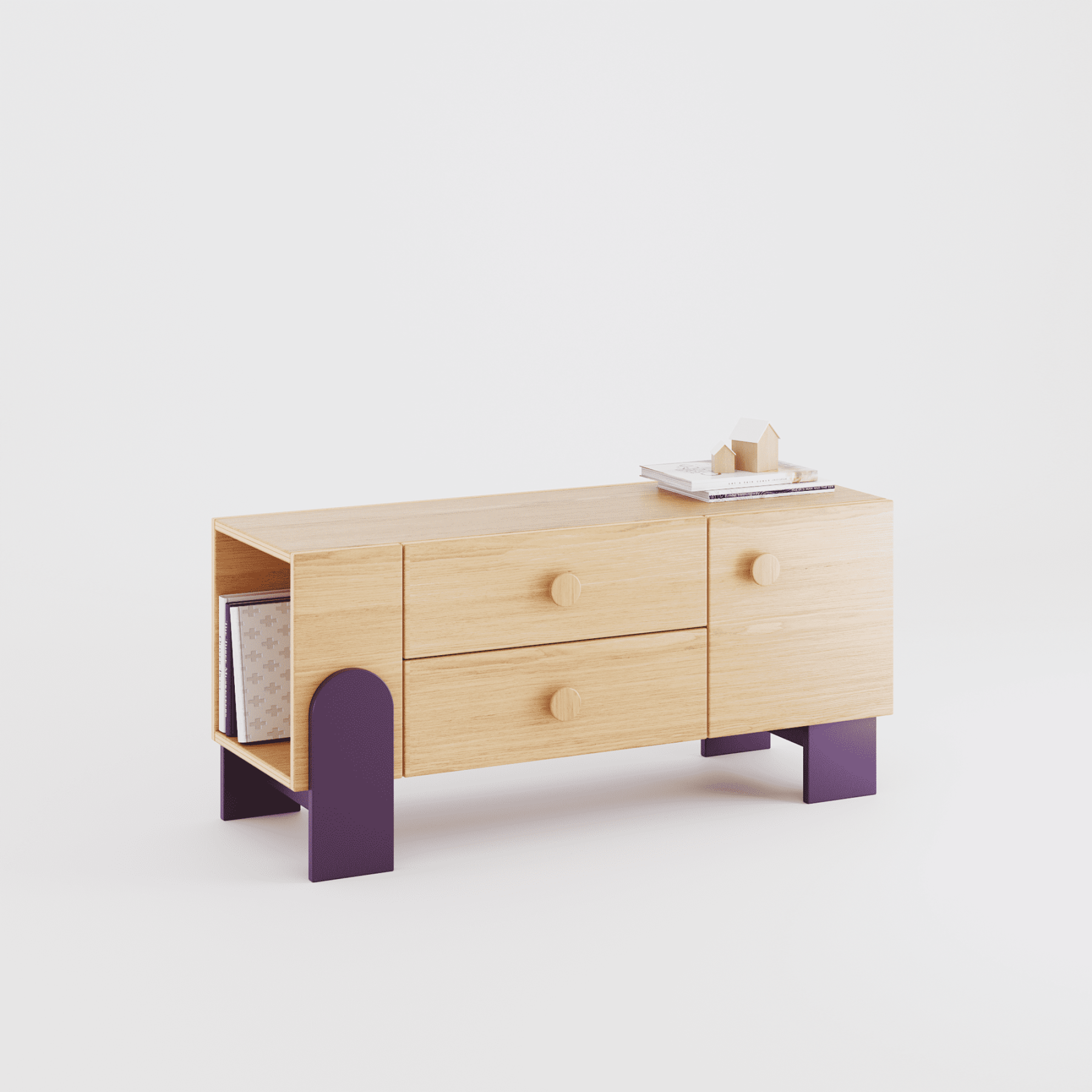
A dresser in a child's room has two lives. At first, a low model with shallow drawers the child can open themselves — that's an investment in independence: they get their own socks and fold their own T-shirt. Then, as the child grows, more capacity is needed. That's why ranges of dressers in several sizes — from S to XL — are so convenient: the room changes stage by stage, rather than "throw out the old one, buy a new one". For the very youngest, dressers with a changing top that later comes off are especially handy — and the dresser simply becomes an ordinary one.
Wardrobes: a low rail at shoulder height
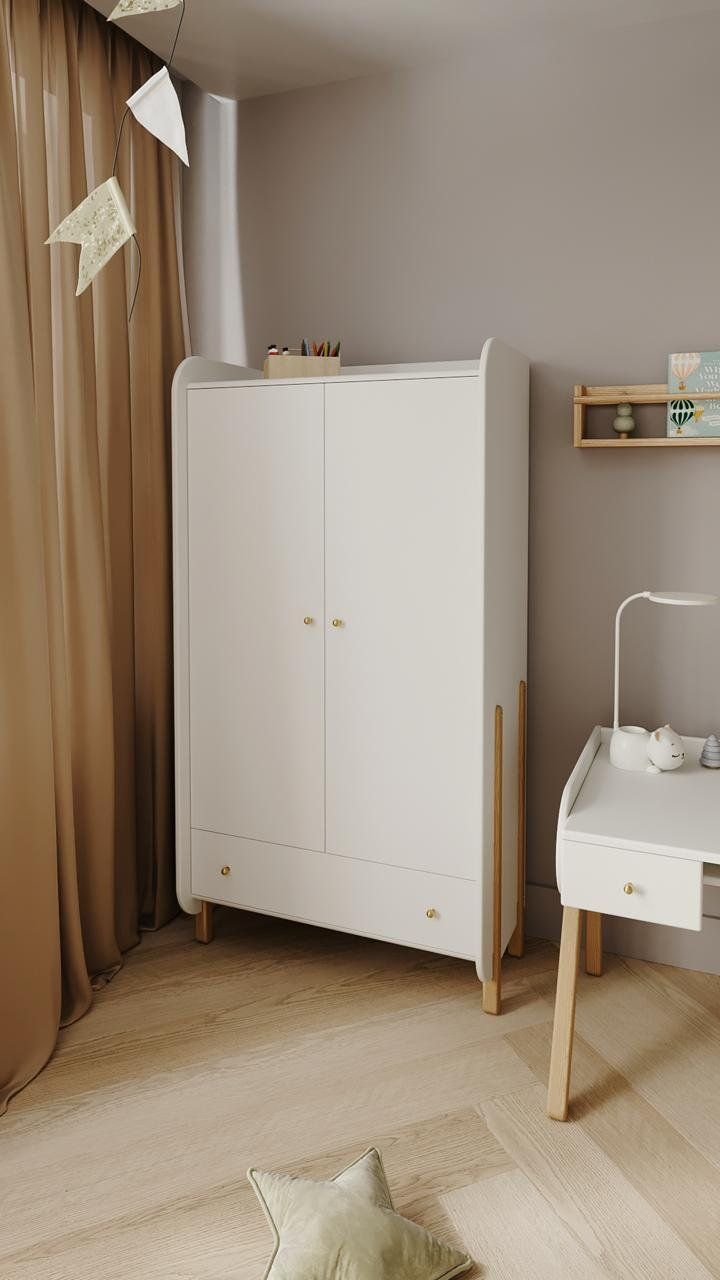
The same height rule applies to a wardrobe, only to the rail: hang it at the child's shoulder level and they can take clothes off hangers and put them back themselves. The guide is simple — the rail roughly at shoulder height, and it "grows" with the child: at two or three that's around 55–65 cm from the floor, closer to school age it goes higher. The figures are a guide; the main thing is that the child can reach without a stool. Another bonus of this approach: a limited, considered choice of clothes reduces the morning "battles at the wardrobe" and teaches a child to get dressed on their own.
Bedside tables: from nursery to teenage room
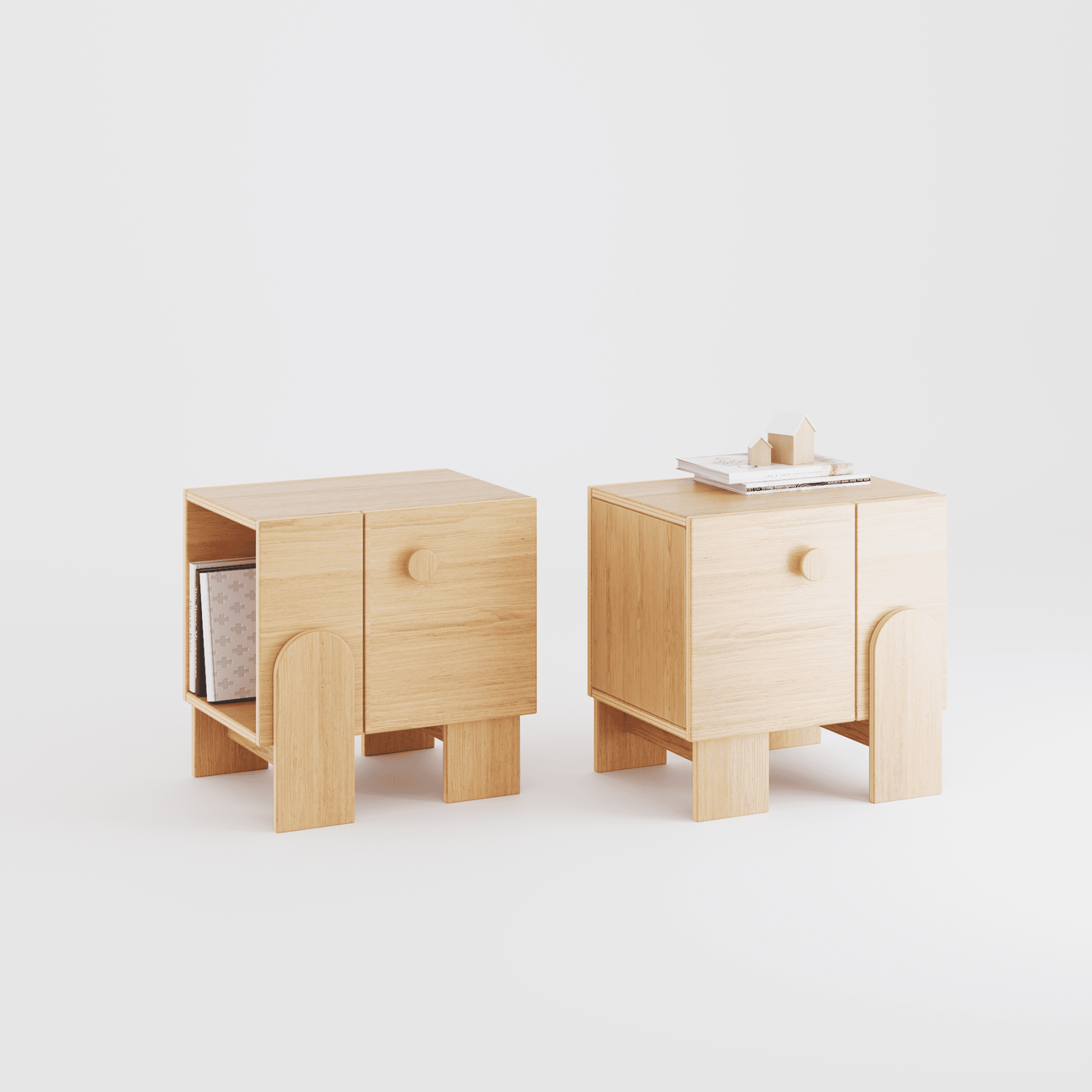
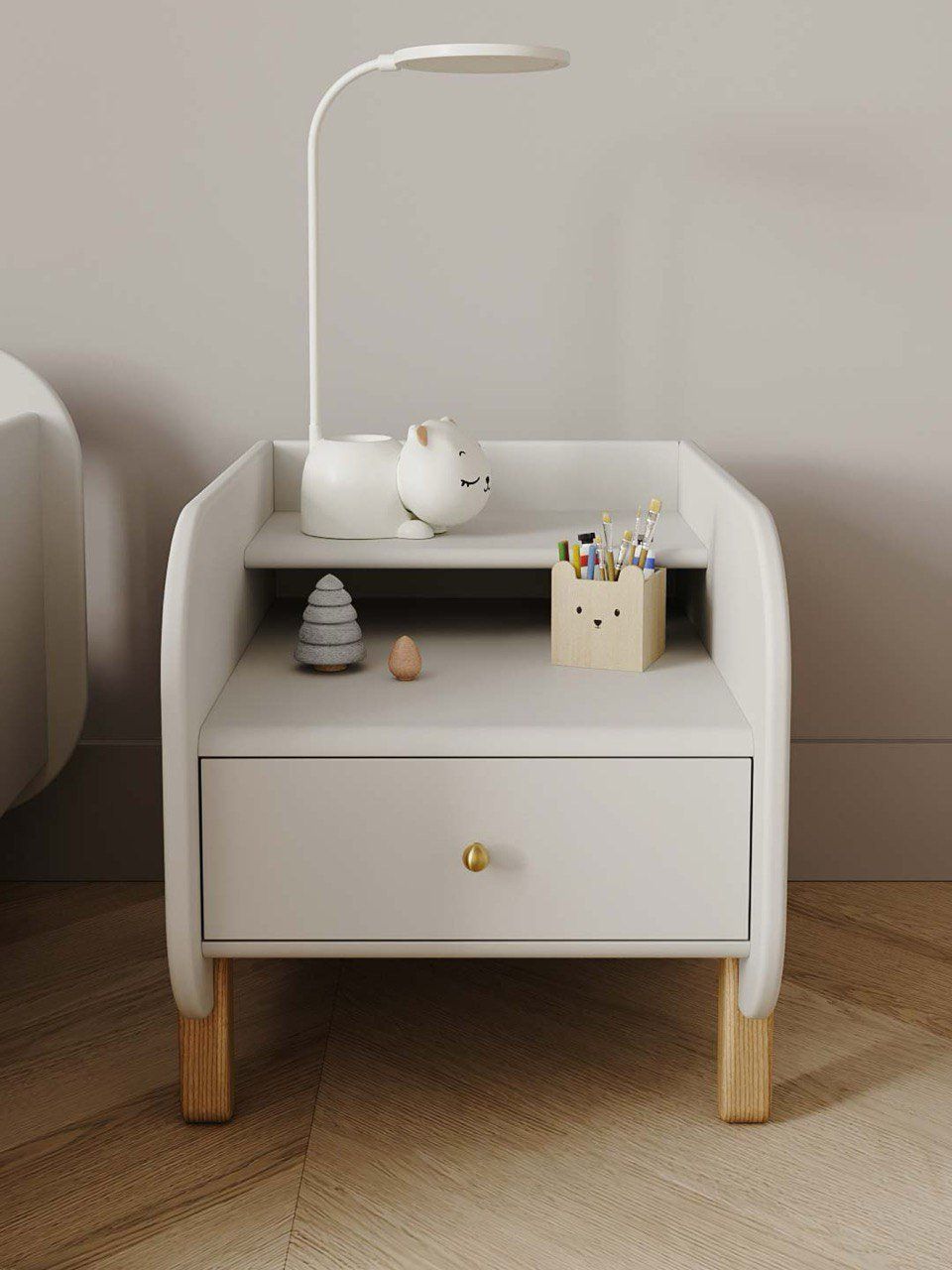
A bedside table appears once the child is already sleeping in a "grown-up" bed and wants water, a night light and a book within reach. It's a small but important step towards independence before sleep: everything of their own is right there, with no need to call an adult. For a child's room, choose a stable model with rounded corners — the simplest option is a table from the same range as the bed.
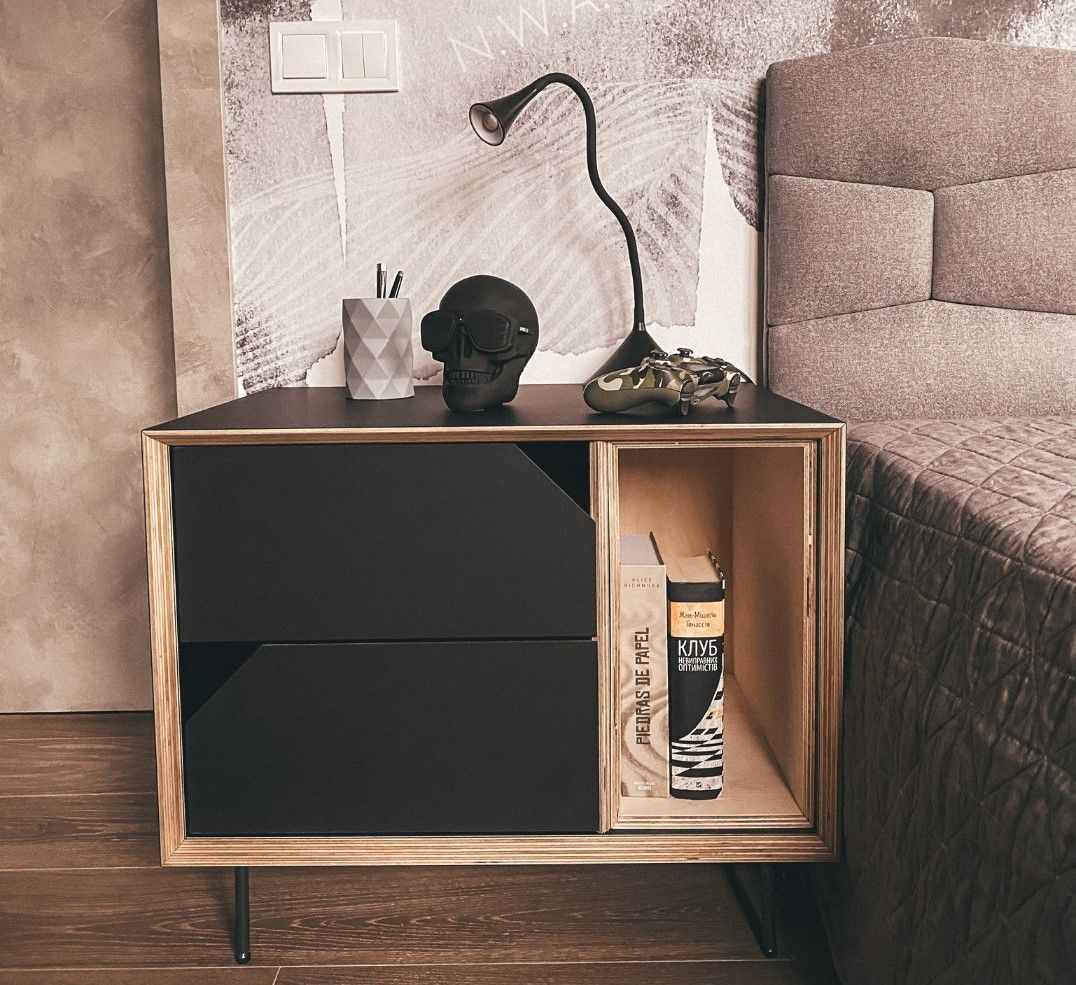
And if you'd like a "grow-into-it" option that will still suit a teenager's room, take a look at the grown-up models with an HPL surface, such as the Origami light bedside table. HPL is an ultra-durable laminate: it isn't fazed by scratches, moisture or felt-tip marks, wipes clean easily and keeps looking like new for a long time. For a child's room, where something is bound to be spilled on the table, that's very practical. Neutral tones — light oak or white — are versatile and grow calmly with the room, while black works well in a teenage room, especially a boy's.

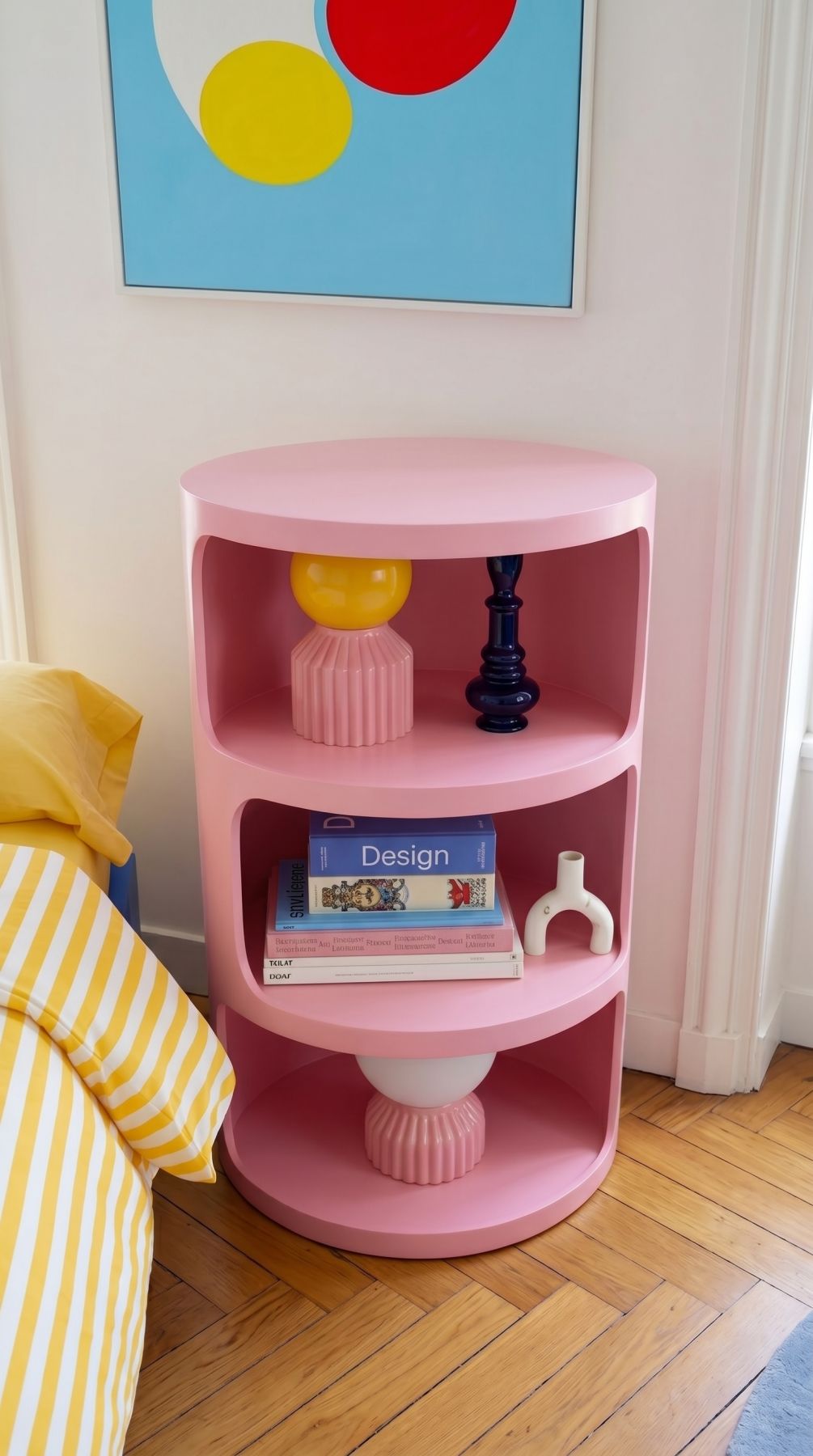
And when you want to give the room some character, there are bedside tables in colour — like Cora: the same practical format, but now as a colourful accent beside the bed.
The most important thing about safety — anchoring to the wall. Furniture tipping over is one of the real household dangers for little ones, and the vast majority of injuries fall on children under 5–6: a child opens the drawers like "steps" or reaches upward, and an unsecured dresser or wardrobe topples over. So any piece of furniture that can be tipped or climbed on should be anchored to the wall with a special strap or bracket — regardless of its weight or "stable look".
The whole children's storage collection — shelves, dressers, wardrobes and bedside tables — is gathered in the category of storage furniture for a child's room. It works best when they come from the same range: then the room looks cohesive and changes gradually, rather than being redone from scratch each time.
Frequently asked questions
How do I organise toy storage in a child's room?
By the "at the child's level" principle: low open shelves for everyday toys, only a few on display (the rest kept out of sight and rotated from time to time), and books cover-facing. That way the child takes things out and puts them back themselves.
Which dresser should I choose for a child's room?
A low one with shallow drawers the child can open themselves. Ranges in several sizes (S–XL) are handy, so capacity grows with the child. For little ones — an option with a removable changing top.
At what height should I hang the rail in a child's wardrobe?
Roughly at the child's shoulder level, so they can reach without a stool: at 2–3 years that's about 55–65 cm from the floor, higher after that. The figures are a guide — the main thing is that the child hangs and takes down clothes on their own.
Do I need to anchor the dresser and wardrobe to the wall?
Yes, without fail. Furniture tipping over is a real danger for little ones who climb up the drawers. Any furniture that can be tipped over should be secured to the wall with a strap or bracket, regardless of its weight.


