Drawer chests for every room
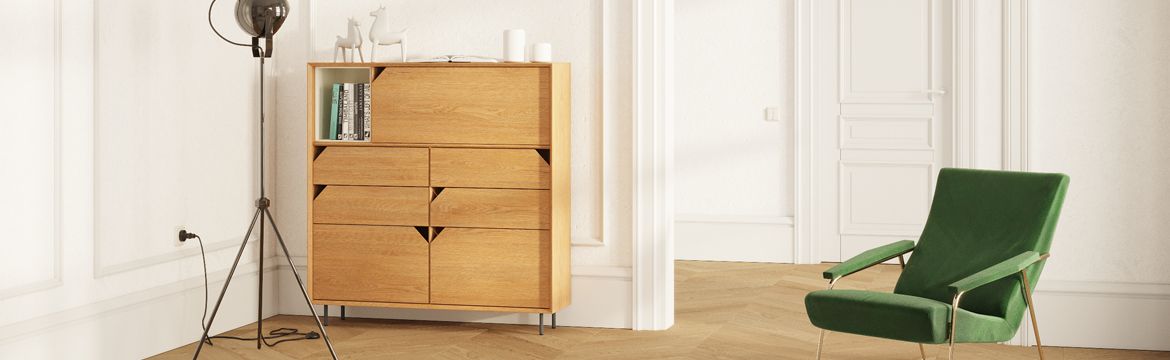
Store things beatifully
Organize storage in the bedroom, hallway, create storage in the living room, or a convenient place for all your documents and favorite books in home office. Our drawer chests can handle any task. Let's start choosing!
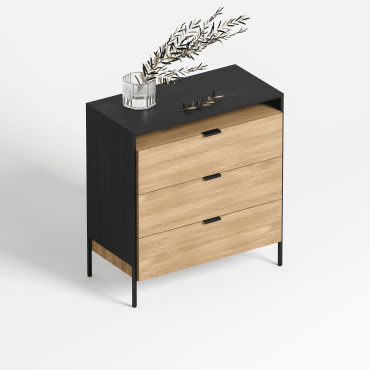
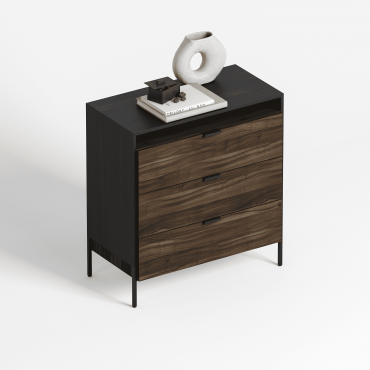
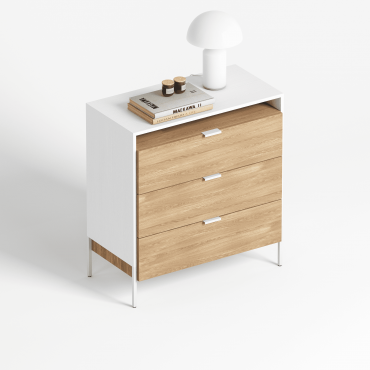
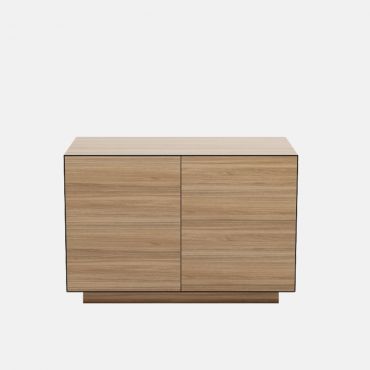
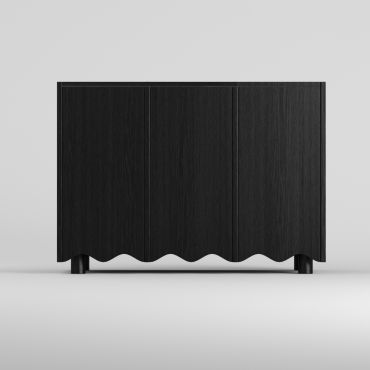
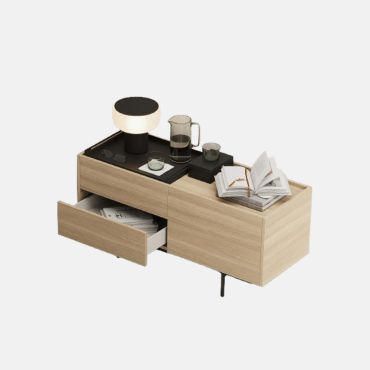
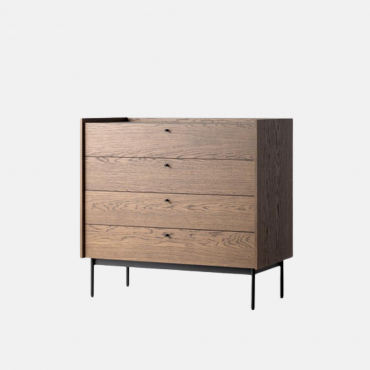
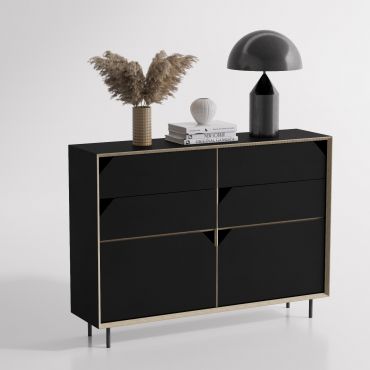
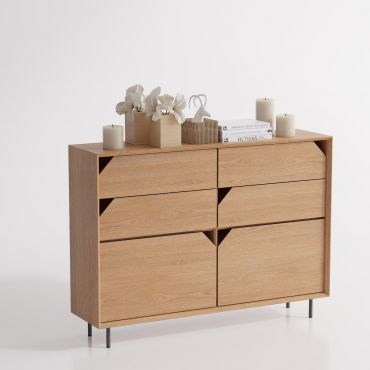
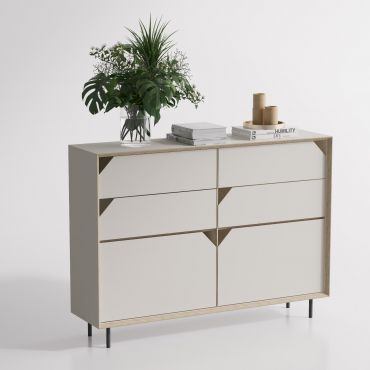
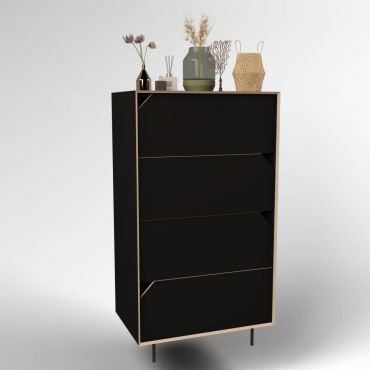
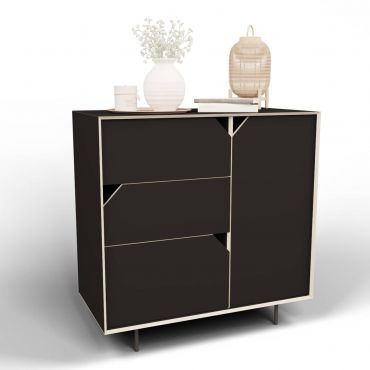
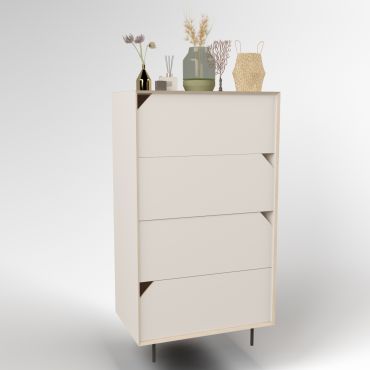
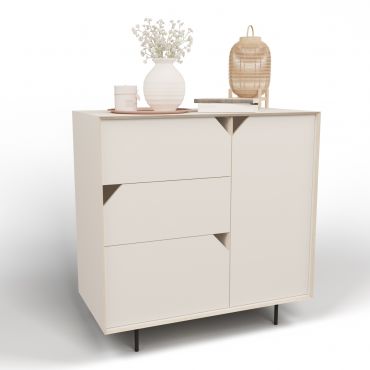
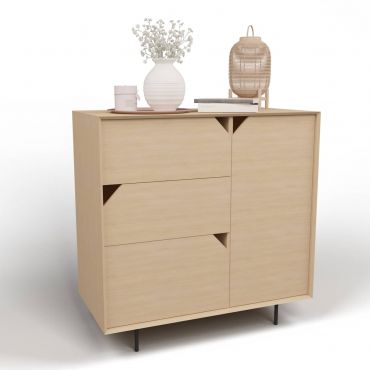
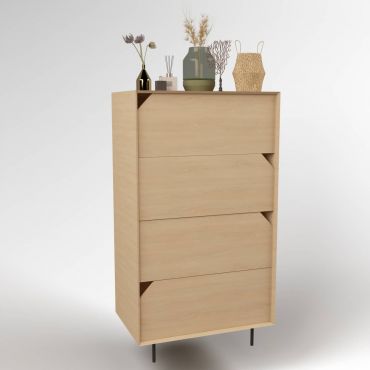
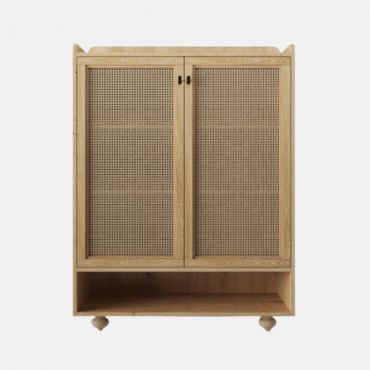
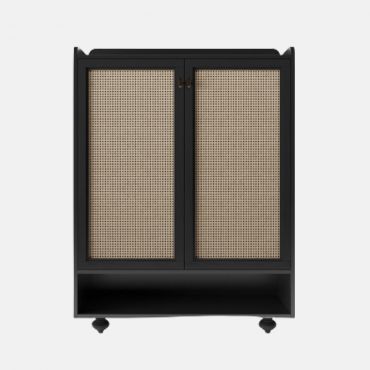
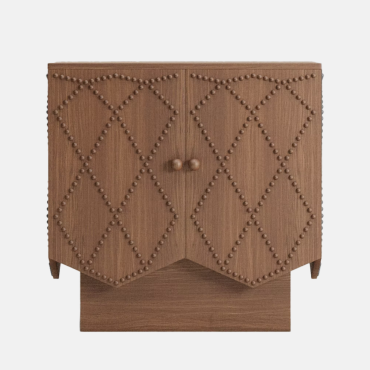
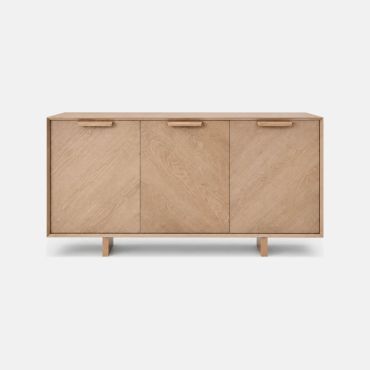
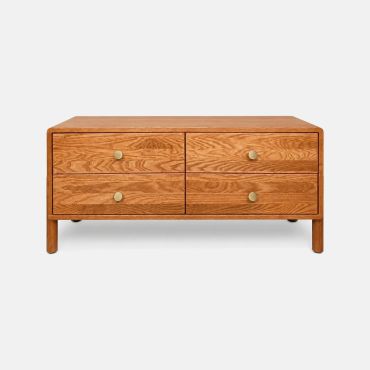
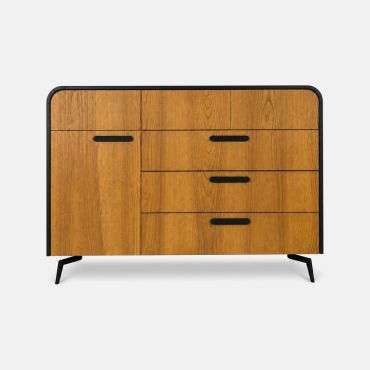
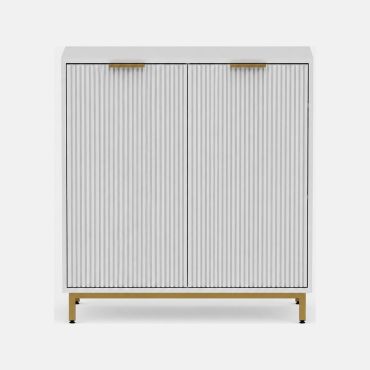
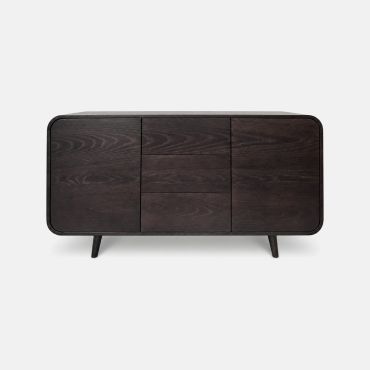
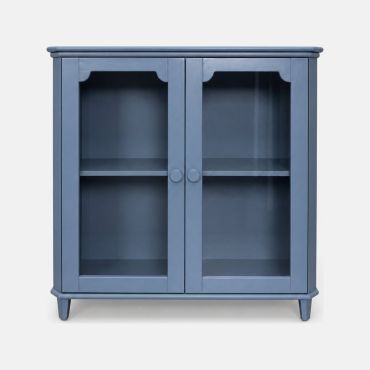
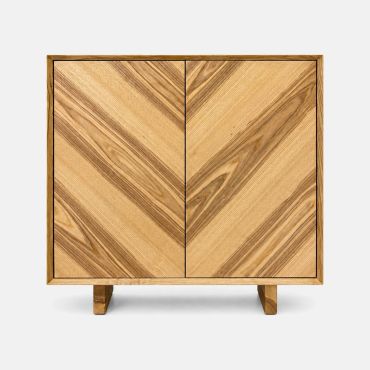
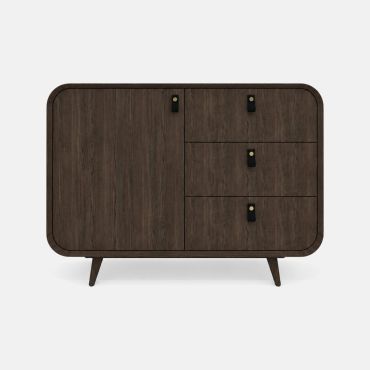
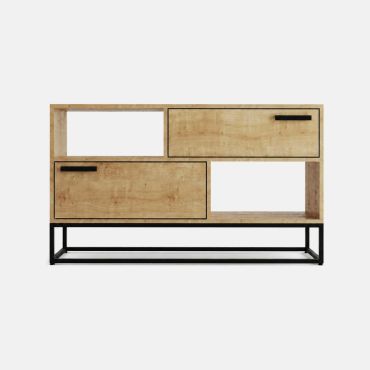
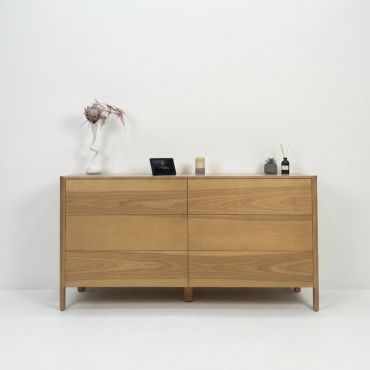
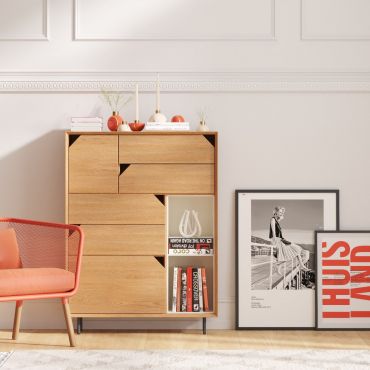
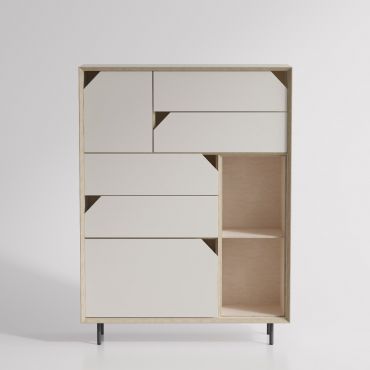
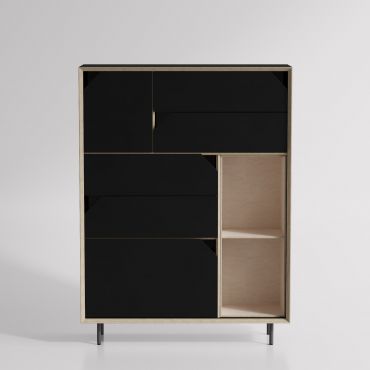
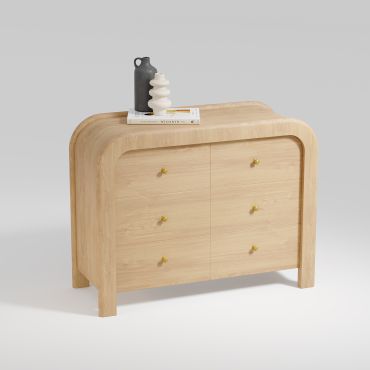
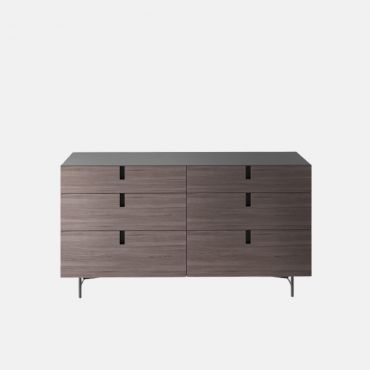
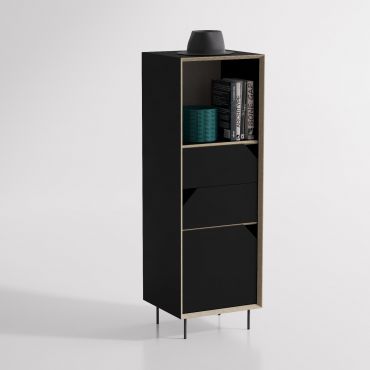
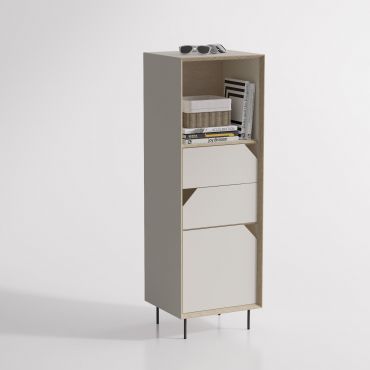
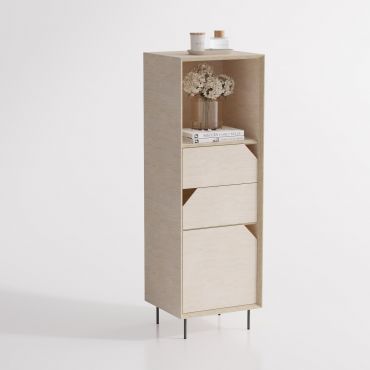
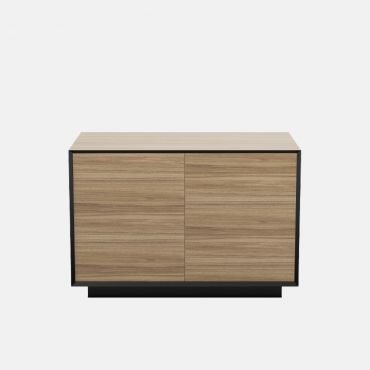
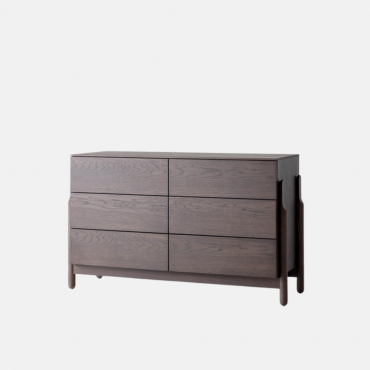
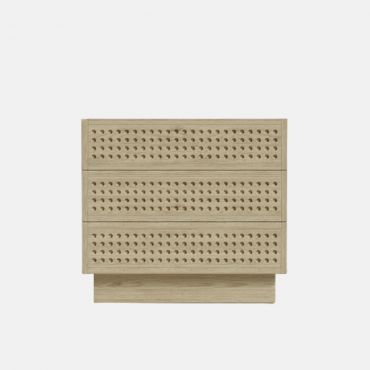
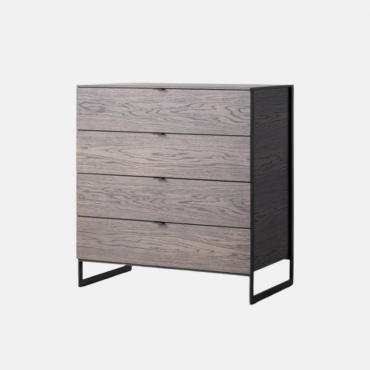
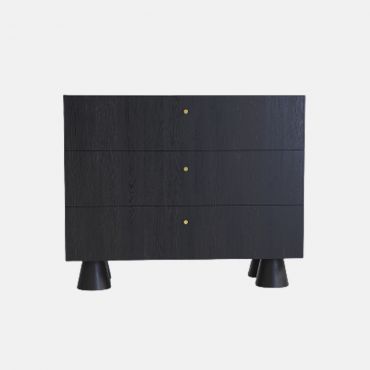
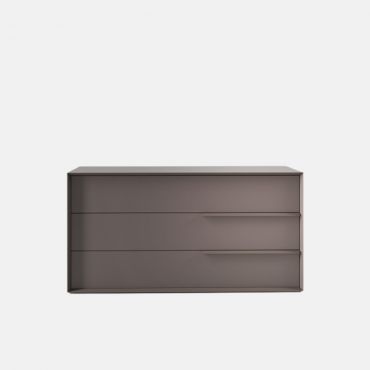
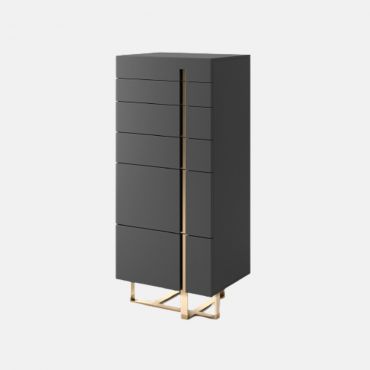
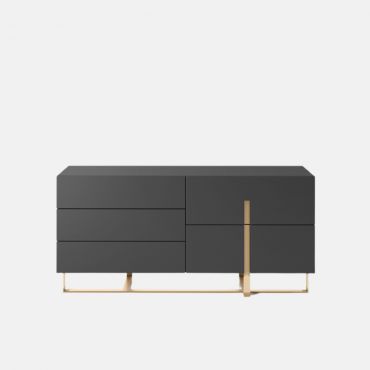
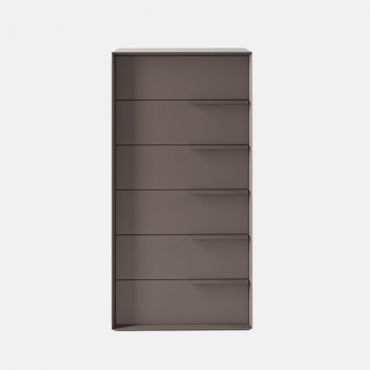
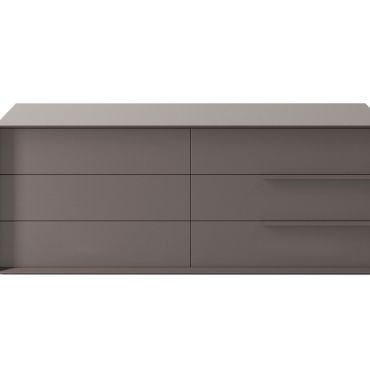
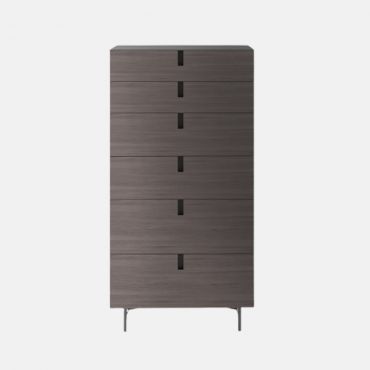
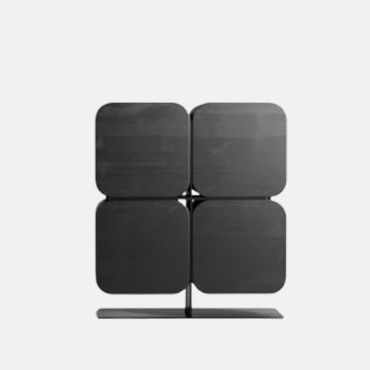
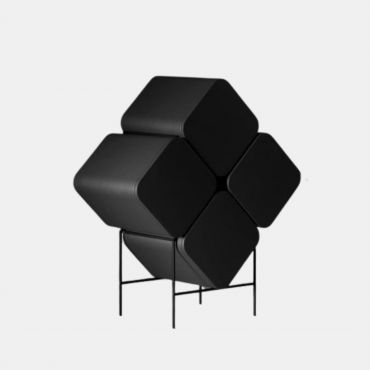
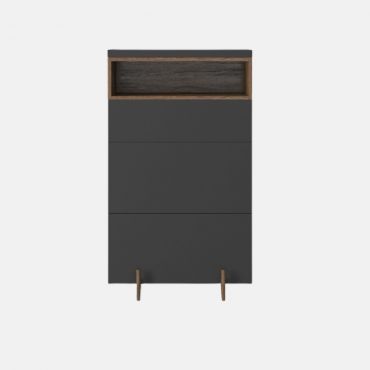
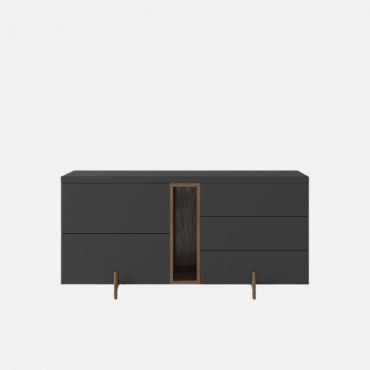
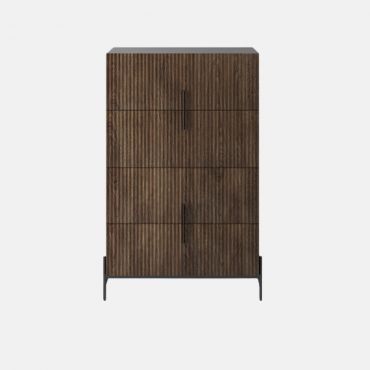
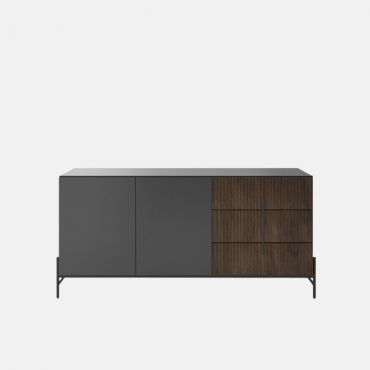
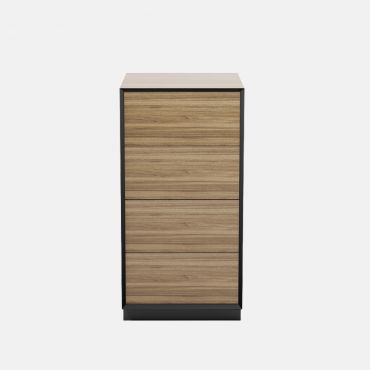
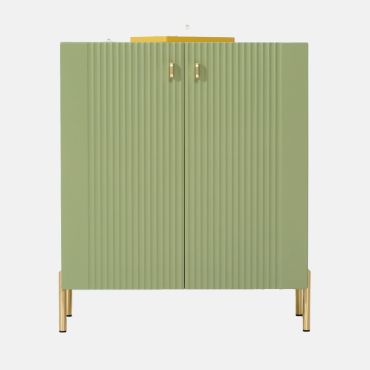
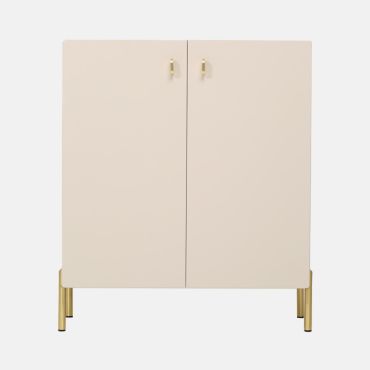
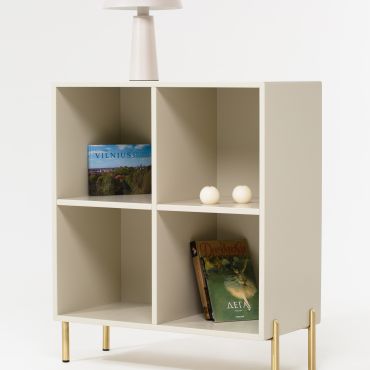
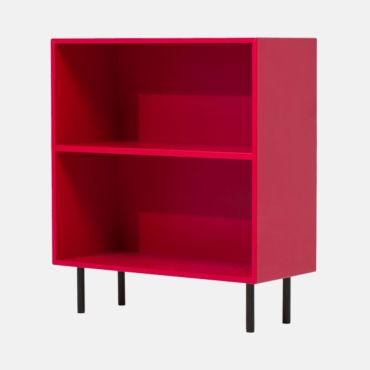
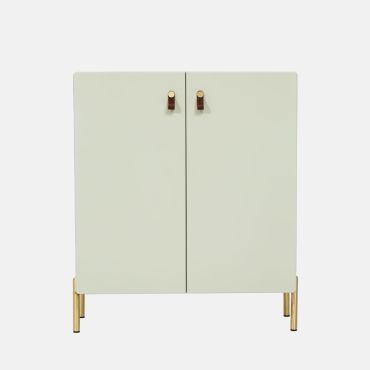
BEDROOM DRESSERS — DESIGNER FURNITURE CATALOG AT MAIIMO
A bedroom holds more things than it seems. Clothes, bed linen, cosmetics, seasonal items, books, and small objects that never quite find a place. Bedside tables are full. The wardrobe is packed. This is exactly where the need for a dresser appears — a piece of furniture that gives real storage and, at the same time, shapes the character of the room.
Bedroom dressers are not chosen only by the number of drawers. They are chosen by form, material, height, and style — and by how they fit into a specific space and a specific life. The market offers thousands of options. Most of them are mass-produced pieces made from cheap chipboard, where everything looks the same and ages just as quickly. MAIIMO has built a different assortment: designer dressers from Ukrainian workshops and studios, where every model has its own logic, material, and authorial approach to detail.
This guide will help you understand what a modern dresser for the bedroom can be, how to choose a model for your space, and why the right material matters more than the price tag in mass-market furniture chains.
WHAT IS A DRESSER AND WHO NEEDS ONE IN THE BEDROOM
A dresser is cabinet furniture with horizontally arranged drawers. The classic height is 70 to 110 cm. The depth is 40–50 cm. The width ranges from 60 to 160 cm, depending on the type and purpose.
Formally, a dresser has one function: storing things. In practice, it does much more. It creates a horizontal accent in the room, works as a surface for decor, a mirror, or a TV, and in some layouts fully replaces a bedside table or vanity. It is furniture that works and looks intentional.
Dressers for the bedroom are useful in several scenarios. A couple may share a wardrobe but still need separate space for personal clothes — a dresser solves this without conflict. Someone may have a closet but no place for bed linen, towels, or seasonal clothes — a dresser gives that volume. Someone who wants to clear the bed and windowsill from clutter and needs structured storage for small items also needs a dresser.
There is another scenario that is rarely stated directly: a dresser as a style element. Sometimes a bedroom feels unfinished not because of the wall color or textiles, but because the furniture simply “stands there” instead of forming a complete composition. The right dresser closes that gap.
A dresser is also useful in bedrooms combined with a work area. When a bedroom is also a home office — an increasingly common reality in city apartments — the dresser can store documents, stationery, and items that do not fit into office logic. It separates “living” from “working” within one room.
A dresser is not mandatory furniture. But when it is present and chosen well, the bedroom becomes more organized and more beautiful at the same time.
TYPES OF BEDROOM DRESSERS
Bedroom dressers come in several types. Each has its own logic, and the choice depends less on taste than on room layout and the tasks you need to solve.
BEDSIDE DRESSER, 50–90 CM HIGH
A low dresser beside the bed is one of the most practical bedroom solutions. It performs the function of a bedside table but gives much more storage.
A height of 50–70 cm lets you place a lamp, book, or glass of water on top and still reach it comfortably while lying down. Three or four drawers can hold clothes, linen, or everything that usually ends up “under the bed” or thrown over a chair. Some models have an open upper niche for a phone or charger.
We recommend this type if the bedroom is small and a classic bedside table does not provide enough storage, if you want symmetry on both sides of the bed, or if you need one storage point next to the sleeping area. Two identical or stylistically similar bedside dressers immediately give the room a sense of order and completeness.
WIDE DRESSER AS A TV-ZONE BASE
A wide dresser is a model from 100 to 160 cm in width and 60–80 cm in height. In the bedroom, it is most often placed opposite the bed and used as a TV stand.
This is not a compromise but a thoughtful solution. You get furniture that supports technology and stores things at the same time. The surface is wide enough for decor, plants, or a mirror on the side. Cables can be hidden inside or routed through special channels, depending on the model.
Pay attention to depth and load capacity: a 50–65 inch TV weighing 12–20 kg needs a stable base at least 40 cm deep, with confirmed surface load capacity. Check these specifications before buying.
DRESSER WITH MIRROR: VANITY FUNCTION
Some dresser models come with a mirror or include a special upper structure above the main body. Such a dresser replaces a vanity table — and this can be genuinely convenient.
If there is no room for a separate makeup area, or you do not want another piece of furniture in the bedroom, this is a practical solution. The surface of the dresser, usually 40–50 cm deep, is enough for cosmetics and skincare. The mirror can be attached to the body or hung on the wall above it — the second option is more flexible and lets you adjust the height.
WALL-MOUNTED AND CORNER DRESSERS FOR NON-STANDARD LAYOUTS
A wall-mounted dresser is fixed to the wall and does not occupy floor space. This is a solution for small bedrooms or rooms where it is important to keep a sense of lightness. The mounting height can be adjusted to the user. The floor below remains open, which makes cleaning easier and the room feel calmer.
A corner dresser fits into the corner of the room — a place that often becomes dead space. It is rare in the mass market, but appears in custom and author-designed collections. If your bedroom has an awkward empty corner, this option is worth considering as part of an individual order.
DRESSER MATERIALS: FROM OAK TO HPL
The material determines not only the appearance but also the weight, durability, and behavior of furniture under changes in temperature and humidity. Let’s look at the main options honestly, without marketing gloss.
NATURAL WOOD: OAK, ASH, WALNUT
Wooden dressers are the most stable long-term category. Solid oak, ash, or walnut does not delaminate, does not swell easily, and keeps its structure for decades with proper care.
Oak is dense, moisture-resistant, and holds hardware well. This is furniture that can be passed on. Ash is slightly lighter and more flexible in processing, with a more expressive grain pattern: in the bedroom, it adds natural texture and liveliness. Walnut has a warm tone, from honey-brown to deep chocolate, medium hardness, and is a classic choice for bedrooms in warm palettes.
There are drawbacks: the price is higher than panel materials; wood “moves” — it expands and contracts with humidity changes, so stable indoor conditions matter: 40–60% humidity and 18–22°C temperature.
A veneer dresser is a compromise. The base is MDF or chipboard, while the surface is covered with a thin sheet of natural wood, usually 0.5–3 mm. It looks like solid wood, weighs less, and is more resistant to warping during humidity changes. This is a good middle category if you want a natural look without the full price of solid wood.
MDF AND CHIPBOARD: WHEN THEY MAKE SENSE
MDF is a medium-density fiberboard. It is denser and heavier than chipboard and less prone to delamination. It mills well, which is why MDF is used for furniture with relief, expressive fronts, and decorative details. Painted MDF gives an even matte or glossy surface — ideal for white dressers and other monochrome solutions.
Chipboard is a broad quality category. Budget chipboard without certification can have increased formaldehyde emissions — especially important for a bedroom, where you spend 7–8 hours at a time. Quality E1 or E0 chipboard with good lamination and finished edges is an acceptable option for practical furniture.
HPL, High Pressure Laminate, deserves a separate mention. It is a multi-layer laminate pressed under high pressure. It is strong, scratch-resistant, moisture-resistant, and often used in loft and contemporary pieces. If you need furniture that can handle active daily use and still look new in five years, HPL fronts are worth attention.
Color solutions differ by material. Painted MDF gives a clean, uniform surface without natural grain. It works well for white dressers, monochrome pieces, or rich colors such as emerald, mustard, and anthracite. Veneer preserves the living texture of wood and looks warmer. The choice depends on the atmosphere you want: mathematically clean or naturally warm.
HARDWARE: TELESCOPIC RUNNERS, SOFT-CLOSE, HANDLES
The quality of a drawer is 70% hardware, not the body material. This is where the difference hides between comfortable furniture and furniture that starts jamming after a year.
Full-extension telescopic runners are the standard for comfortable use. They let the drawer open fully without distortion. Soft-close runners close the drawer smoothly and quietly, even after a sharp push. Hardware brands worth trusting include Blum, Hettich, and Grass.
Handles or push-to-open are a matter of style and practice. Scandinavian and minimalist interiors often choose handleless fronts. Loft dressers use metal brackets, rails, or tube handles. Soft modern interiors often choose brass or matte gold.
HOW TO CHOOSE A DRESSER FOR THE BEDROOM: 5 CRITERIA
Before looking for a model, define the parameters of the space and your tasks. We researched typical buying scenarios — these five criteria matter in practice.
SIZE: MEASURE BEFORE BUYING
First the tape measure, then the catalog. Measure the width of the niche or wall where the dresser will stand. Consider the distance to the door, window, or bed — at least 60–70 cm should remain for free movement. Check whether doors and drawers can open in the planned place without conflict.
Fix the maximum height. If there is a windowsill, shelf, or radiator above the placement area, that limits height. If you plan a mirror above the dresser, consider the total height so the mirror is comfortable, not close to the ceiling.
One more detail people often forget: measure the diagonal of the doorway and staircase. A wide, deep dresser may physically not enter the apartment.
NUMBER AND DEPTH OF DRAWERS
The standard drawer depth is 38–45 cm. This is enough for folded clothes. For bed linen or bulky sweaters, you need a depth from 45 cm.
Three drawers are the minimum for full storage. Five or six are better if the dresser replaces part of a wardrobe. Wide low drawers are convenient for sweaters and trousers; narrower and deeper ones work well for rolled or folded smaller items. If you buy a dresser for children, consider height: the top drawer should be reachable.
COLOR: NEUTRAL, CONTRASTING, OR MATCHED TO THE INTERIOR
White dressers are the most common choice because white feels neutral and works with most finishes. But white can be warm, like cream or ivory, or cold, like pure white with a bluish tone. If the walls and textiles are warm, cold white will feel off. Check it in natural light.
Natural wood is a safe choice if the interior already has wood or warm textures. Dark colors — anthracite, black, graphite — work for contrast accents and hold attention well. In small bedrooms, a dark dresser works only if the rest of the furniture and walls are light.
MATERIAL AND BUDGET
Solid oak or walnut is a long-term investment. It costs more at the start but does not require replacement after 7–10 years and keeps its appearance with proper care.
Painted MDF or veneer is the middle category. Good appearance, reliable hardware, reasonable price — the optimal option for most bedrooms.
Chipboard is budget. It is acceptable if you know the manufacturer’s quality and there is an E1 certificate. Avoid anonymous chipboard without confirmed environmental classification: the bedroom is not a place for safety compromises.
STYLE: WHERE IT GETS INTERESTING
Most people buy furniture not “by style” but “so it fits.” Yet interior style is a system, not a whim. If you do not know what style your bedroom belongs to, look at the dominant materials, colors, and forms. They will tell you which dresser is appropriate and which one will feel foreign.
A practical rule: if the room already has wooden furniture, such as a bed or bedside tables, choose a dresser in the same wood species or a close warmth of tone. If everything is lacquered or monochrome, keep the dresser in the same line. Mixing is possible, but it needs intentional logic: one warm material as an accent, the rest as a neutral base. “I just liked it” without a system creates visual chaos, even when each separate piece is beautiful.
DRESSERS IN DIFFERENT BEDROOM INTERIOR STYLES
Every style has its own logic of forms and materials. We reviewed which dressers fit each one best — specifically, without abstractions.
MINIMALISM AND SCANDINAVIAN STYLE
Minimalism means furniture without unnecessary detail. Straight lines, neutral colors, no ornament. Modern bedroom dressers for minimalist interiors have smooth fronts, push-to-open systems, or minimalist profile handles — a narrow strip instead of a protruding handle.
Color: white, gray, sand, black. Material: lacquered MDF or solid wood without excessive texture. Form: rectangular body, balanced proportions, no carving or decorative overlays.
Scandinavian style allows more warmth: light woods such as birch, ash, pine, natural neutral tones, sometimes textile inserts in drawers or woven storage baskets. The principle is similar to minimalism: clean form, living material.
LOFT AND INDUSTRIAL STYLE
Loft dressers combine metal and wood, open structures, and industrial materials. Fronts often have expressive grain — dark brushed wood or intentionally raw-looking surfaces. Some models are combined: a wooden front panel on a metal frame.
Loft-style hardware includes metal rails, brackets, or tube handles in matte steel. Body colors are dark: graphite, anthracite, wenge, or natural dark wood with metal accents.
In an industrial loft, a dresser with intentionally visible hinges or bolts is appropriate — the so-called honesty of construction. This is not carelessness but an aesthetic position.
JAPANDI AND MID-CENTURY MODERN
Japandi blends Japanese and Scandinavian approaches. Functionality, natural materials, refusal of excess — but not austerity; rather, balance. A dresser for a Japandi bedroom: neutral-toned wood, oak, ash, bamboo, low profile, smooth proportions without sharp geometry.
No gloss. The surface should be matte and, if possible, textured. Handles — wooden or matte metal. Lines — simple, but not mechanical. The Japanese idea of “ma,” empty space as part of composition, means the dresser surface should not be crowded: one or two objects, no more.
Mid-century modern is a retro style from the 1950s and 1960s: tapered legs, strong horizontality, warm wood such as walnut or teak. The classic dresser silhouette in this style is easy to recognize: wide and low, on four conical or angled legs. A mirror above it in a thin brass frame completes the picture.
SOFT MODERN AND ECLECTIC INTERIORS
Soft modern is one of today’s most common requests. Neutral tones, natural textures, and softer forms instead of rigid geometry. The dresser here is like the whole room: calm, warm, and not excessive.
Choose veneer or solid wood in warm neutral tones. Handles — brass or matte gold. Form — slightly rounded corners, a sense of weight and stability. Surface — matte or with a subtle wax finish.
Eclectic interiors do not have strict rules. Here the dresser can become an artifact: special, unlike everything else. This is where author-designed and designer dressers from workshops find their place. If the rest of the room already exists, look for the dresser that becomes an accent, not background.
DRESSER PLACEMENT IN SMALL AND LARGE BEDROOMS
Dresser placement is a separate task that should be solved before buying, not after.
In a small bedroom up to 12 sq. m, the main rule is not to block passage and not to cover light sources. It is better to place the dresser along the wall, parallel to the bed, or opposite it if the room width allows. A narrow and low dresser, 60–80 cm wide and 70–80 cm high, takes little space and does not break up the room.
A wall-mounted model is ideal for a compact bedroom: the floor stays open, and the room looks larger. If possible, build storage into niches: a dresser in a niche occupies the same area as an empty corner but gives a full functional zone.
In a large bedroom from 18–20 sq. m, the space allows more. A wide dresser opposite the bed looks natural and can become the compositional center of the wall, especially if you hang a large mirror or several small artworks above it. Two identical dressers on both sides of the bed are a classic solution that creates symmetry and gives each person their own place.
The entrance angle and drawer-opening direction matter too. Drawers open forward by 40–50 cm. Make sure there is enough space in front of the dresser to open them fully without hitting the bed or door.
Another detail people rarely consider: dresser height and the horizon line. In a small room, a dresser that rises above the windowsill visually cuts the room vertically. If you want to preserve a sense of space, choose models below the windowsill. Or open the area above with a large mirror: it doubles the perceived depth and compensates for the visual weight of the dresser.
For couples with different storage habits, symmetrical placement works well: two identical dressers on both sides of the bed. Each person has a separate place — and no one searches for socks in someone else’s drawers. It looks intentional and genuinely makes daily life easier.
COMMON MISTAKES WHEN CHOOSING A BEDROOM DRESSER
We see several mistakes that repeat regardless of budget or style.
Not considering drawer opening direction. A drawer slides forward 40–50 cm. If a bed, pouf, or box stands in front of the dresser, the drawers will not open fully. Check free space before buying.
Buying without measurements. This is the most common mistake. “It seems like it will fit” is not a parameter. Measure the niche, measure the diagonal for delivery, check the height of the doorway if the dresser needs to pass through a corridor or elevator.
Ignoring drawer depth. Standard folded clothes take 38–40 cm. But bulky sweaters or bed linen need at least 45 cm. Check this before purchase, not after.
Choosing only by price. A cheap chipboard dresser without certification is a health risk and money spent twice. A smaller but better-quality dresser is a smarter choice: one good drawer on Blum hardware is worth more than five on unknown runners.
Forgetting about hardware. A beautiful front with poor runners means drawers that jam and break after a year. Ask about the runner manufacturer before buying.
Matching only the wall color. The dresser color should work with the whole interior palette, not one wall shade. If you need an exact match, take finish samples and check them in natural light, not under showroom lamps.
Underestimating weight. A solid oak dresser can weigh 80–100 kg. Check whether it can be brought in by elevator or stairs — and whether the floor in the room can handle it.
WHY BUY BEDROOM DRESSERS AT MAIIMO
MAIIMO is not another store with a standard assortment. We build the catalog differently: we look for manufacturers who create furniture with character — Ukrainian workshops, craft studios, and designer brands that work with material and detail, not only price tags.
Own collections and authorial approach. Part of the MAIIMO assortment consists of our own developments, where we control materials, forms, and execution quality. It is not always the cheapest option. But it is furniture backed by a specific decision, not an anonymous mass-production algorithm.
The best Ukrainian brands. We select manufacturers that make dressers from solid oak, ash, and walnut, use Blum, Hettich, or Grass hardware, and take responsibility for every product. This is not a declaration — it is a condition for entering the catalog.
Local workshops and craft studios. Our catalog includes dressers from small studios where each model is handmade or produced in small batches. This furniture cannot be found in mass-market chains.
Unique assortment. Designer dressers, models with non-standard materials, authorial hardware — things you do not see in mass stores. If you need furniture that stands out, this is the place to start.
Dressers for living rooms and related spaces. MAIIMO is not only about bedrooms. Dressers for the living room, hallway, children’s room, or home office are also represented in the catalog. If you are furnishing several rooms, you can choose one collection or stylistically connected pieces.
Eco-consciousness and responsible production. We check certificates for panel materials and lacquers. A bedroom dresser stands next to the place where you sleep. It is not a place for formaldehyde or anonymous chemical coatings.
Help with selection and complete furnishing. If you are not sure which type of dresser fits, our managers will help you choose by size, style, and task. This is not a sales script but real consultation from people who know the assortment from the inside. To buy dressers at MAIIMO means getting not only furniture, but confidence in the choice.
FAQ — BEDROOM DRESSERS
WHAT IS THE OPTIMAL DRESSER HEIGHT FOR A BEDROOM?
The standard bedroom dresser height is 70 to 110 cm. For placement next to the bed, a 70–90 cm model works well: it is easy to reach without getting up, and the surface can hold a lamp, book, or glass.
If the dresser stands opposite the bed and works as a TV base, 65–80 cm is optimal for watching while lying or sitting. A very high dresser from 115 cm is closer to a tall cabinet, and in an average bedroom it may visually press down the space.
HOW DO YOU CHOOSE A DRESSER FOR THE BEDROOM?
Start with measurements: niche width and depth, height to the windowsill or shelf, distance to the door. Write them down — only then open the catalog. Without these parameters, every choice turns into guesswork.
Then define priorities. If storage is the main task, choose more drawers and depth from 45 cm. If style matters most, choose material and color to match the existing interior. If the room is small, consider a wall-mounted or narrow bedside model. Budget determines material: solid oak for decades, MDF or veneer for a quality middle category, chipboard only with E1 certification.
WHAT TYPES OF BEDROOM DRESSERS ARE THERE?
By placement: bedside, 50–90 cm high, replacing a nightstand; wide, 100–160 cm, as a TV base; wall-mounted, without floor occupation; corner, for dead zones; dresser with mirror, replacing a vanity. Each type solves a specific task — there is no “best” dresser in general, only the best one for your layout.
By style: minimalist, with smooth fronts and push-to-open; loft dressers, metal plus dark wood; Scandinavian, light woods and natural tones; Japandi, matte surfaces and low profile; mid-century, tapered legs, walnut or teak. Designer dressers are authorial solutions that do not always fit standard categories.
WHAT SIZE DRESSER IS RIGHT FOR A BEDROOM?
Standard parameters: width 60–160 cm, height 70–110 cm, depth 40–50 cm. For a small bedroom up to 14 sq. m, choose a width up to 80 cm and height up to 90 cm. For a large bedroom, 18+ sq. m, a wide 120–160 cm dresser opposite the bed looks natural and becomes a wall accent.
Leave passage space: at least 60–70 cm on the side where you walk. In front of the dresser, leave 40–50 cm for drawer opening. If you plan a mirror above the dresser, consider the total height so the composition does not run into the ceiling.
WHAT DO PEOPLE STORE IN A DRESSER?
Classic storage includes folded clothes, sweaters, jeans, T-shirts, underwear, socks, bed linen, and towels. Deeper drawers hold seasonal items; smaller drawers hold accessories, documents, and small objects.
In bedrooms without a separate closet, a dresser can partially replace a wardrobe: with 5–6 drawers, it provides full storage for two people. In bedroom-office spaces, it can hold stationery and documents. On the surface: decor, a lamp, mirror, or TV. A dresser is useful because it adapts to the owner’s needs, not the other way around.
WHAT COLOR DRESSER SHOULD YOU CHOOSE FOR A BEDROOM?
White dressers are the most universal choice: they suit most finishes and visually enlarge the room. But white can be warm, like cream or ivory, or cool, like pure white with a bluish tone. Check it in natural light next to the actual finishes.
Natural wood is safe if the room already has wooden elements. Dark colors such as anthracite, graphite, and black work as contrast accents, but only if the rest of the interior is light. Rich colors such as emerald, terracotta, and mustard are an authorial choice that requires confidence and gives a strong result. General rule: the dresser color should be part of the room palette, not matched to one wall.
WHAT IS THE DIFFERENCE BETWEEN A DRESSER AND A CABINET?
A dresser is cabinet furniture mostly with drawers, 70–110 cm high and from 60 cm wide. It is designed for storing clothes and belongings. A cabinet is a broader category: it may have doors, shelves, or drawers, is usually smaller, and often works as a stand — for TV, beside the bed, or in the bathroom.
A bedside table is a small cabinet with minimal storage. A dresser next to the bed is a bedside dresser that performs the same function but gives 3–5 times more storage. A wide dresser opposite the bed performs the function of a TV cabinet but has full internal storage. The boundary is flexible: choose by task, not by name.
DRESSER OR WARDROBE — WHICH IS BETTER FOR A BEDROOM?
It depends on the task. A sliding wardrobe or closet is optimal for full-length clothes: suits, dresses, coats. A dresser is for things that fold: sweaters, jeans, underwear, bed linen.
In practice, they complement each other. Wardrobe for long clothes and hangers, bedroom dresser for folded items. If there is only one option: in a small room, a dresser occupies less wall space and gives more flexibility. In a large room, a wardrobe is more efficient by storage volume.
DRESSER WITH MIRROR OR WITHOUT?
A dresser with mirror is a two-in-one solution: it replaces a vanity and provides storage. It is convenient if there is no space or desire for separate makeup furniture. The mirror can be attached to the body or hung on the wall above the dresser — the second option is more flexible.
A dresser without a mirror is cleaner stylistically, especially for minimalism and Japandi. If you need a mirror, you can hang it separately in any size and position. Our advice: if the space allows, choose a dresser without an integrated mirror and plan the mirror separately. You will have more freedom in height, size, and placement.
HOW MUCH DOES A BEDROOM DRESSER COST?
The price depends on material, size, and manufacturer. Budget segment, chipboard and mass production, starts around 3,000–6,000 UAH. Middle category, MDF with veneer and quality Blum or Hettich hardware, is usually 8,000–20,000 UAH. Solid oak or walnut from Ukrainian workshops starts from 20,000 UAH and higher, depending on size and complexity.
We recommend not saving on hardware: a dresser with good runners for 12,000 UAH will last twice as long as a cheaper one with poor drawers. Solid wood is an investment for 15–20 years. MDF or veneer from a quality manufacturer is a worthy compromise. Anonymous chipboard without certification is a risk and often double spending.
WHERE TO BUY A DESIGNER DRESSER IN UKRAINE?
MAIIMO is a catalog of designer dressers from Ukrainian manufacturers and workshops. The catalog includes solid oak and ash models, veneer solutions, authorial dressers in loft, Japandi, and soft modern styles. All manufacturers are verified — materials have environmental certificates, and hardware comes from leading brands.
To buy dressers with consultation on size, style, and material is exactly why MAIIMO exists. We deliver across Ukraine and know our assortment from the inside: we do not sell what we cannot stand behind. Ask us — we will answer specifically and without scripts.
HOW MANY DRAWERS ARE ENOUGH FOR A BEDROOM?
The minimum is three drawers: one for large and heavy items such as sweaters and jeans, one for small clothing such as socks and underwear, and one for “everything else” — documents, accessories, seasonal small things.
If the dresser replaces part of a wardrobe, five or six drawers allow storage by category. For couples using one piece of furniture, six drawers are better: three for each person. This prevents clutter and morning searches.
CAN YOU USE A DRESSER INSTEAD OF A BEDSIDE TABLE?
Yes, and this is one of the most common scenarios for bedroom dressers — especially where a classic bedside table does not offer enough storage. Bedside dressers 50–70 cm high are ideal for this role.
Advantages over a bedside table: much more storage, a stable surface for a lamp and accessories, and the ability to organize personal space without visible clutter. Limitation: they take more floor space — about 50–60 cm in width instead of 40–45 cm for a standard table. For very small bedrooms, a wall-mounted model that leaves the floor open is better.
WHICH WOOD IS BEST FOR A BEDROOM DRESSER?
For the bedroom, we recommend oak or ash. Oak is dense, resistant to moisture and deformation, with an expressive texture. Ash is slightly lighter, with a brighter grain pattern, and takes stain and lacquer well.
Walnut is warm and noble, ideal for bedroom dressers in warm interiors. If the budget is limited, quality MDF with veneer gives a similar visual result for a lower price. Avoid budget chipboard without environmental certificates: the bedroom is where you spend a third of your day.
WILL A LOFT-STYLE DRESSER FIT A CLASSIC BEDROOM?
Usually no. Loft dressers are built on industrial aesthetics — metal, dark wood, rough textures, and intentionally open construction. A classic bedroom relies on smooth forms, warm materials, and decorative details.
If you want an industrial accent in a classic interior, consider mid-century modern: it combines warm natural wood and clear lines without factory roughness. Or consult a designer who can combine different styles without imbalance.
HOW DO YOU CARE FOR A WOODEN DRESSER?
Wipe dry dust with a soft cloth or microfiber. For damp cleaning, use a well-wrung cloth without excess water. Lacquered surfaces do not need additional care; untreated or oil-finished solid wood should be treated once a year with the appropriate wax or oil.
Avoid sharp humidity changes — in winter, use a humidifier if central heating dries the air. Direct sunlight gradually bleaches wood, so do not place the dresser under an unprotected window. Alcohol-based cleaners and abrasive products are forbidden for all furniture surfaces.
CAN YOU PLACE A DRESSER IN A SMALL BEDROOM UNDER 12 SQ. M?
Yes, but it is important to choose the right type and color. In a 10–12 sq. m bedroom, consider a narrow dresser 60–80 cm wide, a wall-mounted model, or a built-in structure in a wall niche.
Choose a light color — white dressers or natural neutral tones visually enlarge the space. Avoid dark and massive models in a small room. If the bed is double, place the bedside dresser on one side to leave passage on the other: the standard recommendation is at least 70 cm.
WHAT IS A VENEER DRESSER AND HOW IS IT DIFFERENT FROM SOLID WOOD?
A veneer dresser is a piece where the base is made from MDF or chipboard, while the front and side panels are covered with a thin sheet of natural wood, 0.5–3 mm. It looks like solid wood but costs less and is less sensitive to humidity changes, with lower risk of warping.
Differences from solid wood: veneer cannot be deeply sanded or restored because the layer is thin; edges often reveal the panel structure. Solid wood is full timber that can be sanded, repainted, or restored if needed. For the bedroom, both options are acceptable; the choice depends on budget and planning horizon.
WHAT MODERN BEDROOM DRESSERS ARE TRENDING NOW?
We see several stable directions. First: material honesty — visible wood texture, minimal paint, hardware either tone-on-tone or contrasting, such as matte brass on oak. Second: simplified forms without unnecessary details — flat fronts, push-to-open, no carved trims.
Third: color as an accent. One dresser in a rich color — emerald, terracotta, deep blue — against a neutral interior. This requires confidence, but the result is expressive and personal. We recommend following authorial Ukrainian studios: they are often one step ahead of the mass market.
WHERE TO BUY BEDROOM DRESSERS WITH DELIVERY ACROSS UKRAINE?
MAIIMO delivers across Ukraine. The catalog includes models from Ukrainian manufacturers: solid wood, veneer, MDF, and authorial solutions with non-standard materials. Before ordering, you can get consultation on dimensions and how a specific piece fits your space and style.
To buy dressers with confirmed material quality and real after-sales service is exactly why MAIIMO was created. We work directly with manufacturers, so we know what is in stock and when new items arrive. Ask us — we will answer specifically.