Outdoor poufs
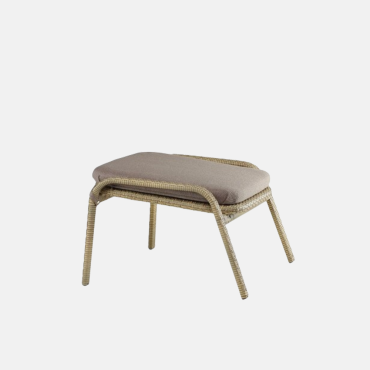
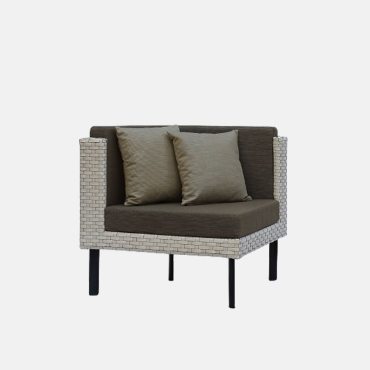
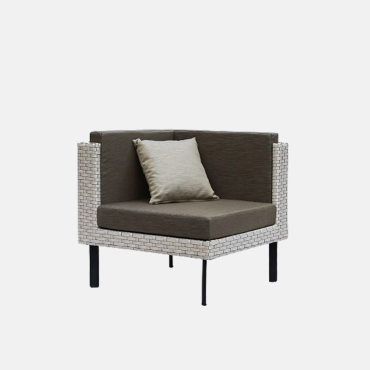
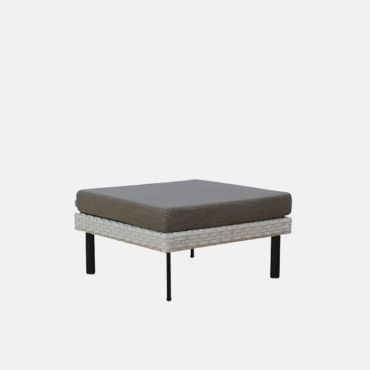
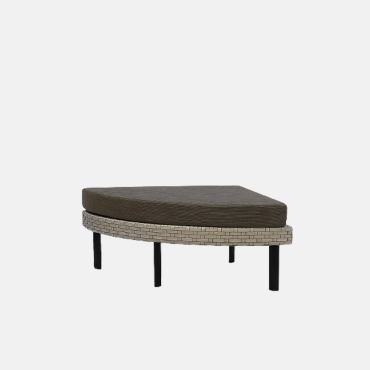
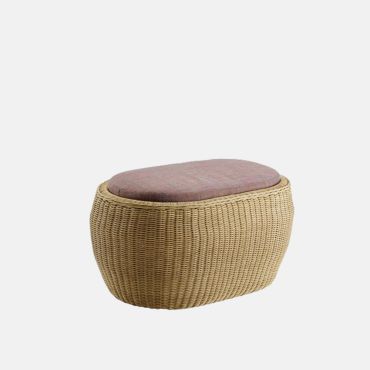
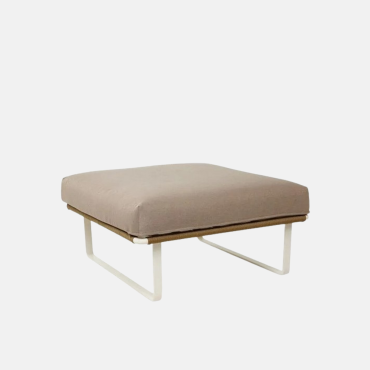
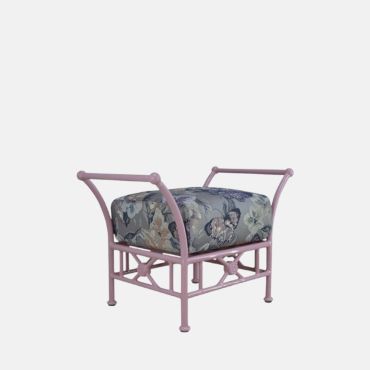
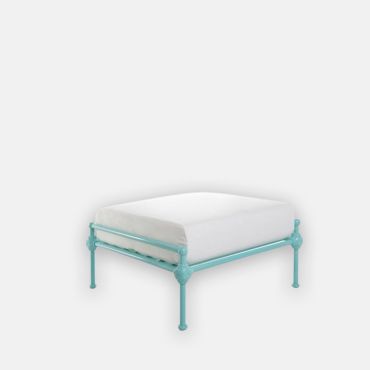
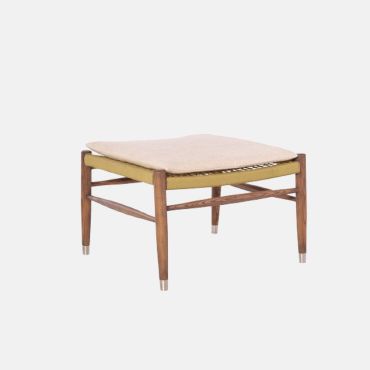
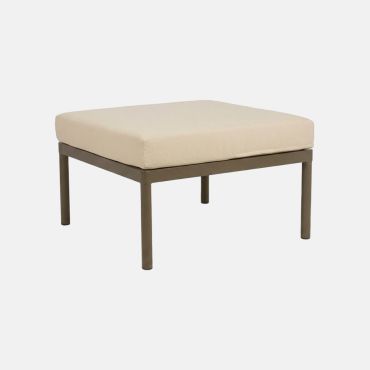
OUTDOOR POUFS: HOW TO CHOOSE, WHERE TO PLACE THEM, AND WHY MATERIAL MATTERS
Outdoor poufs are pieces that either naturally complement an open-air space or become a problem after the very first season. In practice, we see that most mistakes when choosing them are not about taste, but about a lack of understanding of how different materials behave outdoors. Outdoor poufs are not the same as regular poufs moved onto a terrace. They are a separate category of products with their own requirements for construction, filling, and covering.
In this article, we cover everything: from types and materials to how an outdoor pouf fits into different styles — from minimalism to eclectic interiors. We also explain what to look for before buying and which mistakes are better to avoid from the start.
WHAT ARE OUTDOOR POUFS AND WHO ARE THEY FOR?
An outdoor pouf is a soft or semi-soft furniture element designed for outdoor use. Terraces, balconies, gardens, poolside lounge areas, and verandas are the main spaces where outdoor poufs make sense. But there is an important nuance: not every space has the same requirements. A covered balcony and an open garden area are completely different conditions for the material and construction.
Outdoor poufs are ideal for those who want a flexible lounge area without fixed furniture. They are easy to move, store seasonally, or use as extra seating when hosting guests. For those furnishing a terrace or garden, an outdoor pouf often becomes the first purchase — because it immediately changes the feel of the space without requiring a large investment or complicated layout.
TYPES OF OUTDOOR POUFS: HOW THEY DIFFER IN PRACTICE
Before choosing a specific model, it is worth understanding what construction you actually need. We divide outdoor poufs into several main types and explain the differences not only visually, but also in everyday use.
POUFS WITH FILLING
This is the classic format. Inside, there is polystyrene filling, EPS beads, memory foam, or a combination of these materials. Poufs with EPS beads are lighter, regain their shape faster, and are less sensitive to temperature changes. Memory foam is more comfortable, but heavier and slower to dry after moisture exposure.
For outdoor use, we recommend paying attention to models with a double cover: the outer one should be water-repellent, while the inner one protects the filling even if the top layer gets wet. This is especially important for areas without a roof.
INFLATABLE OUTDOOR POUFS
Inflatable models are lightweight, compact to store, and naturally resistant to moisture. They do not have traditional filling and keep their shape thanks to air pressure. The downside is that they are less stable on uneven surfaces and not as comfortable for long sitting.
They work well for temporary lounge areas, camping, or situations where storage is a priority. For permanent placement on a terrace, we would choose something with filling.
OUTDOOR BEAN BAG POUFS
Outdoor versions of bean bag poufs have a larger volume and a more relaxed seating position. They are designed for laid-back rest in a semi-reclined or horizontal position. Important: the outer fabric of such poufs must have UV protection — otherwise, it may fade after just one season.
OUTDOOR OTTOMAN POUFS
These have a more compact and firmer construction. They are mainly used as footrests for garden chairs or as additional seating. They often have a flat surface and a square or rectangular shape. Some models come with an opening lid and can be used as storage boxes for garden accessories.
MATERIALS FOR OUTDOOR POUFS: WHAT LASTS AND WHAT DETERIORATES
This is the most important question when choosing an outdoor pouf. We studied how different materials behave during seasonal outdoor use, and here is what you should know.
FABRICS FOR OUTDOOR POUFS
Oxford fabric is one of the most common outdoor fabrics. It has a dense weave, water-repellent treatment, and an accessible price. It can withstand moderate moisture, but with prolonged contact with water, it will still get wet. It is a good option for covered terraces.
Textilene is a synthetic mesh fabric based on PVC and polyester. It does not absorb water, does not rot, is UV-resistant, and hardly fades. We consider it one of the most functional options for open garden areas.
Dralon and acrylic fabrics are soft to the touch and can preserve their color for 3–5 seasons with regular sun exposure. They are more expensive, but look better than standard synthetic alternatives.
Faux leather is not recommended for outdoor use. It cracks from temperature changes and deteriorates from moisture much faster than indoors.
FILLINGS
For outdoor use, the optimal choice is closed-cell polystyrene or moisture-resistant foam. Open-cell foam absorbs water and takes a long time to dry, which may lead to mold.
HOW TO CHOOSE AN OUTDOOR POUF: SIZE, SHAPE, COLOR
We recommend focusing on three parameters that determine the right choice in 90% of cases.
SIZE AND HEIGHT
The standard height of an outdoor pouf is 35–45 cm. This is comfortable for adult seating. For children or for use as a footrest, models of 25–30 cm are suitable. If the pouf is intended as the main seat without a backrest, a height of 40–45 cm reduces pressure on the lower back.
In terms of diameter or width: compact poufs range from 50 to 65 cm, medium ones from 70 to 80 cm, and large bean bag models from 90 cm and above. For a small terrace, we recommend not choosing a pouf wider than 70 cm, as it may dominate the space.
SHAPE
A round shape is the most versatile: it does not conflict with other furniture, fits well in corners, and is easy to move. Square or rectangular shapes are more structured and work better in areas with a clear layout. Shapeless bean bags are best suited only for relaxed lounge zones without strict arrangement.
COLOR
In practice, darker colors work better outdoors: anthracite, deep blue, and dark green show dirt less and look more natural in outdoor surroundings. Light tones — beige, white, cream — require more frequent care and are more vulnerable to stains from grass, sand, and food. If you want an accent, choose a rich but not overly bright shade: terracotta, mustard, or olive.
OUTDOOR POUFS IN DIFFERENT STYLES: WHAT WORKS AND WHAT DOESN’T
Each style has its own logic when it comes to choosing shape, material, and color. Here is how outdoor poufs work in different design directions.
MINIMALISM
In a minimalist space, an outdoor pouf should be discreet in the best sense. Monochrome colors — gray, black, dark blue, or white — work best. The shape should be round or square with clean contours, no decoration, and no unnecessary lines. The fabric should be smooth, matte, and without strong texture. Bean bag poufs usually do not work here, as they bring too much visual chaos.
SCANDINAVIAN STYLE
The Scandinavian approach is about natural colors, simple shapes, and natural-looking materials. An outdoor pouf in this style looks good in shades of oat, sand, dusty blue, or warm gray. Textured fabrics — matting or woven textures — work better than smooth synthetics. The shape should be round or slightly elongated.
LOFT
Outdoor loft style usually combines concrete, metal, and wood. An outdoor pouf looks best here in dark shades: anthracite, rusty brown, or black. The material should be dense synthetic fabric or faux leather, but only if the space is covered. The shape should be cubic or massive and round, without overly soft lines.
CONTEMPORARY STYLE
Contemporary style allows more variation. Both monochrome solutions and accent colors can work here. The shape can be unconventional — elongated, asymmetrical, or modular. The main thing is that the pouf should not look accidental, but part of a well-thought-out arrangement.
JAPANDI
Japandi is a blend of Japanese restraint and Scandinavian simplicity. Poufs in earthy shades work well here: sand, charcoal, misty gray, and clay. The shape should be calm, rounded, and without unnecessary details. Fabric with a natural texture — linen or cotton-like weaving — creates the right feeling, but for outdoor use it still needs moisture-resistant treatment.
MID-CENTURY MODERN
This style loves geometry and warm shades: mustard, terracotta, deep green, and cognac. A mid-century outdoor pouf usually has a rounded or slightly conical shape with clear proportions. If the construction includes legs, they should be wooden or metal with a clean, minimal profile.
ECLECTIC STYLE
Eclecticism is the one style where the rules are the most flexible. Mixing textures, colors, and shapes is acceptable here. But even in eclectic interiors, an outdoor pouf should have some internal connection with the space — a shared material, repeated shade, or shape that echoes another object.
SOFT CONTEMPORARY INTERIOR
Soft contemporary style is about volume, warm neutral colors, and tactile materials. For outdoor spaces, large rounded poufs in shades of beige, cream, or warm gray work well. The fabric should look soft even from a distance — matting, soft velvet for covered terraces, or textured acrylic.
WHERE TO PLACE OUTDOOR POUFS: SMALL AND LARGE SPACES
SMALL TERRACE OR BALCONY
Here, we recommend choosing one or two compact poufs with a diameter of up to 65 cm instead of full-size garden chairs. This frees up space for movement and prevents the area from feeling overloaded. If you already have a folding rocking chair or a sun lounger, an outdoor pouf can work as a footrest or as an extra seat for a guest.
LARGE GARDEN OR OPEN AREA
In large spaces, outdoor poufs work best in groups. Two or three poufs around a low table can be an alternative to a garden sofa. Another option is to create several small rest points across the area: one pouf under a tree, two near a barbecue zone.
For large areas, we recommend combining poufs of different sizes: a larger one as the main seat and a smaller one as a footrest or a place for a child.
WHAT TO CHECK BEFORE BUYING
In practice, we see that buyers rarely clarify these parameters — and later regret it.
UV protection. Check whether the fabric is treated against fading. Without this, a bright color may become dull after just one summer.
Drainage hole. If the pouf stands outdoors, drainage allows water to escape instead of collecting inside.
Removable cover. This is critical for care. A cover that cannot be removed is almost impossible to clean properly after a season.
Antibacterial treatment of the filling. This is especially important if the pouf is placed in a humid area — near a pool or in a garden with heavy morning dew.
Weight. If the pouf needs to be moved often or stored away for winter, choose lightweight models up to 3–4 kg.
COMMON MISTAKES WHEN CHOOSING OUTDOOR POUFS
Mistake 1: Using a regular pouf “for outdoor use.” Standard fabric and filling are not designed for humidity and temperature changes. Even one rainy season can permanently damage such a pouf.
Mistake 2: Ignoring placement conditions. A covered balcony and an open area are different environments. For covered spaces, water-repellent fabric may be enough. For open areas, full water resistance and drainage are needed.
Mistake 3: Choosing a color that is too bright. Bright colors fade first. If you want richness, choose a shade with more dark pigment: emerald, muted orange, or burgundy.
Mistake 4: Not considering maintenance. Outdoor poufs need seasonal cleaning. If the cover is not removable, care is reduced to wiping, and accumulated dirt and moisture gradually damage the material from the inside.
Mistake 5: Buying a pouf that is too large for a small space. A large pouf on a small terrace limits movement and visually “eats up” the space.
HOW TO CARE FOR OUTDOOR POUFS
Proper care extends the service life by several seasons. We recommend following a few simple rules.
For winter. Store poufs indoors or in waterproof covers. Even if the material is described as winter-resistant, prolonged contact with frost and moisture reduces the lifespan of the fabric and filling.
After rain. Do not leave a wet pouf in a closed or covered position. Let it dry in the open air before storing or covering it.
Stains. Most outdoor fabrics can be cleaned with a mild soap solution and warm water. Do not use aggressive cleaning products — they damage the treatment and discolor the fabric.
Cover. Remove and wash the cover at least once per season — at the end of summer or early autumn, before storage.
WHEN TO CHOOSE A DESIGNER OR CUSTOM OUTDOOR POUF
Mass-market outdoor poufs solve the basic task: they provide seating in an outdoor space. But there are situations where a standard solution is not enough.
Non-standard size or shape of the space. If the terrace has an unusual configuration — angular, narrow, or with niches — a standard model may simply not fit. A designer or custom-made pouf solves this issue.
Complete lounge area design. If all outdoor furniture is selected according to one concept — material, color, and proportions — the outdoor pouf should be part of this system, not an item added later.
Durability as a priority. Designer pieces usually use higher-quality materials and have better seam and fastening construction. This becomes especially noticeable by the second or third season, when a mass-market pouf may start losing its shape and color.
THE PRACTICAL VALUE OF A QUALITY OUTDOOR POUF
A quality outdoor pouf is not about status or design for the sake of design. It is about withstanding real use: children’s games, gatherings with guests, rain, heat, and frequent moving.
In practice, we see that cheap “one-season” poufs are usually replaced after one or two years. A quality product lasts five or more seasons with proper care. If you calculate the cost per year, the price difference no longer seems significant. And one more point: a good outdoor pouf not only lasts longer — it also looks different in the space. The material holds its shape, the color does not fade, and the silhouette remains clear even after several seasons.
WHY BUY OUTDOOR POUFS FROM MAIIMO
MAIIMO is a platform that brings together products from Ukrainian design studios, craft brands, and young makers. The outdoor poufs in our selection are not mass-market items from a generic catalog. Each piece has an author, selected material, and a clear construction logic.
We focus on manufacturers who consciously approach the choice of fabrics and fillings. This means that the stated characteristics match reality. If UV resistance is claimed, we check that it is truly present and not just a marketing label. Supporting Ukrainian manufacturers is also part of our approach. When you buy an outdoor pouf from MAIIMO, your money stays in the Ukrainian economy and supports studios that continue to develop despite difficult conditions.
If you are not sure which outdoor pouf will suit your space, we help with selection. The MAIIMO team advises on size, material, and stylistic compatibility. For those furnishing a terrace or garden as a complete project, we offer furniture selection within a unified concept — from poufs to lighting and decor.
Outdoor poufs in our catalog are pieces we would place on our own terrace. This selection logic is simple and does not change.
10 FAQ
CAN YOU LEAVE AN OUTDOOR POUF OUTSIDE IN THE RAIN?
It depends on the material. If the fabric is water-resistant, such as Textilene or PVC-coated fabric, and the filling has a drainage hole, a short rain will not damage the pouf. However, even in this case, prolonged soaking and trapped moisture inside will speed up wear.
We recommend covering poufs with a waterproof cover during long periods of rain and always allowing them to dry after rainfall before storing or covering them. This can extend the service life by several seasons.
WHICH FILLING IS BETTER FOR AN OUTDOOR POUF — EPS BEADS OR FOAM?
For outdoor use, EPS beads are the more practical option. They do not absorb water, dry quickly, do not develop mold, and are lighter in weight. Foam is more comfortable for sitting, but if it gets wet, it absorbs water and stays damp inside for a long time.
If the pouf is placed under a canopy or in a covered area, foam is acceptable. For open areas and poolside zones, we recommend choosing EPS beads or moisture-resistant closed-cell foam.
HOW DO YOU KNOW IF THE FABRIC OF AN OUTDOOR POUF IS UV-RESISTANT?
Look for UPF marking or information about an acrylic or polyester base with UV protection. Fabrics such as Dralon or Sunbrella have documented protection, and manufacturers usually specify how many seasons the fabric can last without significant fading.
If there is no such information, ask the seller. A vague answer like “suitable for outdoor use” without details is a reason to choose another model. Without UV protection, even dark fabric can lose its richness after one summer season under intense sun.
HOW LONG DOES AN OUTDOOR POUF LAST WITH NORMAL CARE?
A quality outdoor pouf made from suitable materials can last from three to six seasons with proper storage and basic care. Mass-market models with unprotected fabrics and regular foam usually last one or two seasons before visible deterioration.
The key factors are winter storage indoors or under a cover, regular cover cleaning, and avoiding prolonged contact with water. Poufs left outdoors all year round without protection deteriorate 2–3 times faster.
HOW DO YOU CLEAN AN OUTDOOR POUF FROM DIRT?
Most outdoor fabrics can be cleaned with a mild solution of neutral soap and water, using a soft brush or sponge. Rub the stain in circular motions, rinse with clean water, and let the pouf dry in the open air. Do not leave the product wet in a closed position.
A removable cover can be washed by hand or in a washing machine on a delicate cycle at up to 30°C. Always check the care label — some acrylic and PVC fabrics are not suitable for machine washing. After washing, dry the cover outdoors, not in a dryer.
IS AN OUTDOOR POUF SUITABLE FOR CHILDREN?
Yes, but with a few considerations. First, height matters: for children, models of 25–35 cm are better, so the child can sit down and stand up comfortably. Second, stability: round shapes are less stable than square ones. Large bean bag poufs are usually more stable.
Third, material: for active children’s areas, choose dark colors and easy-clean fabrics. Dirt, juice, and grass stains are part of the normal context. PVC fabrics and Textilene are the easiest to clean.
WHAT SIZE OUTDOOR POUF SHOULD YOU CHOOSE FOR A 6 SQ. M TERRACE?
For a 6 sq. m terrace, we recommend a pouf with a diameter of 55–65 cm or a square model of 60×60 cm. This leaves enough space for movement and does not overload the area. If you want two poufs, choose two models of 50–55 cm each, not larger.
Avoid large bean bag poufs from 90 cm and above on small terraces — they restrict movement and visually “close” the space. If the terrace is narrow and elongated, consider an ottoman-style pouf, as it takes up less width.
HOW DO YOU COMBINE OUTDOOR POUFS WITH GARDEN FURNITURE?
Focus on two parameters: color and material. If the garden furniture is metal or wood, choose a pouf in a neutral or contrasting tone to the main furniture color. If the furniture is rattan or woven, poufs in natural shades work well: sand, beige, or warm gray.
Do not try to make everything the same color — it often looks artificial. A shared material or repeated shade in details such as cushions, planters, or an outdoor rug is enough for visual unity.
DO OUTDOOR POUFS NEED LEGS?
Legs protect the bottom from direct contact with the floor and improve ventilation. This is especially important on stone and concrete surfaces, where moisture tends to accumulate. If the pouf stands on a wooden deck or raised platform, legs are less critical.
However, most outdoor poufs do not have legs — this is part of their construction logic. In this case, we recommend placing the pouf on an outdoor rug or rubber pads so that the bottom does not rest directly on a damp surface.
CAN YOU STORE AN OUTDOOR POUF OUTSIDE IN WINTER?
Technically, some materials can withstand this. But we do not recommend it. Even the most durable fabrics degrade during long cycles of freezing and thawing. The filling may also absorb moisture during temperature changes.
The best option is to store the pouf in a dry indoor space or in a dense waterproof cover with ventilation. If indoor storage is not possible, choose a place with minimal exposure to precipitation and remove the cover for ventilation several times during winter.