Wool Runner Rugs
Wool runner rugs bring natural texture, warmth, and a clear sense of rhythm to hallways, entryways, and other narrow spaces. Explore Ukrainian designs in calm neutrals, graphic stripes, and expressive patterns, with sizes suited to different layouts. Choose a runner that works with your doors, walking path, and interior—not one that simply fills the floor.
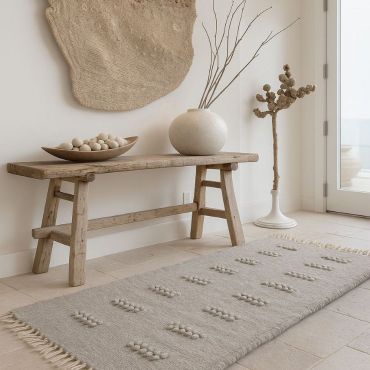
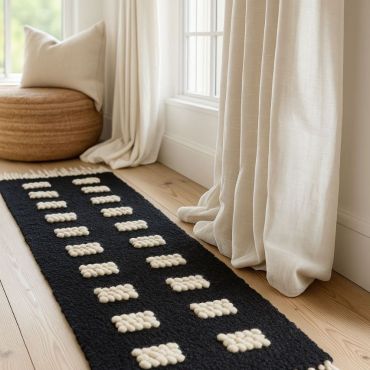
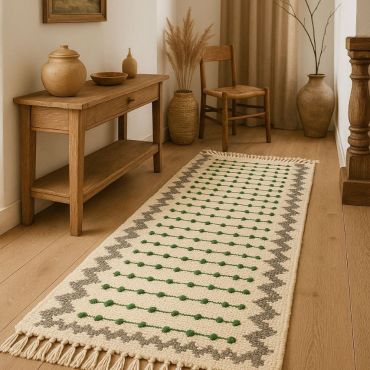
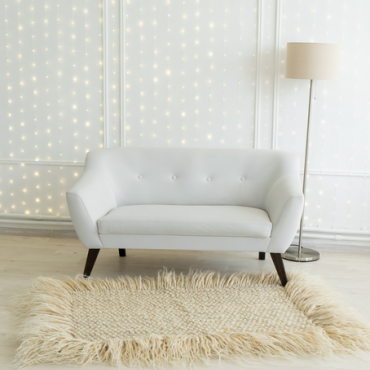
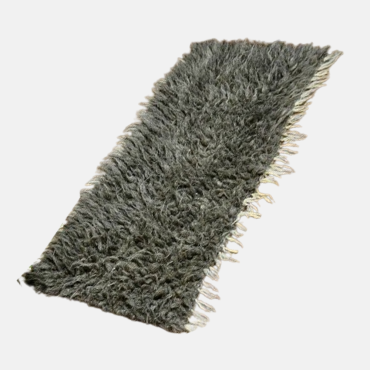
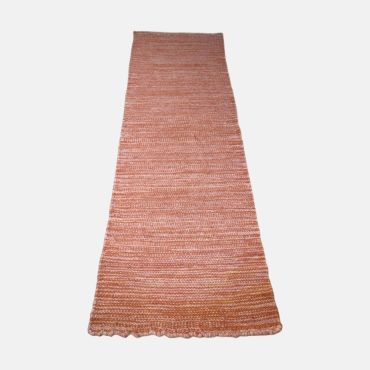
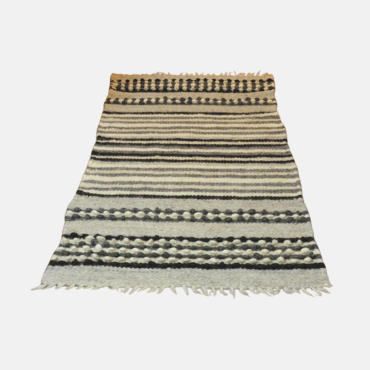
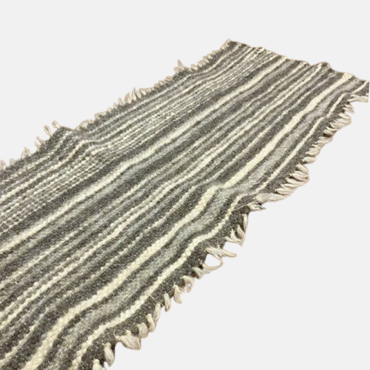
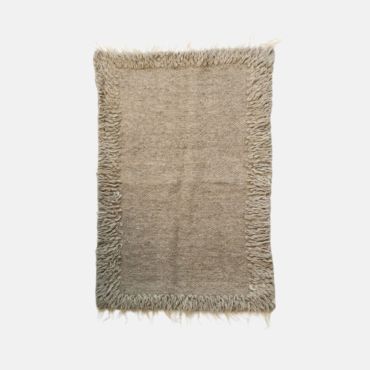
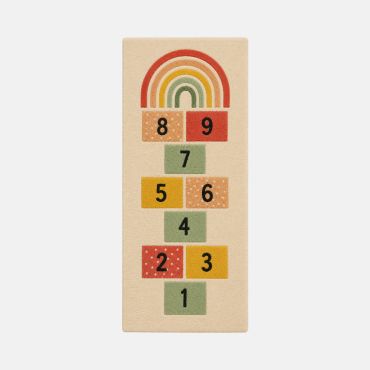
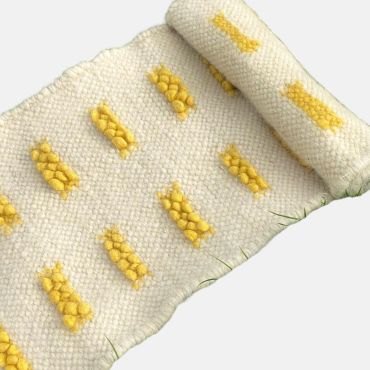
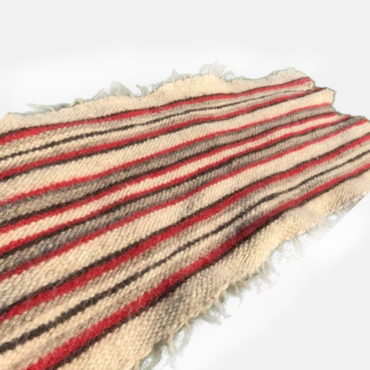
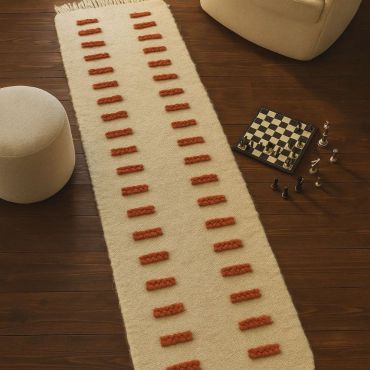
Wool Runner Rugs for Hallways
A hallway rarely gets treated as a room in its own right. It is the route between rooms, the place where shoes land, and the first glimpse of home after the door opens. Yet one well-chosen wool runner rug can change the whole sequence. It softens footsteps, adds color at floor level, and gives a long, narrow space a visual center without asking for extra furniture.
The shape does much of the work. Wool runner rugs follow the direction of movement, so they feel natural in corridors, entryways, walk-through closets, and beside a bed. Their proportions can make a short hall feel more composed or lead the eye through a long passage. The effect is quiet but immediate: less empty flooring, more texture, and a clearer connection between adjoining rooms.
Choosing the right runner takes more than matching a color. Width, length, pile, door clearance, floor finish, and daily traffic all matter. A beautiful piece that catches beneath a door or drifts across a smooth floor will become irritating fast. This guide focuses on the decisions that make wool runners for hallways look deliberate and work comfortably in everyday life.
Why Wool Works in Hallways and Entryways
Wool has a surface that reads as warm even in a restrained interior. Its fibers catch light differently across the weave, giving a natural wool runner rug more depth than a flat field of color on the floor. That subtle variation is useful in a hallway, where there may be little room for art, shelving, or large decorative objects.
A runner also changes the acoustics of a passage. Hard floors reflect footsteps and voices; a textile surface absorbs some of that sharpness. It will not soundproof a corridor, but a wool hallway runner can make the route between rooms feel calmer, especially where wood, tile, glass, and painted walls dominate the space.
Wool is often chosen for busy areas because a well-made rug can handle regular use, but construction matters as much as fiber. A dense weave behaves differently from a loose, high surface. Fringe, loops, and raised details may also respond differently to shoes, pets, or a vacuum head. Read the specifications for the individual wool runner rug for a hallway, then judge it against the way your household actually moves.
Wool comes with a few practical trade-offs. A new rug may release loose fibers, spills need prompt attention, and some pieces should stay well away from damp zones or a washing machine. Pale colors also show street dust sooner than mid-tone patterns. None of this disqualifies a wool rug runner. It simply tells you what to check before buying and which care instructions you will need to follow.
How to Choose the Right Wool Hallway Runner
Start with the architecture. Measure the usable floor, locate every door swing, and notice where the walking line naturally falls before the product photography pulls you toward a favorite. Then decide whether the wool hallway runner rug should define the entire passage or create a shorter island of texture. Let the hall set the answer.
Measure Width, Length, and Exposed Floor
Measure the hallway at several points because walls are not always perfectly parallel, particularly in older homes. Record the narrowest width and any pinch points created by radiators, trim, cabinets, or open doors. A wool runner rug for a hallway needs enough breathing room to look intentional and enough clearance to stay away from obstacles.
Visible floor along both sides helps frame the runner. Equal margins usually create a calm, centered look, while a deliberately offset placement can work beside built-in storage. A fixed border measurement will not suit every hall. Step back and check whether the wool hallway runner looks squeezed between the walls or seems to float without a relationship to the space.
Length deserves the same care. Mark the beginning and end with removable tape before buying. Walk the route, open each door, and look from both ends of the hall. This simple test shows whether a long wool runner rug supports the room’s proportions or interrupts a doorway, threshold, or turn. That small pause can save an awkward return.
If you are working from metric product dimensions, compare them with your measurements in the same unit rather than estimating from feet. The current MAIIMO selection includes several compact and elongated formats, so check the exact option on each product card. Never assume that every wool runner rug comes in every listed category size.
Check Door Clearance and Pile Height
Door clearance is easy to forget because an empty floor gives no warning. Open the door through its full arc and measure the smallest gap beneath it. Include a rug pad in the total height. A thick wool runner rug may feel generous underfoot, but it is the wrong choice if the door brushes, folds, or pushes the edge every time it moves.
Low and medium profiles tend to be easier in busy passageways, though the construction of the individual rug still matters. A surface with pronounced loops or fringe can need different handling from a flatter weave. When comparing wool carpet runners for hallways, look beyond the word “wool” and check the listed thickness, edge finish, and recommended care.
Think about what crosses the runner. Shoes, wheels, pet claws, a robot vacuum, and a frequently moved bench all create different demands. A wool rug runner for a quiet bedroom corridor can prioritize softness, while an entry route may benefit from a firmer surface and a pattern that does not magnify every speck between cleanings.
Use a Rug Pad on Smooth Floors
A narrow rug has less mass than a large area rug, so movement is more noticeable. On wood, tile, stone, or laminate, a suitable pad can help a wool hallway runner stay in position. Choose one made for both the floor finish and the rug construction; some backing materials can mark or react with particular surfaces.
The pad should sit inside the rug edges rather than showing around them. It also needs to be thin enough to preserve door clearance. Tape may seem like a quick fix, but adhesive can leave residue on flooring or fibers. For a wool runner rug, the safer approach is a correctly sized pad that the flooring and rug-care instructions permit.
Recheck the runner after the first days of use. If an edge curls, the pad shifts, or the rug creeps toward a wall, solve the cause before someone trips. Good styling should survive ordinary movement. A secure wool rug runner for a hallway feels like part of the room rather than an object that needs constant correction.
Patterns and Colors for Narrow Spaces
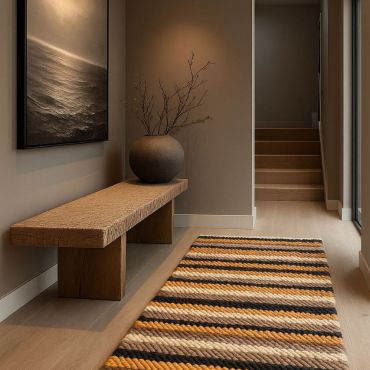
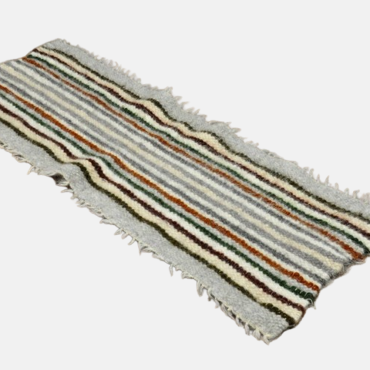
A hallway gives pattern a strong stage because the view is naturally compressed. Stripes can reinforce length, while repeated geometric motifs introduce rhythm between doors. A striped wool runner rug does not have to be loud: close tonal changes can create movement without taking over the adjoining rooms.
Color behaves differently at floor level. Dark or mid-tone designs can visually anchor a bright corridor, while pale wool keeps the atmosphere soft and open. A blue wool runner rug can connect cool gray walls, warm timber, or small blue accents elsewhere, but choose it only when the available product and the room truly support that palette.
Black-and-white pattern offers sharper contrast and makes the floor part of the architecture. If that direction suits the space, compare the runner with MAIIMO’s black-and-white rugs before settling on scale. A bold modern wool runner rug works best when its pattern has room to repeat rather than disappearing beneath furniture or doorways.
You do not have to match every neighboring color. One relationship is enough: the warmth of the wood, a tone in the wall art, the metal of a console, or the upholstery visible from the hall. The most convincing modern wool runner rugs join the interior without turning into a sample card of everything around them.
Handmade Wool Runner Rugs from Ukraine
Ukrainian textile design moves comfortably between graphic restraint and expressive color. In a narrow format, that range feels especially clear: a runner can carry bold stripes, irregular geometry, soft neutrals, or a tactile surface without overwhelming the room. MAIIMO brings these wool runner rugs together as functional objects with a distinct design point of view.
Use construction terms carefully when comparing products. “Handmade,” “handwoven,” and “hand-knotted” describe different processes and should appear only when the individual listing confirms them. A handmade wool runner rug should be chosen for its verified material, dimensions, finish, and method—not for a romantic label applied to the whole category.
If you want a broader view of Ukrainian wool traditions and larger formats, explore MAIIMO’s Ukrainian wool rugs. Lizhnyky and wool hallway runner rugs can share material warmth, but their proportions and intended placement differ. Keeping those roles clear helps each textile look at home rather than forced into the wrong space.
Wool Runner Rugs for Long and Unusual Hallways
A long corridor does not automatically need a runner from wall to wall. Sometimes a shorter wool hallway runner placed within the clearest stretch gives the architecture a needed pause. In other spaces, a longer piece creates continuity and prevents the floor from feeling visually chopped into sections.
For a very long hall, compare one continuous runner with two smaller pieces. One creates a strong unbroken line. Two can respect a doorway, turn, stair landing, or change in floor level. If you use multiple wool runners for hallways, keep a deliberate relationship between their widths, colors, or pattern language so the result feels composed.
L-shaped and irregular passages need an especially practical plan. Do not fold a straight runner around a corner. Treat each leg as its own zone, leave a clear break at the turn, and check the sightline from adjoining rooms. A pair of related wool runner rugs can guide movement more naturally than one piece placed against the geometry.
Entry halls often combine several functions: shoes, storage, a mirror, seating, and the path into the home. Plan the rug alongside your hallway furniture, not after everything else is fixed. A wool runner rug for an entryway should allow cabinet doors to open and leave practical space where wet footwear is handled.
Connect the Hallway with the Rooms Around It
A hallway is usually seen in pieces: through an open living-room door, from the foot of a staircase, or in the reflection of an entry mirror. Check those views before choosing a modern wool runner rug. A design that feels modest when seen straight on may become the strongest pattern in the room when it appears between two quiet doorframes.
Connection does not require a perfect color match. Repeating the temperature of a wood floor, the weight of a black metal detail, or one muted shade from an adjoining room is often enough. Let the wool hallway runner have its own identity while giving the eye one recognizable thread to follow. The interior will feel related rather than coordinated by formula.
Open-plan homes need a little more restraint because several textiles may be visible at once. If a living-room rug already carries a large pattern, a quieter natural wool runner rug can create a visual pause. If the main room is minimal, the hallway can take more color or rhythm. Compare both rugs from the shared sightline; judging them separately misses the way they will actually live together.
Floor transitions matter too. A runner placed across a change from wood to tile can make the boundary feel busy, while ending it just before the transition often looks cleaner. When the same flooring continues through several rooms, a long wool runner rug can give the passage a clearer beginning and end. Use the architecture that is already there instead of asking the textile to correct every line.
Common Mistakes to Avoid Before Ordering
The most common mistake is measuring the room once and treating that number as the available rug size. Baseboards, door casing, a slightly narrowing wall, or a cabinet handle can take away usable space. Measure the actual route at several points before selecting wool rug runners for hallways. A few minutes with a tape measure is far easier than negotiating a rug that almost fits.
Another mistake is choosing by softness alone. A sample that feels wonderful under your hand may sit higher than a door allows or hold more visible debris in an entry route. Texture matters, but the best wool runner rug balances touch with movement, cleaning, and clearance. Look at how the household uses the hall on an ordinary weekday, not only at how you want the finished photograph to look.
Scale can also go wrong. A tiny motif may blur into visual noise along a long corridor, while an oversized pattern may never complete a readable repeat in a short one. View the full dimensions of a striped wool runner rug or geometric design, not just a close-up of its weave. Product photography should help you understand the surface, but the listed size tells you how much of the composition will reach your floor.
Do not assume that every wool rug is hand-knotted, washable, low-pile, or suitable for an uncovered entrance. Those words describe specific products, not the whole category. If you are looking for hand-knotted wool runner rugs, verify the construction on the individual card. The same rule applies to fiber content, backing, custom sizing, and care. Precise expectations make it easier to recognize the right piece.
Finally, do not leave the pad decision until after delivery. Its material and thickness affect grip, total height, and sometimes floor compatibility. Choose it as part of the wool hallway runner rug setup and include it in your clearance calculations. The rug, pad, floor, and doors work as one small system; treating them that way prevents most everyday frustrations.
How to Care for a Wool Runner Rug
Begin with the care label or product instructions. Wool rugs vary in construction, dye, backing, and finish, so one cleaning method cannot safely cover every design. For routine upkeep, a wool runner rug usually benefits from gentle, regular attention rather than waiting until dirt is deeply worked into the surface.
Remove surface dust with a vacuum setting appropriate for the rug. Avoid aggressive brush action if the instructions warn against it, and take care around fringe, raised loops, or textured edges. Vacuum both the walking line and the less-used sides of a wool hallway runner rug; dirt rarely distributes itself evenly.
Blot a spill promptly with a clean, absorbent cloth. Rubbing can spread the liquid and disturb the fibers. Before using any cleaning product, test it in an inconspicuous area and confirm that it is suitable for wool and the rug’s dyes. If the stain is persistent or the natural wool runner rug needs a full clean, use a specialist familiar with wool textiles.
Rotate the runner from time to time when the shape and room allow it. This can balance exposure to foot traffic and daylight. Rotation will not erase wear, and it may not suit an asymmetrical design, but it is a simple habit for many wool rug runners for hallways.
Loose surface fibers can appear on some new wool rugs. Handle them according to the product guidance rather than pulling at the weave. Also check the pad and floor beneath the rug during cleaning. A cared-for wool runner rug includes the hidden layers: clean flooring, a flat pad, and edges that remain secure.
Why Choose Wool Runner Rugs at MAIIMO
A hallway is part of the interior, even if it is easy to overlook. MAIIMO brings Ukrainian design into a format that earns its place every day: you walk over it, see it from several rooms, and feel its texture underfoot. These wool runner rugs suit homes where practical details and visual character belong in the same conversation.
Before comparing designs, make a short brief for your own space. Note the maximum dimensions, the lowest door clearance, the floor material, and the kind of traffic the hallway receives. Add one visual preference—quiet texture, graphic stripe, warm neutral, or stronger color. This gives you a useful filter for modern wool runner rugs and prevents a striking but unsuitable option from winning simply because it looked good in isolation.
Use the product filters and individual cards to compare exact dimensions, color, material information, and available options. If a runner is close but the layout is difficult, measure the space and ask for help before ordering. Choosing a wool hallway runner is much easier with a clear floor plan than with a guess based on a styled photograph.
Keep screenshots or samples of the nearby finishes when you compare color. Phone screens can shift tone, and natural fibers can look different as light moves across the surface, so leave room for subtle variation. Check the product in morning and evening light if samples are available. With a wool runner rug, texture is part of the color story. The goal is a convincing relationship with the room, not a laboratory-perfect match that disappears as soon as the light changes.
You can also browse the wider collection of designer rugs when the room needs a different proportion or shape. Take your time with the final comparison. Choose a wool runner rug that fits the route, works with daily life, and gives the hallway enough character to feel like a real part of the home.
Wool Runner Rug FAQ
Are wool runner rugs good for high-traffic hallways?
Wool runner rugs can work well in high-traffic hallways when their construction, pile, and care requirements match the household. Check the individual product rather than relying on fiber alone. A dense or flatter surface may be easier where shoes, pets, or frequent cleaning are part of daily life, while a more textured piece may suit a quieter passage. Use a compatible rug pad, deal with spills promptly, and follow the listed vacuuming instructions. No rug is maintenance-free, but a carefully selected wool runner can combine regular use with the warmth and depth people want from a natural textile.
What are the downsides of a wool runner rug?
A wool runner rug may release loose fibers when new, require quicker attention to spills, and need more specific cleaning than a machine-washable synthetic rug. Price can also be higher, depending on construction and design. Thick surfaces may interfere with low doors, while pale colors reveal entryway dirt sooner. None of these points applies equally to every product, so read the material and care details first. Wool is a good choice when you value natural texture and are comfortable giving the rug the care its particular weave and finish require.
What size wool runner rug should I choose for a hallway?
Choose a wool runner rug for a hallway only after measuring the narrowest width, usable length, door swings, thresholds, and fixed furniture. Mark the proposed outline on the floor with removable tape and walk around it. You should see intentional floor margins rather than a rug pressed against the walls. The runner can cover most of the passage or define a shorter zone; both solutions can look right. Compare your final measurements with the exact size on the product card, since category filters do not mean every design is available in every dimension.
How much floor should show around a hallway runner?
No single border measurement works for every wool hallway runner. The visible floor should frame the textile and keep it clear of trim, vents, radiators, and door hardware. Balanced side margins usually feel calm, but an offset layout can make sense beside built-in storage or a console. Judge the ends separately and leave enough space around a threshold or doorway. Taping the outline lets you see the proportion from both ends of the hall before you commit to a size.
Should a runner rug cover the full length of a hallway?
A long wool runner rug does not need to cover the full hallway. Full-length coverage creates continuity, while a shorter runner can define the clearest section and leave useful breaks at doors or turns. Look at where the passage visually begins and ends, not only at the wall-to-wall measurement. In a very long corridor, two related runners may work better than one oversized piece. Keep their width or design language consistent and leave a deliberate gap rather than placing them almost, but not quite, together.
Do I need a rug pad under a wool hallway runner?
A rug pad is often useful beneath a wool hallway runner rug on a smooth floor because a narrow textile can shift under repeated footsteps. The pad must be compatible with both the flooring and the rug, fit inside the edges, and remain thin enough for nearby doors. Check the floor manufacturer’s guidance if the finish is sensitive. A pad cannot correct a curled or damaged rug, so inspect the runner itself too. Avoid improvised adhesives unless the rug and flooring instructions specifically allow them.
What pile height works best for a hallway runner?
The best pile height for wool carpet runners for hallways depends on door clearance, traffic, cleaning habits, and the rug’s construction. A lower profile is often easier beneath doors and in routes that see frequent shoes or wheels. A thicker surface can feel softer but may catch a door or need more attention around edges and texture. Measure the available gap with the rug pad included. Then check the listed thickness for the exact model instead of judging from a photograph, where lighting can make pile look higher or flatter.
How do I clean and care for a wool runner rug?
Care for a wool runner rug according to its product instructions. Use an appropriate vacuum setting, work carefully around fringe or raised texture, and blot spills instead of rubbing. Test any wool-safe cleaner in a hidden area before treating a visible mark. Do not assume the rug is machine-washable. Rotate it when the design and room permit, and clean beneath the pad as well as on top. For a persistent stain or full cleaning, choose a professional who understands wool rugs and their dyes.
Should I use one long runner or several smaller rugs in a long hallway?
One long wool runner rug gives a straight hallway a strong continuous line. Several smaller rugs make more sense when doors, turns, landings, or changes in floor level break that line. If you use two, give each one a clear zone and repeat at least one visual element—width, palette, weave, or pattern family. Avoid tiny gaps that look accidental. Mark both layouts on the floor before ordering and walk through them from every adjoining room; the better option usually becomes obvious once you see the complete route.
Is a wool runner rug a good choice for an entryway?
A wool runner rug for an entryway can add warmth and pattern, but the placement should reflect how much moisture, grit, and outdoor dirt reaches the space. Leave a practical landing area for wet shoes if needed, and choose a color and surface you are prepared to maintain. Check door clearance and use a compatible pad on smooth flooring. If the entry is frequently damp, review the product guidance before choosing wool. A protected interior entry and an exposed exterior threshold place very different demands on a rug.