Swing chair
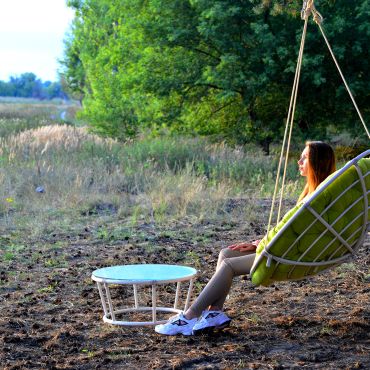
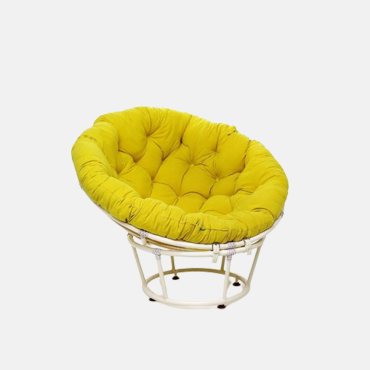
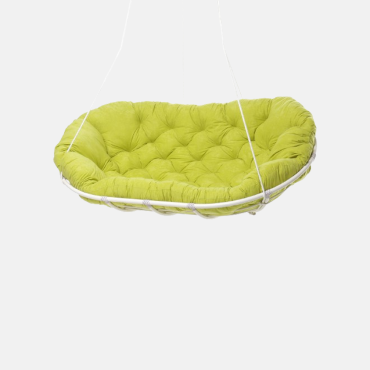
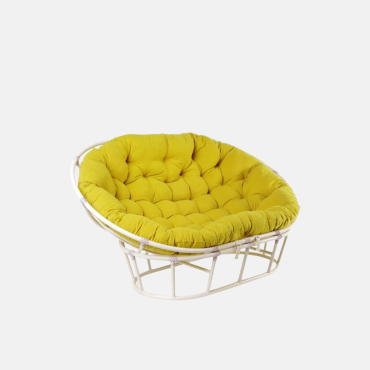
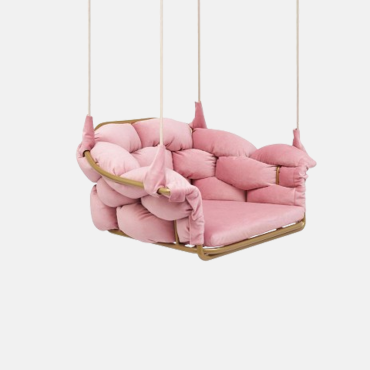
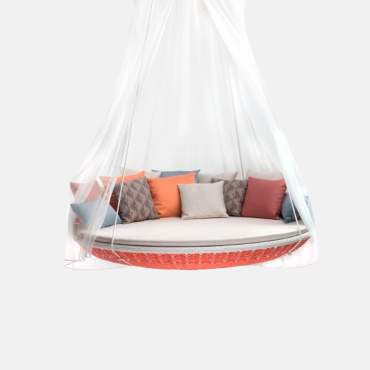
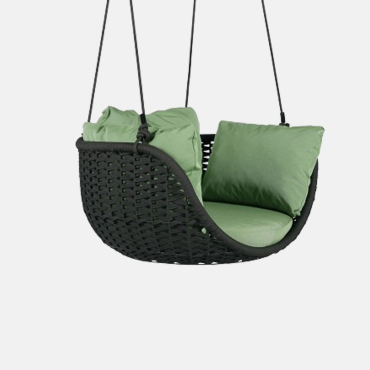
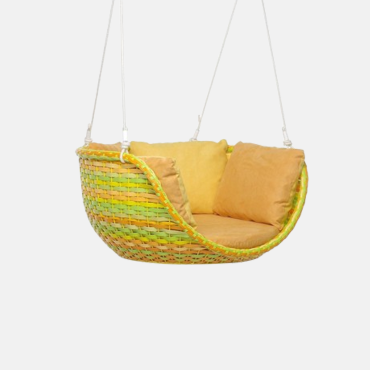
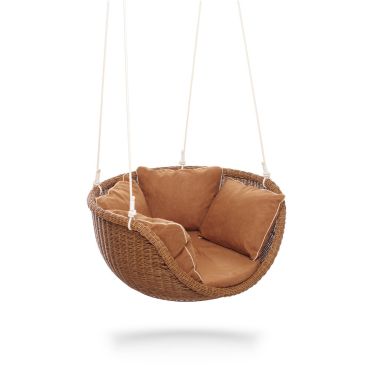
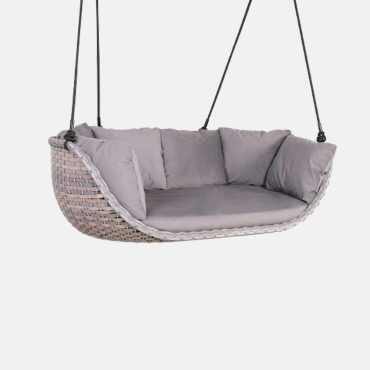
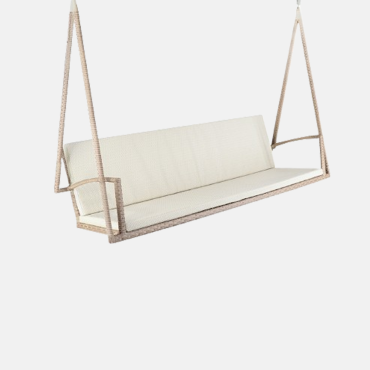
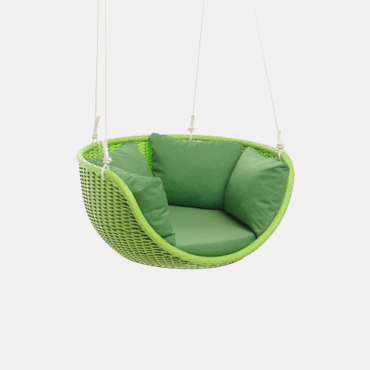
Garden swing chair: how to choose the right format, materials, and style for a terrace, balcony, and garden
A garden swing chair is no longer seen as a random seasonal item for a summer house. Today, it works as a full-fledged part of an outdoor space. We see this in real projects in private gardens, on urban terraces, in courtyards, and even on spacious balconies. This format combines several functions at once: it creates a place to pause, adds gentle movement, gives the composition more character, and helps make the space feel more alive. While a regular garden chair often serves a purely practical role, a garden swing chair creates a separate way of spending time outdoors.
We studied how people actually use this type of furniture, which formats turn out to be comfortable in everyday life, which materials handle outdoor conditions better, and where mistakes happen most often. In photos, almost all models look attractive. But in a real setting, the difference between a successful and an unsuccessful choice becomes obvious very quickly. It is not only about appearance and size. Seating position, stability, depth, textile quality, surrounding space, and compatibility with the architecture all matter.
In this article, we explain who a garden swing chair suits, what types of constructions exist, how to choose the right size, materials, color, and shape, how to integrate such a piece into different interior and exterior styles, and what to check before buying. We also look at when a designer solution makes sense, how to care for the piece, and why a quality model truly changes the way a space is used.
What a garden swing chair is and who it suits
A garden swing chair is a separate seat for open-air or semi-open spaces that uses suspended or swinging movement. Depending on the construction, it may be a hanging chair on a stand, a cocoon chair, an egg chair, or a model with a more open suspended form. Each format has its own logic of use. One works better for a short pause. Another is better for reading. A third serves as a visual accent in a lounge area.
This piece does not suit everyone in exactly the same way. We recommend considering it first of all if you want to create a dedicated place for calm rather than simply add one more seat. If you have a terrace, patio, garden, veranda, courtyard with a relaxation area, or a balcony of sufficient size, a swing chair can become one of the most frequently used items. It works well for a morning coffee ritual, an evening with a book, or a short daytime break between tasks.
In practice, garden swing chairs are often chosen for spaces where there is a need to soften visual rigidity. If the setting includes tile, concrete, metal railings, straight facade lines, or many sharp corners, the gentle movement and rounded silhouette of such a chair bring lightness into the composition. It also suits families who use their outdoor area regularly rather than occasionally. But in that case, it is especially important to look closely at stability, weight capacity, and the durability of materials.
What types of garden swing chairs exist
The most common format is a hanging chair on a separate stand. It is convenient where there is no possibility or desire to mount the construction to a ceiling or beam. This is a flexible solution for a terrace, garden, or balcony because such a chair can be moved to another part of the space, shifted into the shade, or placed under a canopy. For many people, it is the safest option in terms of installation. But this is also where the size of the base is often underestimated. The seat may seem compact while the stand takes up far more room than expected.
The second common type is the cocoon chair. It can be more closed or more open, oval, rounded, or elongated. This construction creates a sense of visual shelter. We see in practice that cocoons are often chosen for reading, quiet time alone, or building a cozy corner on a terrace. But a deep cocoon is not always convenient for people who dislike a low seat or need to sit down and stand up many times throughout the day.
The third option is the egg chair format, which is especially common in contemporary outdoor spaces. It usually has a more defined silhouette and can work as both a functional seat and a strong decorative anchor. In some interiors and terraces, this format looks cleaner and more intentional than a softer cocoon shape. But the same rule applies here: comfort should be checked in real proportions, not assumed from photos.
There are also more open hanging seats with lighter frames and simpler textile structures. They can be a good solution for smaller balconies or for spaces that already contain many visually heavy objects. Double formats also exist, but we recommend treating them carefully. A “for two” label does not always mean real comfort for two adults. In such cases, you need to assess not only the stated weight capacity, but also the actual seat width, edge shape, cushion depth, and how the construction behaves under load.
How to choose a garden swing chair by size
Size is the main reason behind a poor choice. People often look at a photograph and underestimate how much room the piece will take in real life. For this kind of item, not only the footprint under the base matters, but also the swing zone. If the chair moves freely, there should be enough space around it. If it is a hanging model on a stand, you need to account not only for the frame width but also for side clearance so the chair does not feel squeezed between a wall, plants, or other furniture.
For a small balcony, we recommend models with an open silhouette, a not overly deep seat, and a restrained base width. For a large terrace or spacious yard, on the contrary, you can allow a more voluminous cocoon, a visually denser frame, and a deeper seat. The point is not only to fit within the available area, but also to match the scale. A small chair in a large garden may look random. And one that is too large in a compact loggia will simply block the space.
We recommend checking four measurements: the overall height of the piece, the width of the construction, the seat depth, and the seat height from the floor. If the seat height is too low, the chair may feel cozy but inconvenient for prolonged use. If the depth is too great, it may be pleasant to sink into but hard to sit upright in. This is especially important if the chair will be used by people of different heights.
Another practical tip is to mark the future outline on the floor. We often recommend doing this with masking tape. This simple test immediately shows whether a normal passage will remain, whether the door leaf will be blocked, whether light will still come through, and whether the chair will clash with other items. At this stage, it becomes clear whether you truly need a large model or whether a lighter-scaled construction would work better.
Which materials work better outdoors
In outdoor furniture, material determines not only aesthetics but also actual service life. We recommend first looking at metal frames with quality coating, aluminum, steel, technical weaving, synthetic rattan, properly treated wood, and textiles designed for outdoor use. It is important to understand that an attractive color and appealing texture do not automatically mean readiness for sun, rain, dust, and temperature fluctuation.
Synthetic rattan and technical weaving remain popular for a reason. They offer soft texture, visual warmth, and pair well with greenery, wood, porcelain tile, stone, and textiles. But we recommend checking the density of the weave and the rigidity of the form. If the material is too soft, the piece may quickly lose its neat appearance. It is also important to inspect the quality of joints, nodes, and connection points, because wear often shows up there first.
A metal frame is a good solution for contemporary and restrained spaces. It provides clarity of form and structural stability. It is especially useful when you need to integrate the chair into a modern style, loft, or minimalism. But here it is worth checking corrosion protection, powder-coating quality, the neatness of welded seams, and how the surface behaves in direct sun. Some frames can heat up significantly.
Wood feels visually warmer and often works better in Scandinavian interiors, japandi, mid-century modern, and soft contemporary spaces. But we see in practice that wood requires more discipline in maintenance. It needs protection, periodic refinishing, and careful handling in harsh weather. If you are not ready for that rhythm of care, it is better to choose less demanding materials.
Textiles should be assessed separately. Cushions and covers age faster than the frame. That is why it is worth checking whether the covers are removable, how quickly the filling dries, whether the fabric absorbs dirt, and whether replacement soft elements will realistically be available after a few seasons.
How to choose color, shape, and visual weight
The color of a garden swing chair should not exist apart from the space. Outdoors, it is influenced by the facade, tile or decking, railing, plants, textiles, lighting, and seasonal changes in the environment. If you already have active greenery, bright planters, or patterned decorative elements, we recommend staying within a calm palette. Graphite, sand, warm gray, off-white, clay, terracotta, and dark brown tones tend to work well.
Shape also defines how the chair will be perceived in the space. Rounded models soften rigid geometry where there are many corners, straight lines, and hard surfaces. Straight, restrained, and composed forms better support contemporary style or minimalism. If the space is narrow, we recommend more open constructions with air between the elements. Closed bulky forms can make a balcony or a small terrace feel visually heavier.
There is also the idea of visual weight. A large dark chair in a small space will pull all the attention toward itself. And a very small light-colored model in a wide garden may simply disappear. We recommend assessing the chair together with the floor, side table, rug, throw, plants, and lighting. In a good composition, no item exists on its own.
How to combine the chair with different interior styles
In minimalism, clean silhouettes, a limited palette, precise geometry, and the absence of decorative noise work best. Here, metal, matte surfaces, graphite, black, white, warm gray, and simple textile solutions are appropriate. We recommend avoiding overly complex weaving and excessively voluminous cushions if the whole space is built on restraint and discipline.
In Scandinavian style, lighter materials, soft textures, wood, off-white, sand, and light gray tones are more suitable. In this setting, a garden swing chair should not feel resort-like. It should feel natural and calm. Models that convey warmth without visual overload tend to work best.
For loft, black metal, dark or natural weaving, dense fabrics, and combinations with concrete, brick, porcelain tile, or rough boards work well. But even in that kind of setting, we recommend adding softness through cushions and textiles. Without that, the chair may feel too harsh and not inviting enough for real use.
Contemporary style works best where balance is present. Tactile materials, precise lines, a natural palette, and functionality are key. The chair should not be too decorative. It should support the overall logic of the space.
For japandi, we recommend warm neutrals, light or medium-toned wood, soft rounded forms, fine weaving, and visual calm. In this style, it is important not to overdo the details. For mid-century modern, more expressive silhouettes, rounded lines, wood, and caramel, olive, mustard, or tobacco accents are suitable. In eclectic settings, a more characterful object can work, but we advise keeping one clear logic: make the accent either through form, or through color, or through texture.
A soft contemporary interior works well with deeper seating, pleasant textiles, flowing lines, warm complex shades, and pieces that genuinely feel residential. In that kind of space, the chair can become not just an accent but a full continuation of the indoor living area outdoors.
How to integrate the chair into a small and large space
In a small space, the basic rule is simple: the chair should not only fit, but also leave room for life around it. It should not block doors, cover a window, interfere with movement, or clash with drawers, a side table, or plants. For a compact balcony, we most often recommend visually light models on a base that is not too massive. One quality relaxation point is better than trying to squeeze everything in at once.
In a medium-sized space, the chair often works as a transition between the dining area and the relaxation zone. Here, its orientation matters: toward the view, toward the courtyard, toward the sun, toward greenery, or, on the contrary, into the shade. Sometimes the right angle of placement changes the feel of the whole terrace. We recommend not pushing it against the wall without reason. A small offset almost always improves the sense of space.
In a large garden or on a spacious terrace, the issue is different: one chair may look lonely. In that case, it is worth thinking about the composition around it. This may include a small table, an outdoor rug, a floor lamp or lighting, planters, a throw, an additional chair, or a second swing chair. But it is important not to lose human scale. If the elements are spread too far apart, the zone stops feeling cozy.
That is why hanging garden chairs are better understood not as separate objects, but as part of a scenario. We recommend deciding from the start how exactly you want to use this point: for morning coffee, evening quiet, reading, conversation, or simply as a place where you want to spend time in the open air.
What to look at before buying
Before buying, it is important to assess several basic things. The first is weight capacity. Not a general phrase in the description, but a precise technical figure. If the chair will be used by different people, it is better to choose a model with a weight reserve rather than the bare minimum. The second is stability. If this is a stand model, evaluate the width of the support, the balance, and the rigidity of the whole system. If it is a suspended installation, make sure the mounting point is truly reliable.
The third is seating comfort. Here, the backrest angle, seat depth, lumbar support, entry height, and how the cushion behaves under weight all matter. The fourth is detail quality. We recommend checking seams, coating, connection points, weave density, surface smoothness, the neatness of welded seams, and the absence of wobble.
The fifth is the use scenario. Is there a place to store the cushions? Can the chair be moved under cover? Will the textile stay wet all the time? Will the piece fit through a doorway if you plan to move it seasonally? These everyday questions often determine whether an item becomes a favorite or starts to irritate you in the very first season.
The most common mistakes when choosing
The first mistake is buying only by appearance. Many models look beautiful in photos, but in real life turn out to be uncomfortable, too deep, too low, or simply out of scale. The second mistake is ignoring climate conditions. What works well on a covered veranda may quickly lose its appearance on an open terrace without protection.
The third mistake is choosing decoration over comfort. If a chair feels pleasant only for a few minutes, it will very quickly turn into background. The fourth is overlooking maintenance. Light cushions, complex weaving, unprotected wood, or non-removable covers may look attractive, but in everyday life they demand far more attention than the buyer expects.
Another common mistake is poor stylistic integration. We see in practice that people often fall in love with a single object without thinking about how it will work with the facade, floor, other furniture, and the overall mood of the space. As a result, the chair exists on its own. Then even an expensive model fails to hold the composition together.
How to care for a garden swing chair
Care begins even before the purchase. If the piece is difficult to clean, if the covers are not removable, if the weaving is too fine, or if the cushions absorb moisture, this will affect everyday use. For regular care, a soft dry or slightly damp cloth, a gentle brush, and periodic airing of the textiles are usually enough.
It is better not to leave the cushions outside all the time if the space is fully open. Even moisture-resistant fabrics last longer when they do not come into contact with rain and dew every day. We recommend having at least a basic storage scenario: a box, a cover, a bench with hidden storage, or a place in a utility room.
Wood requires renewal of the protective layer. Metal needs monitoring for paint condition and the absence of chips. Weaving needs careful dust removal in the intersections. For winter, the piece is better stored under cover or protected with a quality cover. If the space is fully exposed, this habit significantly extends the life of the chair.
When it is worth choosing a designer or custom solution
A mass-market format does not always truly suit a space. If you have complex architecture, a narrow balcony, a terrace with a defined palette, or an already assembled composition with lighting, decor, and furniture, a standard solution may look foreign. In such cases, we recommend paying attention to designer pieces.
A designer solution is appropriate when precision matters. That may mean a better seat height, the right textile shade, a more balanced relation between frame and seat, a softer silhouette, or a different weaving logic. In a good project, such nuances determine whether the object truly integrates into the space.
A custom approach is especially valuable when the chair is meant to become not just a function, but a compositional anchor. In that case, it matters that it works together with the lighting, plants, rug, side table, facade, and even the rhythm of other forms in the setting. A good designer object does not shout. It simply looks right.
The practical value of a quality swing chair
A quality swing chair changes the way an outdoor area is used. It does not simply add another seat. It creates a separate reason to spend more time outside. If you have a terrace or garden but use it rarely, this kind of piece can start a new habit: morning coffee outdoors, a pause in the middle of the day, an evening without a phone, reading on the weekend.
There is another effect too, an emotional one. Such pieces make a space feel not only styled, but actually lived in. We see this constantly in real interiors. A chair, a throw, soft light, and the right seating position often create a stronger sense of completion than a large amount of random decor.
That is why garden swing chairs have value not only as beautiful objects. If the model is truly comfortable, reliable, and well chosen stylistically, it starts working every day. And that is the best sign that the purchase was a good one.
Why it is worth buying a garden swing chair at MAIIMO
At MAIIMO, we approach outdoor pieces not as seasonal additions, but as part of a coherent space. It matters to us that an item not only looks appealing on its own, but also works well in a real environment: with the architecture, floor finish, lighting, decor, textiles, and everyday habits of use.
We curate selections of designer pieces from Ukrainian studios, local brands, and craft manufacturers who work carefully with form, materials, and details. This is convenient for the buyer because there is no need to look separately for the chair, lighting, decor, and other elements that may later prove difficult to combine. In this format, it is easier to think not in terms of separate objects, but in terms of a complete environment.
We value a contemporary and responsible approach to interior and exterior design. That is why we pay attention to sustainability, durability, local production, and pieces that have practical value rather than only a quick visual effect. If you need a fitting solution for a terrace, balcony, or garden, we recommend paying attention to the models that match the scale of the space, your lifestyle, and the real conditions of use.
Another advantage is selection support. This is especially important when the outdoor area visually continues the interior of a house or apartment and everything needs to be brought into one coherent logic. At MAIIMO, a chair can be chosen not as an impulsive purchase, but as part of a complete spatial concept.
10 FAQ
How do I choose a garden swing chair for a small balcony?
For a small balcony, the main thing is to look not only at the seat itself, but at the entire footprint together with the stand or base. Very often the support takes up the most room and becomes the main reason why the space feels cramped. We recommend looking for models with a light silhouette, an open form, and moderate depth.
Before buying, it is useful to mark the chair’s outline on the floor. That way, you immediately see whether there will still be passage space, whether the chair will interfere with the door, and whether there will be room for a small table or plants. For compact spaces, it is safer to choose a stand model if you are not certain that a suspended installation can be done securely.
What is better: a hanging chair on a stand or a ceiling-mounted one?
A stand model is convenient because it does not require installation and offers more freedom to rearrange. It can be moved into the shade, turned toward the view, or placed under cover. For terraces, gardens, and rented homes, this is often the more practical choice.
A ceiling- or beam-mounted solution can look lighter and take up less floor area. But this format requires full confidence in the load-bearing base, correct installation, and precise load calculation. If there is even slight doubt about the structure, we recommend not taking the risk.
Which material is more practical outdoors?
For open spaces, metal frames with good coating, aluminum, and quality technical weaving are usually practical options. They cope better with sun, moisture, and seasonal changes when they are well made. But what matters is not only the material name, but also build quality, form rigidity, and the condition of all joints.
Wood can also work very well, especially in calm and warm-feeling settings. But it requires more attentive care. If you are not ready to refresh the protective finish from time to time and monitor the surface, it is better to place a wooden model under cover or choose a less demanding option.
Is it comfortable to sit in a cocoon chair for a long time?
The comfort of a cocoon depends on seat depth, backrest angle, cushion shape, and lumbar support. Some of these models are truly designed for short relaxation rather than for long reading sessions or working with a laptop. That is why chairs that look similar on the outside may feel very different in use.
We recommend paying attention to the entry height of the chair and how easy it is to get out of it. If the seat is too soft and too deep, some people will find it cozy, while others will find it uncomfortable. For regular use, models with balanced seating usually work better than overly enveloping ones.
How much weight should a garden swing chair support?
You should rely on a specific technical figure rather than a general description. If different people will use the chair, it is better to choose a model with extra weight capacity. This matters both for safety and for the longer life of the construction.
It is also worth remembering that during swinging, the load works differently than in static sitting. That is why not only the strength of the seat matters, but the whole system: the base, stand, arch, fasteners, suspension, weaving, and fittings. We recommend looking at the piece as a whole.
Can I leave the cushions outside in the rain?
Even if the textile is marketed as outdoor fabric, it is still better not to leave cushions in the rain all the time. Moisture resistance does not mean total indifference to water, dirt, pollen, and prolonged soaking. Regular contact with moisture affects both the look of the fabric and the condition of the filling.
The most practical solution is to have a place for quick cushion storage or at least a protective cover. It is a simple step, but it significantly extends the neat appearance of the piece. This is especially important in open gardens and on uncovered terraces.
How do I match a garden swing chair with a contemporary terrace?
For a contemporary terrace, we recommend choosing models with clean lines, restrained weaving or a smooth frame, and a calm palette. Graphite, warm gray, black, off-white, sand, and clay work well. Such a chair should not feel like a separate “resort” story next to a carefully thought-out space.
The surroundings matter too. A small table, one throw, several cushions, soft lighting, and neat plants almost always help integrate the piece naturally. If everything else is selected with restraint, the chair becomes an organic part of the composition rather than a random accent.
Are hanging garden chairs suitable for an open garden without a canopy?
Yes, but only if the materials and textiles are truly intended for outdoor conditions. For an open garden, resistance to moisture, sun, dust, and temperature fluctuations matters. Frames with good protection, removable cushions, and at least a basic option for seasonal protection tend to work best.
We recommend thinking through the care scenario from the start. Where will the textiles be stored in bad weather, will there be a cover, can the piece be moved under shelter, and is there room for winter storage? Even a good model lasts longer when these questions are solved in advance.
How are garden swing chairs different from regular garden chairs?
The main difference is in the use scenario. A regular garden chair often functions as part of a dining or lounge group. A swing chair, by contrast, creates a separate point for pause, calm, reading, and gentle motion. It does not simply provide a seat. It creates a different rhythm of being in the space.
There is also a structural difference. These models are suspended or stand-mounted, so they require more attention to load, stability, and free space around them. In return, they often work more strongly as a compositional accent and can completely change the character of a relaxation zone.
When is it worth choosing a designer chair instead of a standard model?
A designer solution is worth considering when the space already has a clear character and a random item may break its coherence. This often happens on terraces with thoughtful architecture, in narrow complex spaces, or in projects where the outdoor area visually continues the interior. In such situations, precision of form, color, and material really matters.
Another reason is the desire to get not just a comfortable object, but an accent that works within the overall composition. Designer solutions are usually better resolved in terms of proportions, details, shades, seating, and interaction with other elements in the space. That is why such a piece often feels more appropriate in the long term.