Bathroom Mirrors

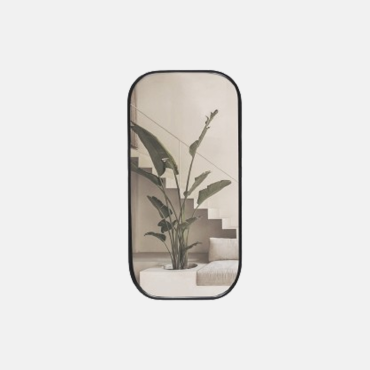

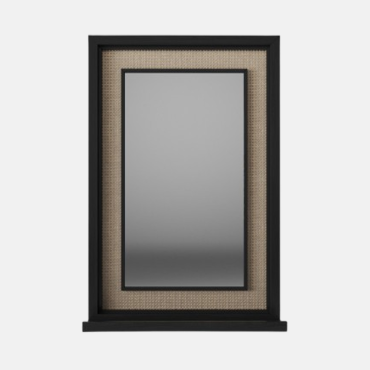
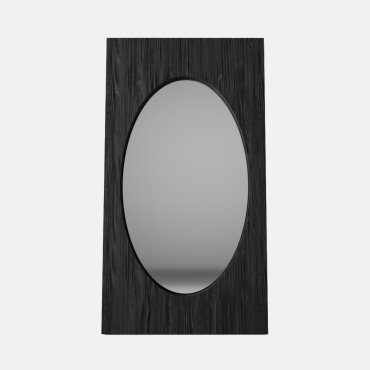
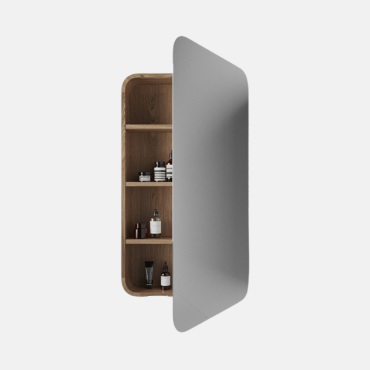
BATHROOM MIRRORS: HOW TO CHOOSE THE RIGHT SIZE, SHAPE, LIGHTING, AND STYLE WITHOUT MISTAKES
We see bathroom mirrors not as a minor detail, but as one of the key elements of everyday comfort. It is in front of the mirror that the morning begins, it is the mirror that affects the quality of light near the sink, and it is often the element that brings the entire bathroom composition together. If this item is chosen well, the space feels cohesive, comfortable, and calm. If not, even good finishes do not save the room from feeling random.
We explored how people choose a bathroom mirror, which mistakes happen most often, and which parameters are truly worth paying attention to before buying. In practice, the main questions are always similar: what size will be comfortable, whether lighting is necessary, which shape will not become tiring, how to match the mirror with the interior style, and whether extra features are really worth paying for. That is why below we look at bathroom mirrors not in abstract terms, but from the point of view of real daily use.
When someone plans to buy a bathroom mirror, they usually think first about appearance. But in practice, we see that beauty works only when it aligns with function. It is not enough to simply choose a trendy shape or a popular backlight. You need to consider the scale of the wall, mounting height, materials, humidity in the room, user habits, and the overall logic of the space.
In this article, we explain what bathroom mirrors are and who they suit, which formats are available, how to choose a bathroom mirror by size, materials, color, and functionality, how to integrate bathroom mirrors into different interior styles, and when it makes sense to consider custom designer solutions. We will also go through typical mistakes, care rules, and the reasons why a bathroom mirror should be chosen just as carefully as furniture or lighting.
WHAT BATHROOM MIRRORS ARE AND WHO THEY SUIT
Bathroom mirrors are not just reflective surfaces above the sink. In a well-thought-out interior, they are objects that perform several tasks at once. They provide comfortable reflection for everyday use, work with light, visually change the proportions of the room, and support the overall style of the bathroom. That is why we recommend treating such a piece not as a random purchase, but as a functional part of the interior.
Bathroom mirror solutions work especially well for people who want not only basic convenience, but also a visually clean space. For some, good lighting for shaving or makeup is the priority. For others, it is the feeling of more space in a compact room. And for some, the mirror becomes a strong accent that ties together the tile, vanity, faucet, and lighting.
We recommend deciding right away what the main task is in your case. If you need to visually enlarge a small room, the approach will be one. If you are planning an accent interior in japandi or eclectic style, the approach will be different. If you are choosing a mirror for a family bathroom with active daily use, then size, durability, and ease of care come first.
Another important point is that bathroom mirrors need to perform well in conditions of moisture, temperature changes, and regular cleaning. That is why we recommend paying attention not only to shape, but also to the quality of the mirror glass, edge finishing, mounting type, and how the frame behaves in a humid environment.
TYPES OF BATHROOM MIRRORS BY FORMAT AND CONSTRUCTION
The most common option is a classic wall-mounted mirror without additional storage sections. This is a universal solution for interiors where there is already enough storage in the vanity or tall cabinet, and where you want to keep the sink area visually light. This type of bathroom mirror is the easiest to fit into different styles because it does not create extra visual bulk.
The second format is models with integrated lighting. In practice, we see that these are especially convenient in modern bathrooms, where ceiling light does not always provide the right illumination for the face. If a person often gets ready in the morning under artificial light, integrated lighting stops being a decorative feature and becomes a genuinely useful function.
The third format is mirrored cabinets. This is a good solution for small spaces where it is important to clear small items off open surfaces. If jars, toothbrushes, and care products constantly gather on the countertop, this type of construction helps make the space look cleaner very quickly. But we recommend assessing the depth carefully. A mirror cabinet that is too bulky can feel heavy in a small bathroom.
The fourth format is custom-made mirrors. These are needed when standard sizes do not fit, when the wall has сложная geometry, or when the interior requires a very specific shape. It is exactly in this category that bathroom mirrors often become not only functional items, but also designer pieces.
HOW TO CHOOSE A BATHROOM MIRROR BY SIZE
Size is the first place we recommend starting. Even a very beautiful piece will not work if it is too small or out of proportion to the vanity and wall. The basic rule is simple: the width of the mirror is usually equal to the width of the vanity or slightly narrower. This proportion creates a sense of balance and does not make the elements look randomly assembled.
If a bathroom mirror is much narrower than the vanity, the sink area looks cramped. If it is significantly wider, the composition may lose cohesion, especially if there is a tall cabinet, wall light, or shelf nearby. We recommend not relying only on a feeling of “I like it,” but checking the actual dimensions in the real space.
The same principle applies to height. A mirror that is too low is inconvenient in daily use. A mirror that is too tall can look dramatic, but part of its surface simply does not work. We recommend considering the height of the users, the vanity height, the faucet position, and the top line of the tile or backsplash. All of this together helps define the right mounting limits.
A useful practical method is to mark the future mirror size on the wall with painter’s tape. It is a simple way to immediately see the proportions and understand whether the mirror will conflict with tile joints, outlets, wall lights, or furniture.
WHAT SIZE WORKS BEST FOR A SMALL BATHROOM
In a compact space, we recommend using a size that helps the room feel more open. A tall or fairly wide mirror without a heavy frame often works well here. It visually adds air and does not break up the wall.
But balance still matters. If the small bathroom already has many active elements — contrasting tile, open shelves, noticeable hardware — a mirror that is too large may reflect this visual noise and intensify it. That is why we recommend assessing not only the square footage, but also the overall visual density of the space.
WHAT SIZE IS APPROPRIATE FOR A LARGE BATHROOM
In a spacious room, the main mistake is buying a mirror that is too small. On a large wall, a small mirror almost always looks accidental. We see this often: the vanity is wide, the room is generous, and yet the mirror above it feels lost.
For a large bathroom, we recommend either one large statement mirror or a well-planned composition of two mirrors if you have a double vanity area. In such spaces, it is important not to be afraid of scale, but also not to cross the line where decoration starts to dominate function.
HOW TO CHOOSE THE SHAPE: ROUND, OVAL, RECTANGULAR, OR ASYMMETRICAL
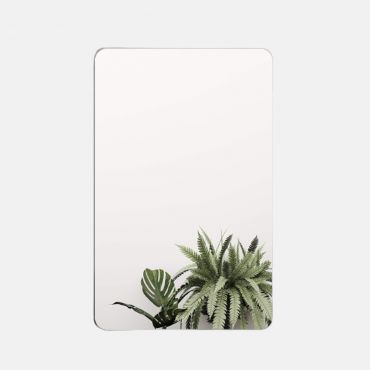
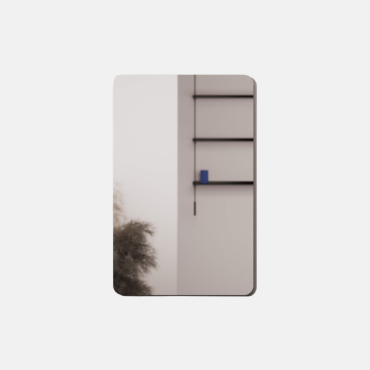
Shape always affects how the interior is perceived as a whole. A rectangular bathroom mirror creates a sense of structure, order, and stability. It is the easiest option to pair with geometric tile, straight furniture fronts, and clean-lined lighting. If you do not want to take risks, this is one of the safest choices.
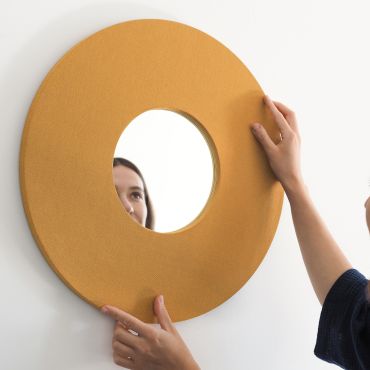
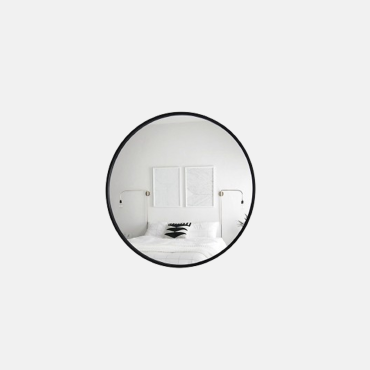
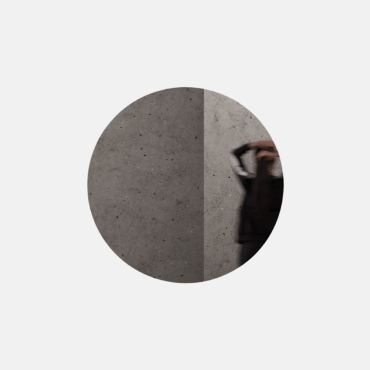
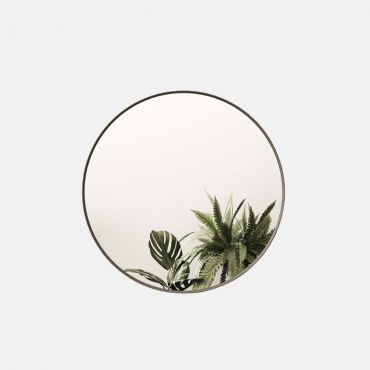
Round mirrors visually soften a room. We recommend them in interiors with many hard lines, corners, dark metal details, or large-format tile. A circle adds softness and balances sharpness. But it is important to remember that a round mirror offers less usable reflective area than a rectangular one of a similar overall size.
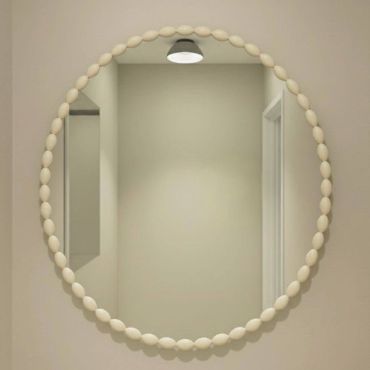
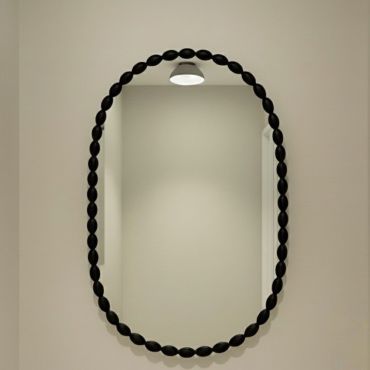
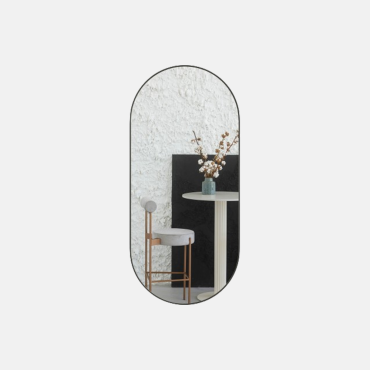
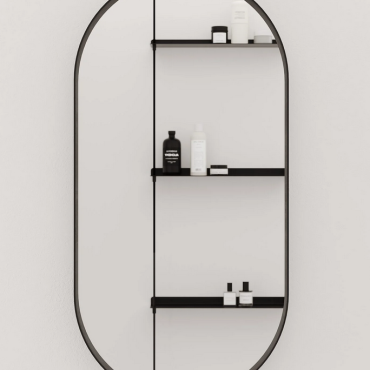
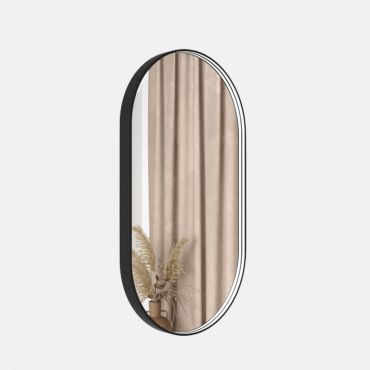
Oval mirrors are a good compromise between a softer shape and practical usability. They are often suitable in interiors where you want less graphic sharpness but do not want to lose vertical functional area. That is why an oval bathroom mirror often works well in japandi, mid-century modern, and soft contemporary interiors.
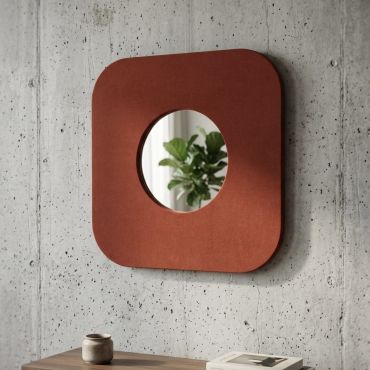
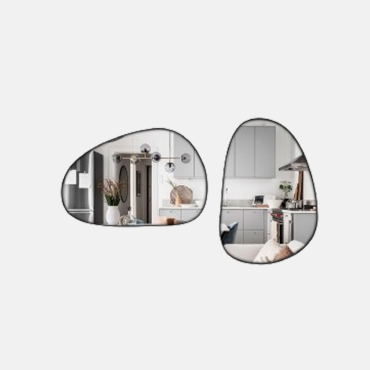
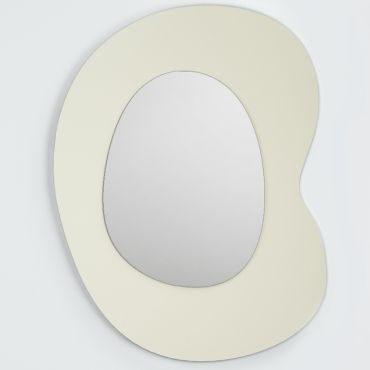
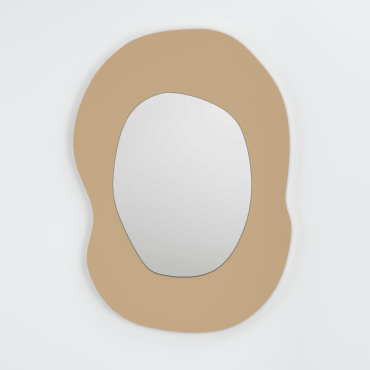
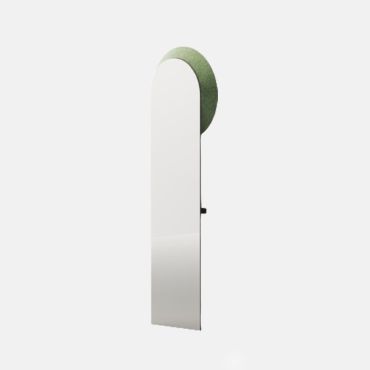
We recommend choosing asymmetrical shapes only when the interior already has a clear concept. They can be very expressive, but they need calm surroundings or a carefully considered supporting rhythm. If the space already has too many active textures, colors, and shapes, asymmetry can easily cross the line and turn into visual noise.
MATERIALS, FRAME, AND FINISHES: WHAT TO CHECK BEFORE BUYING
We recommend checking not only how the product looks from the front, but also how it is made. In a bathroom, humidity and temperature changes affect all materials, so the quality of construction becomes visible very quickly. If the mirror edges are poorly finished, they may lose their neat appearance over time. If the frame is not adapted to humid conditions, that will also show relatively quickly.
Frameless models usually look lighter. They are especially appropriate where the goal is to make the space feel visually cleaner. But in this case, a high-quality edge finish is critical. If you choose a framed version, look closely at how the material performs in a bathroom setting. Metal should have a stable finish, wood should be properly treated, and painted surfaces should be well executed without feeling fragile.
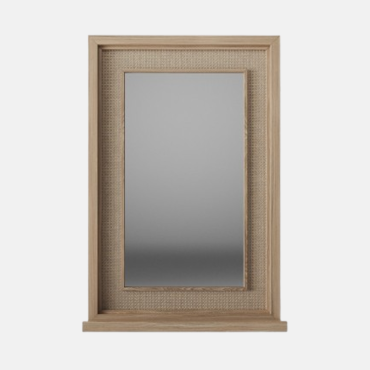
Frame color also matters. A black outline adds graphic character and works well in loft, contemporary, and minimalist interiors. Warm wood supports Scandinavian style, japandi, mid-century modern, and softer interiors. Light or barely noticeable frames are useful where you do not want to overload the wall.
We also recommend paying attention to frame thickness. A frame that is too massive can visually reduce a small bathroom. One that is too thin can get lost if there is a lot of texture around it or if the furniture is large in scale.
LIGHTING: WHEN IT IS TRULY NECESSARY
Many people want to buy a bathroom mirror specifically with lighting. And that is logical, because a good lighting setup in the sink area directly affects everyday comfort. In practice, we see that built-in light is especially useful when the main ceiling light casts shadows on the face or when the bathroom is used early in the morning and late in the evening.
But we do not recommend treating mirror lighting as a universal standard for everyone. If you already have well-planned wall sconces or even side lighting, an LED outline may simply be an additional decorative effect. In that case, it is better to honestly assess whether you really need this feature or are simply reacting to a fashionable look.
The character of the light also matters. Light that is too cool often makes the face appear harsher, while light that is too warm distorts skin tones. We recommend paying attention to models where the light does not feel harsh on the eyes and does not create a technically aggressive effect, especially if the bathroom is meant to feel calm and restful.
WHEN LIGHTING IS ESPECIALLY APPROPRIATE
We recommend mirror lighting for small bathrooms without windows, for families where the sink area is used actively every day, and for contemporary interiors where clean light integration is important without separate wall sconces.
It also works well when the mirror itself is meant to be one of the main compositional elements. But even then, we advise checking that the light contour does not visually compete with the other light sources in the room.
WHEN YOU CAN GO WITHOUT IT
You can absolutely do without mirror lighting if you already have well-placed fixtures at the right height, if the bathroom gets enough daylight, or if you want the interior to feel as calm and non-technical as possible.
In many cases, a simple bathroom mirror without extra features looks more appropriate and serves longer as a visually stable solution.
ANTI-FOG, TOUCH SENSOR, AND EXTRA FEATURES: ARE THEY REALLY NECESSARY?
Additional features are attractive because they seem like a sign of a more advanced product. But we recommend judging them not by the principle of “the more, the better,” but by your real use scenario. Anti-fog is useful in bathrooms that are small, poorly ventilated, and where the mirror regularly gets covered with steam after a shower. In that case, the function really does add comfort.
If the room is spacious or has proper ventilation, anti-fog is not always essential. We recommend not overpaying for a feature you will not use regularly. Sometimes it makes much more sense to invest in better mirror quality, a larger size, or more thoughtful installation.
Touch control is not universally practical either. It looks neat, but it requires regular wiping and is not convenient for everyone. If you prefer simple and reliable solutions, a classic switch connection may turn out to be more practical.
HOW TO MATCH BATHROOM MIRRORS WITH DIFFERENT INTERIOR STYLES
In minimalism, we recommend looking at simple forms, clear proportions, and the absence of unnecessary decoration. Rectangular or softly rounded models without a heavy frame work best here. Materials should feel calm, and colors should not create excessive contrast. If you want a black outline, it should be thin and precise.
In Scandinavian style, light tones, natural wood, round or oval shapes, and soft light work especially well. We recommend paying attention to lightness. If a bathroom mirror looks too heavy, it goes against the logic of this style. Simplicity, warmth, and tactility matter here.
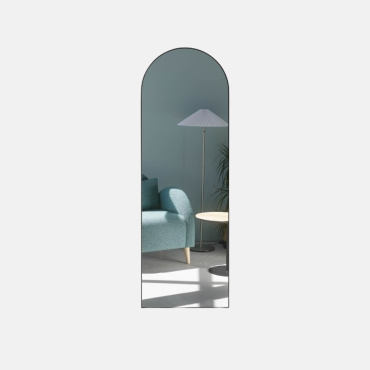
For loft interiors, metal frames, dark accents, rectangular geometry, or arch-shaped silhouettes are appropriate. But we recommend not overloading a small space with too much black metal. One strong gesture is enough — a mirror frame supported by a faucet or a light fixture. When there is too much dark metal, the bathroom starts to feel heavier than it really is.
Contemporary style values functionality and clean lines. This is where models with integrated lighting, smooth surfaces, and a minimum of decorative elements are especially fitting. But even in contemporary interiors, we recommend not reducing everything to technicality. A good bathroom mirror should not only look modern, but also remain comfortable to live with over time.
In japandi interiors, we see strong demand for soft shapes, warm neutral tones, and natural materials. Oval models, calm wooden frames, or fully frameless solutions with very clean geometry work especially well here. The main principle is quiet form and the absence of any visual noise.
For mid-century modern, we recommend warm wood tones, ovals, rectangles with rounded corners, and brass or bronze accents. This style does not respond well to cold technological sharpness, which is why overly harsh LED lighting or a glossy technical appearance can feel out of place.
Eclectic style offers freedom, but does not forgive randomness. Here, an asymmetrical bathroom mirror or an unusual frame can work very well, but only if the whole interior already has a logic for combining different elements. In this case, we recommend paying especially close attention to proportions and color relationships.
For soft contemporary interiors, rounded silhouettes, muted shades, warm even light, and models that do not create a harsh impression are the best fit. If the room is meant to feel calming, an overly graphic shape or a contrasting frame can easily break that effect.
HOW TO INTEGRATE BATHROOM MIRRORS INTO SMALL AND LARGE SPACES
In a small bathroom, the mirror is almost always a tool for visual enlargement. We recommend using models that do not complicate the wall: frameless, with a thin outline, or with a vertical proportion. A mirror matched to the vanity width also works well if it helps unify the composition.
It is also important to remember that in a small space, every bit of clutter is reflected and visually doubled. That is why, if storage is very limited, a mirrored cabinet may be a more rational solution than an open mirror panel. In this format, bathroom mirrors help not only visually, but also organizationally.
In a large space, the task is different. Here, the mirror is not so much about enlarging the room as it is about holding the scale. We recommend not being afraid of large formats, double compositions, or accent shapes if they are supported by the furniture and lighting. In large bathrooms, items that are too small often disappear visually.
If you have a double vanity, we recommend deciding right away what matters more to you: cohesion or rhythm. One wide mirror creates a calmer look and unifies the area better. Two separate mirrors make the composition feel more architectural and symmetrical.
WHAT TO CHECK BEFORE BUYING A BATHROOM MIRROR
We recommend starting with accurate measurements and a mounting scheme. You need to know not only the vanity width, but also the distance to the faucet, the height of the backsplash edge, and the position of lights, outlets, and shelves. Very often the issue appears not because of the mirror itself, but because it was purchased before the placement was fully planned.
The second criterion is light. Think about how exactly you use the bathroom. If your morning routine happens under artificial lighting, good mirror lighting or well-positioned sconces become very important. If the lighting is already resolved, there is no need to complicate the mirror with extra features.
The third point is style and materials. A bathroom mirror should match not only the vanity, but also the hardware, faucet, tile, ceiling, and even the door. When one element speaks the language of loft, another the language of Scandinavian style, and a third the language of glossy classic design, the room starts to fall apart.
The fourth point is maintenance. We recommend answering honestly whether you are ready to regularly wipe a touch sensor, a complex frame, or decorative bevels. Sometimes a simpler solution lives better precisely because it is easy to use and easy to keep neat.
TYPICAL MISTAKES WHEN CHOOSING AND WHAT TO AVOID
The most common mistake is choosing only by a photo. What looks beautiful in a catalog will not necessarily work well in your bathroom. Without relating it to wall scale, vanity height, and real lighting, even a good-looking mirror can turn out to be inconvenient.
The second mistake is poor proportion. A mirror that is too small makes the sink area look unfinished. A mirror that is too large, without the right surrounding balance, can overload the wall. We recommend always checking dimensions before buying instead of relying on intuition.
The third mistake is overestimating trendy features. Not everyone needs anti-fog. Not everyone benefits from a touch sensor. Not everyone needs an LED outline. If you choose a bathroom mirror with features you will never actually use, the product does not become better. It only becomes more expensive and more complicated.
The fourth mistake is ignoring style. Very often the mirror ends up either too dominant or too weak compared with the overall composition. We recommend evaluating right away whether it supports the interior or starts to compete with it.
The fifth mistake is poorly planned installation. If the cable, mounting points, height, or offsets are not considered in advance, even a good purchase turns into a compromise.
HOW TO CARE FOR BATHROOM MIRRORS SO THEY KEEP THEIR LOOK LONGER
We recommend gentle regular care instead of rare aggressive cleaning. The mirror surface is best wiped with a soft cloth, and the cleaner should be applied to the fabric rather than directly onto the edges. This reduces the risk of moisture building up around the perimeter.
For framed mirrors, the material matters. Wood needs a more delicate approach, matte metal does not tolerate abrasives, and complex decorative profiles collect water marks and dust faster. That is exactly why we often recommend simpler constructions to those who want fewer everyday maintenance concerns.
It is also important to remember ventilation. Even a very high-quality bathroom mirror performs better when the room has proper airflow. If steam lingers in the bathroom for a long time after a shower, it affects not only the mirror, but also the furniture, joints, and the overall condition of the interior.
WHEN IT MAKES SENSE TO CHOOSE DESIGNER OR CUSTOM SOLUTIONS
We recommend considering a custom format if your space is non-standard, has difficult geometry, or follows a specific design concept. In such cases, ready-made models often feel like a compromise: either the size is wrong, or the piece does not support the logic of the whole interior.
A custom bathroom mirror is also appropriate when it needs to repeat the shape of the furniture, work within a niche, integrate with lighting, or solve a non-standard everyday scenario. For example, when a very exact height, a special width, or a specific shape for a narrow wall is needed.
But we do not recommend ordering a custom piece only for the sake of uniqueness. If a standard model already solves the task well, it is better to invest in quality, lighting, and proper installation. In a practical interior, not everything custom automatically means better.
THE PRACTICAL VALUE OF A HIGH-QUALITY PRODUCT
A high-quality bathroom mirror does not distort the reflection, does not lose its appearance too quickly, and does not create a daily feeling of inconvenience. It works well in both morning and evening routines, does not irritate with poor lighting, does not clash with the furniture, and does not look temporary.
We see that good quality reveals itself not only in durability. It is felt in the small details: how the mirror looks on the wall, how the frame behaves, how easy it is to care for, how the light falls on the face. These are the nuances that separate an object that simply exists in the bathroom from one that truly works every day.
That is why we recommend treating bathroom mirrors as an investment in comfort, not as a formal finishing touch to a renovation. This is one of those details people interact with constantly, which is exactly why precision of choice matters so much here.
WHY IT IS WORTH BUYING BATHROOM MIRRORS AT MAIIMO
At MAIIMO, we approach interior items not in isolation, but in the context of the whole space. That is why when someone wants to buy a bathroom mirror, we look not only at the product itself, but also at how it works alongside the furniture, lighting, wall color, tile texture, and everyday use scenario.
We recommend the MAIIMO format to those who are looking not for a random solution, but for a piece with clear design logic. The platform brings together products from Ukrainian studios, local brands, and craft makers, which means a more attentive approach to shape, detail, and material. For the customer, this is convenient because it offers a selection of pieces already filtered by aesthetics and relevance to a contemporary interior.
For us, it is important that bathroom mirrors are not only visually appealing, but also realistic in everyday use. That is why we recommend assessing a product by several criteria at once: whether the size is sufficient, whether the shape suits the specific wall, whether the frame clashes with other materials, and whether lighting is actually needed in your scenario.
Another advantage of the MAIIMO format is the possibility of getting help with selection. We see that people often doubt not whether a specific bathroom mirror looks good, but whether it is right for their particular space. And that is a completely normal question. In such cases, it is important not to guess, but to evaluate the solution in the context of the whole interior.
It is also important to us to support a contemporary approach to interiors, attention to local production, and sustainability in a broader sense. This is not about loud claims, but about choosing things that last longer, do not lose relevance after one season, and do not need quick replacement. This is how we see a responsible approach to product design.
And finally, MAIIMO is not only about one separate product. If needed, we also help with a complete selection of furniture, lighting, and decor so that a bathroom mirror does not exist on its own, but works as part of a cohesive, calm, and comfortable space.
10 FAQ
WHAT SIZE BATHROOM MIRROR IS BEST ABOVE A VANITY?
We recommend using the vanity or sink width as your main reference point. In most cases, a mirror that matches the vanity width or is slightly narrower looks the most balanced and feels the most comfortable in daily use. This proportion creates visual cohesion and avoids a random look.
If the mirror is much narrower, the sink area will look compressed. If it is much wider, the result may feel unbalanced, especially if there is a tall cabinet, shelves, or sconces nearby. That is why we recommend testing the size on the wall first and only then ordering the product.
IS IT WORTH BUYING A BATHROOM MIRROR WITH LIGHTING?
It is definitely worth considering if the bathroom has weak overhead light, if you often use the sink area early in the morning, or if good shadow-free face lighting matters to you. In such cases, lighting is not just decorative, but a real improvement in everyday comfort.
At the same time, we do not consider lighting essential in every interior. If you already have well-planned fixtures near the mirror or enough daylight, it may be better to choose a simpler model and invest in better materials or a larger format.
WHAT SHAPE OF BATHROOM MIRROR IS THE MOST PRACTICAL?
We consider the rectangular format the most universal. It provides a large usable reflective area, works easily with most vanities, and fits well into contemporary, minimalist, Scandinavian, and even loft interiors. It is a reliable choice if you want a calm result without much risk.
Round and oval mirrors are also practical, but they have a stronger influence on the style and mood of the room. We recommend them when you want to soften the interior, reduce the harshness of straight lines, or make the composition feel more delicate. The important thing is not to lose too much functional reflection area.
DO YOU REALLY NEED AN ANTI-FOG BATHROOM MIRROR?
Anti-fog is most useful in small bathrooms with a shower and weaker ventilation. If the mirror becomes fully covered with steam after every hot shower and cannot be used right away, this feature truly makes sense and adds everyday comfort.
In larger bathrooms or spaces with good ventilation, this option is not always necessary. We recommend evaluating not the marketing appeal of the feature, but the real need in your specific space, so you do not overpay for something you will hardly use.
CAN YOU USE A REGULAR MIRROR IN A BATHROOM IF IT IS NOT MADE FOR HUMIDITY?
Technically, yes, but we do not recommend it as a long-term solution. A bathroom constantly deals with steam, moisture, and temperature fluctuations, which means a regular mirror may lose its neat appearance faster, especially around the edges and where it meets the frame.
It is better to choose a product that is properly adapted to this environment from the start. This is not only about durability, but also about maintaining a stable appearance, without which even a beautiful interior begins to look neglected.
WHAT IS BETTER: ONE LARGE BATHROOM MIRROR OR TWO SEPARATE MIRRORS ABOVE A DOUBLE VANITY?
One large mirror creates a calmer and more cohesive image. It unifies the space better, visually expands the wall, and works especially well in contemporary and minimalist interiors where a clean continuous surface matters.
We recommend two separate mirrors when you want to emphasize symmetry, make the composition feel more architectural, or support the rhythm of two distinct use zones. It all depends on the vanity width, fixture placement, and the style of the bathroom itself.
WHAT HEIGHT IS BEST FOR HANGING BATHROOM MIRRORS?
We recommend not relying on a universal number, but on the actual vanity height, the height of the users, and the faucet position. The center of the mirror should work for most people in the household without making them bend or stretch, and the lower edge should not conflict with the faucet or backsplash.
The best approach is to mark the outline on the wall before installation and see how it interacts with the tile, lighting, and furniture. This simple check often gives more insight than any general recommendation about standard height.
DO LARGE BATHROOM MIRRORS WORK IN SMALL SPACES?
Yes, in many cases a large mirror is exactly what helps a small bathroom look brighter and more spacious. When the mirror is integrated correctly into the wall and does not have an overly massive frame, it acts as a visual expansion tool and does not break up the space.
But it is important that the large size is not random. If there is too much active tile, too many shelves, or too many dark accents around it, a very large mirror may only amplify the visual noise. We always recommend judging it by the whole composition, not by the room size alone.
WHAT KIND OF FRAME IS BEST FOR A BATHROOM MIRROR?
For minimalism, loft, and contemporary style, we more often recommend thin metal frames or completely frameless solutions. They look clean, do not overload the wall, and work better with modern sanitary ware, simple furniture, and flat surfaces.
For Scandinavian style, japandi, mid-century modern, and soft contemporary interiors, we recommend looking at warmer materials and more delicate outlines. The main rule is simple: the frame should support the interior, not take all the attention for itself.
WHEN IS IT WORTH ORDERING A CUSTOM BATHROOM MIRROR?
We recommend choosing a custom format when the space is non-standard and ready-made models do not fit the required size or shape. This is especially relevant for niches, difficult geometry, unusual wall proportions, or cases where the mirror has to interact precisely with furniture, lighting, or architectural lines.
If a standard model already solves your task in terms of size, style, and functionality, then a custom order is not essential. In many cases, it is better to invest in quality workmanship, stable materials, and proper installation than to complicate the solution without a real need.