A Bunk Bed: From What Age It's Safe and How to Choose
Bunk beds: from what age are they safe, and how to choose one
A bunk bed is the dream of almost every child and the headache of almost every parent. The top level, the ladder, the "what if they fall" — here, questions of safety matter more than the design.
So let's get to the heart of it: from what age the top bunk is suitable, what a safe guard rail and ladder should look like, and how a bunk bed for two children differs from a loft bed for one.
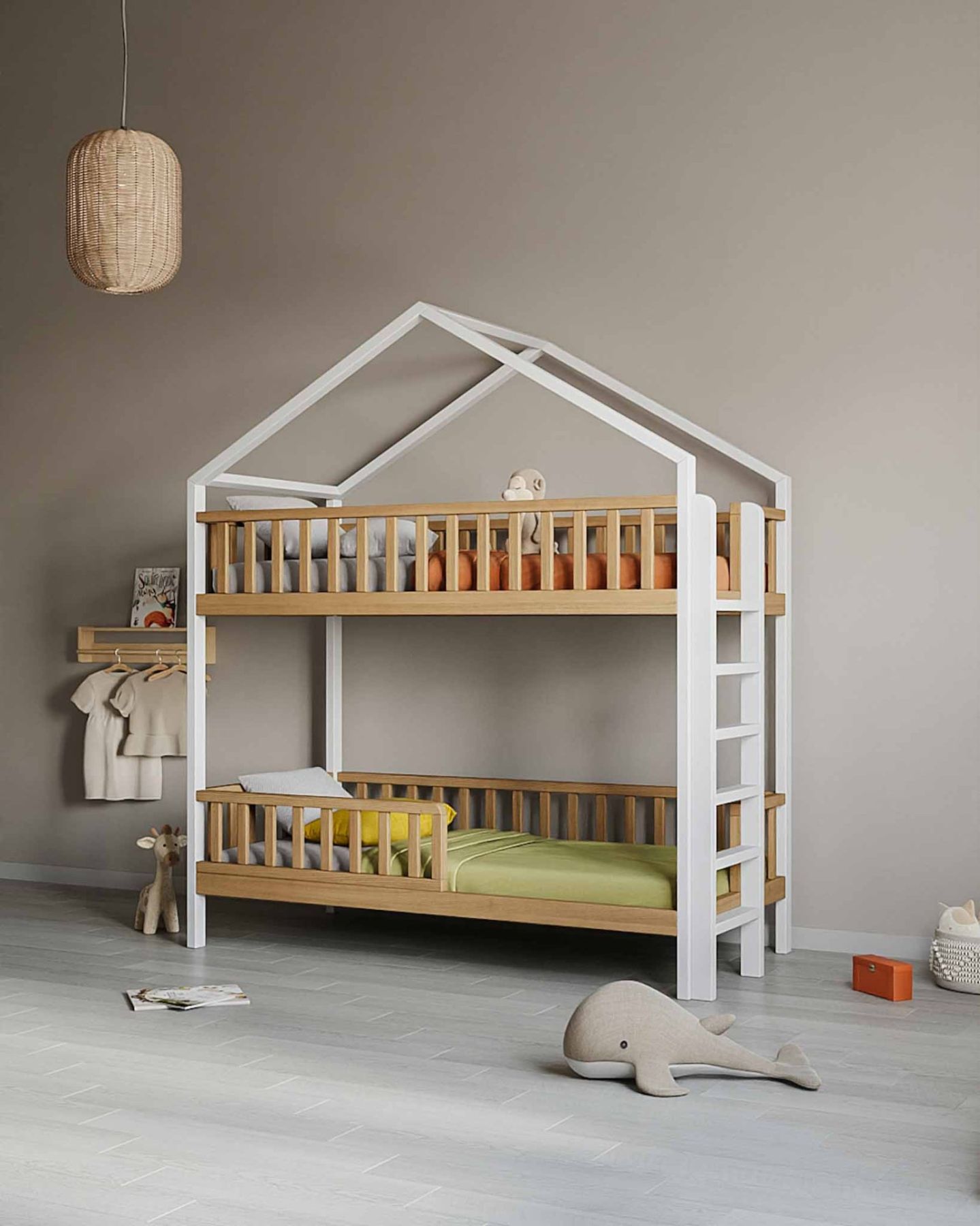
The essentials: the top bunk is for ages 6 and up
This isn't over-caution — it's a safety standard. International standards explicitly require the warning: children under 6 must not use the top bunk, regardless of the child's height. The reason is simple: coordination and reactions during sleep mature at around this age. Statistically, children under 6 account for roughly half of all bunk-bed-related injuries, and the most common injury isn't a fracture from a fall but a cut during an awkward climb down.
What makes the top bunk safe: the guard rail should rise at least 13 cm above the mattress along its entire length, and the gap between the rail and the end panel should be minimal (so a head can't get trapped). It's precisely this gap, rather than the height of the rail, that is the main cause of serious injuries — and precisely what the mass market most often ignores.
The ladder, the ceiling and the load
The ladder should be securely fixed, with non-slip rungs; for smaller children, wide steps are more comfortable than thin bars. Above the top bunk, leave enough space for the child to sit up without hitting their head on the ceiling. And check the stated load capacity for the level — for teenage models, aim for 90 kg and above. Fittings, screws and joints should be tightened periodically: a bed that has worked loose over time is more dangerous than any height.
Rules worth pinning to the wall: no jumping on the bed or ladder; only one child on the top bunk; a night light to find their way in the dark; the ladder always fixed in place; no garlands or cords dangling near the top bunk.
For two children or for one
These are two different tasks. A classic bunk bed with two sleeping places is the answer when there are two children or guests often stay over: it fits two beds into the space of one. A loft bed is the opposite — a single sleeping place up top, with the space below given over to a desk, play or storage; a good option for one child in a compact room.
Low Montessori-style bunk beds
A separate, gentler format is low house beds. Both levels sit lower than on classic models, the roof is house-shaped, and the overall height is lower — so climbing up and down is easier, and there's less far to fall. This doesn't cancel the "top bunk from age 6" rule, but it makes the move to "two-tier living" a calmer one. Such models are a natural continuation of the Montessori bed line.
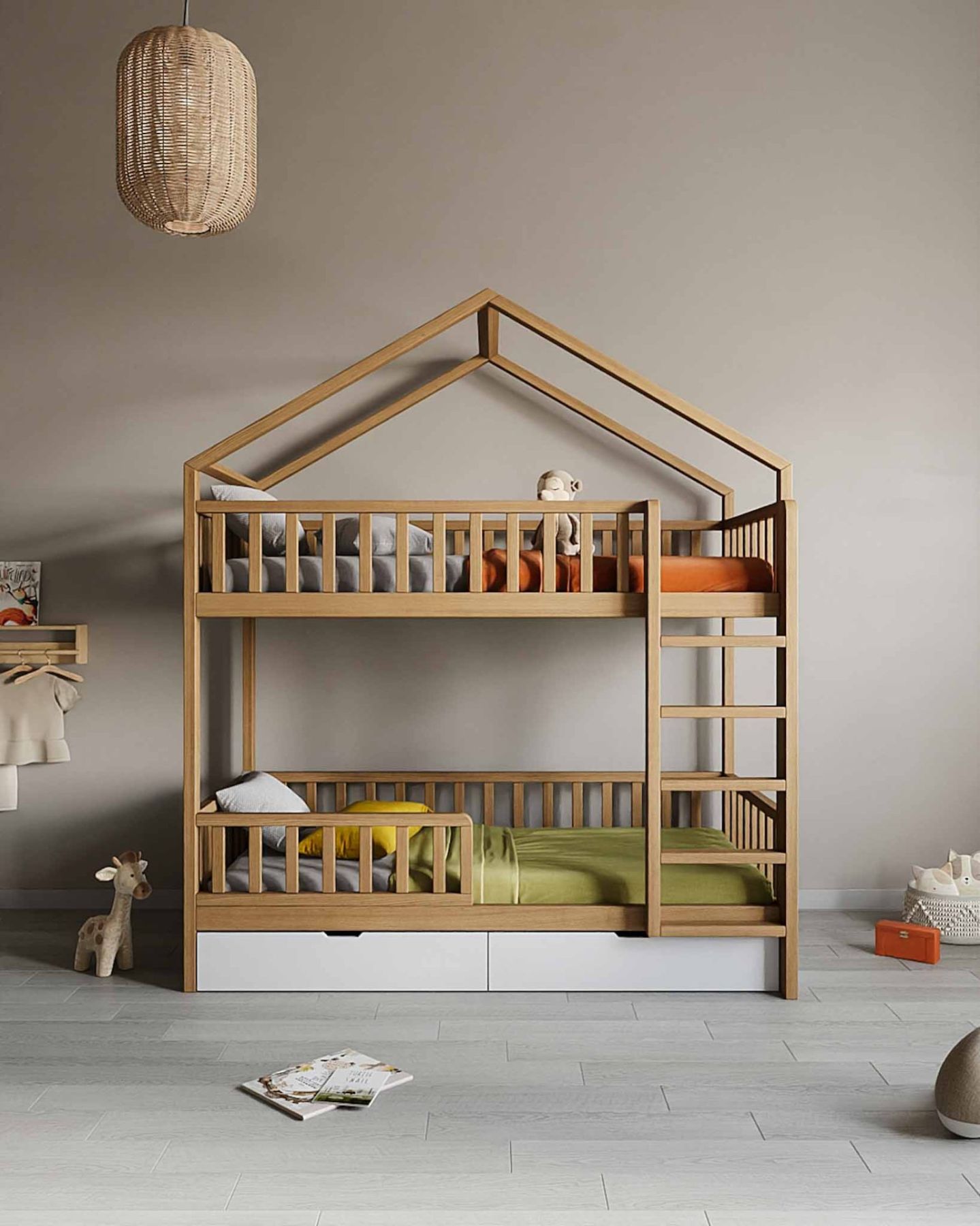
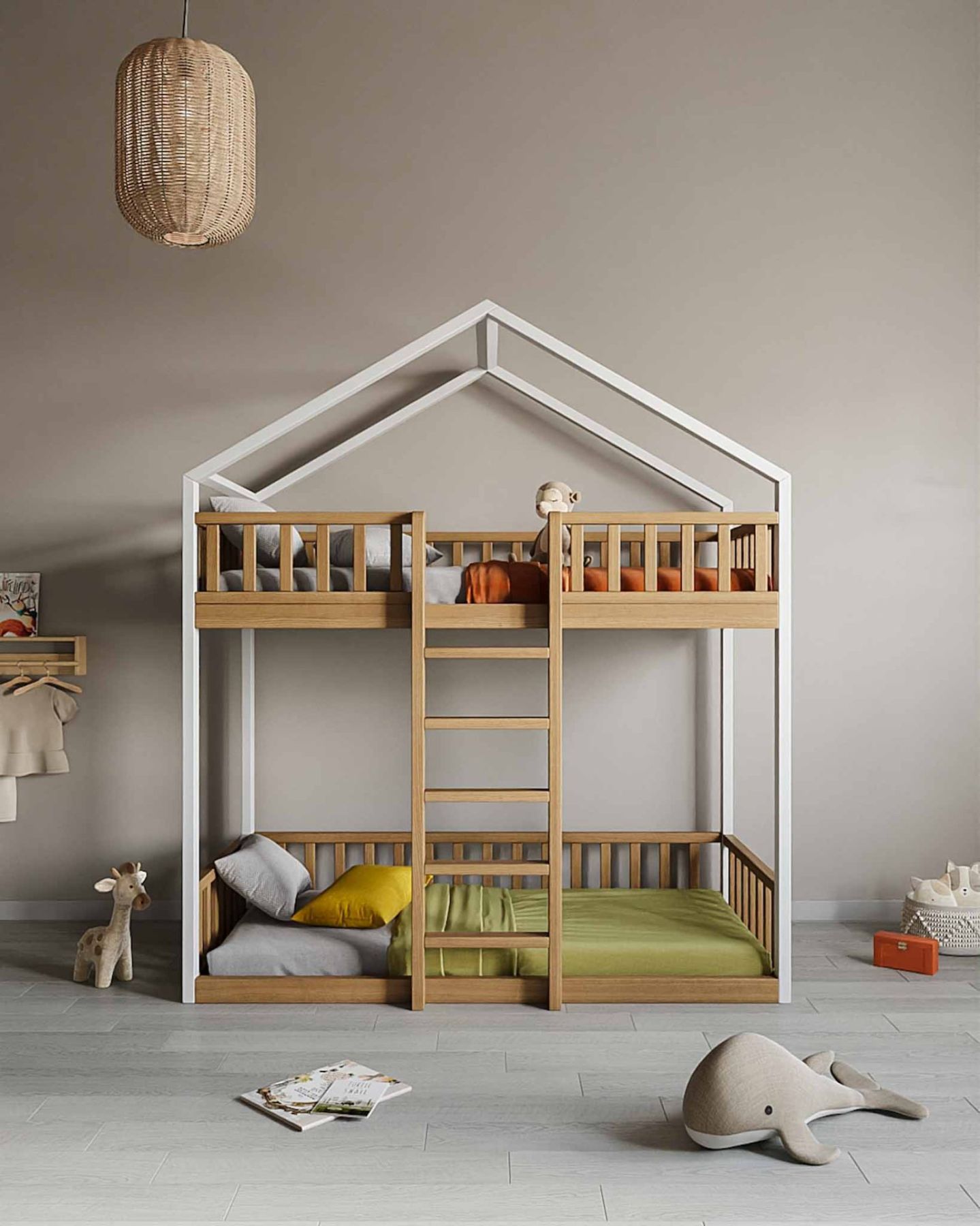
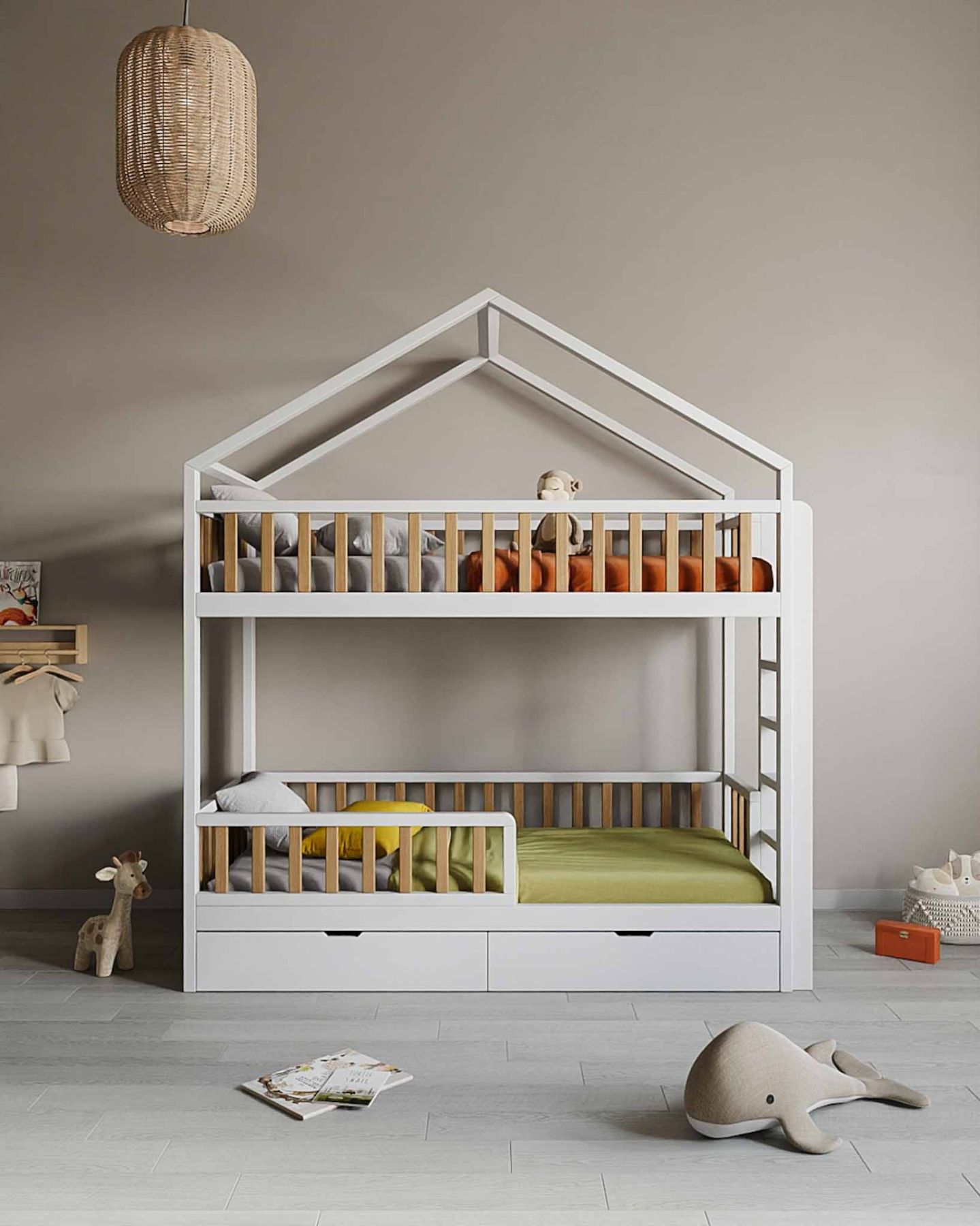
The full collection of "two-tier" sleeping places is in the bunk beds category. When choosing, consider the room's ceiling height, the age of the older child (for the top bunk — from 6) and temperament: which child is more comfortable below, and which up top.
Frequently asked questions
From what age is a bunk bed suitable?
Under safety standards, the top bunk should not be used before age 6 — regardless of the child's height. The lower level can be used earlier. Younger children are better suited to a low model, or a version with a play area below instead of a second sleeping place.
How high should the guard rail on the top bunk be?
At least 13 cm above the mattress along its entire length, with a minimal gap between the rail and the bed panel — so a head can't get trapped. It's the gap, not the height, that is the key safety factor.
Bunk bed or loft bed — which to choose?
A bunk bed with two places is for two children or guests. A loft bed (one place up top, an area below) is for a single child, when you want to free up space for a desk, play or storage.
What are the main safety rules?
The top bunk is for ages 6 and up, and only one child on it; no jumping; a securely fixed ladder with non-slip rungs; a night light; no garlands or cords near the top; periodic checks of the fittings.


