Bedroom Lighting: Light Scenarios for Sleep, Reading and Slow Mornings
- Bedroom lighting ideas: light scenarios for sleep, reading and slow mornings
- Ambient light: quiet, not bright
- By the bed, the main character is not always a lamp
- The mirror and dressing table: light on the face
- A reading chair: its own island of light
- The last layer is live flame
- Putting the scenarios together: a short checklist
- FAQ
Bedroom lighting ideas: light scenarios for sleep, reading and slow mornings
Light works differently in a bedroom than anywhere else in the home. Nothing here needs to be "lit up" — the room needs to help your body slow down. That is why we build bedroom lighting out of scenarios rather than a single ceiling fixture: quiet ambient light, a separate light by the bed, the mirror, the reading chair. Below is the scheme we use ourselves, shown on lights made in Ukrainian workshops.
Ambient light: quiet, not bright
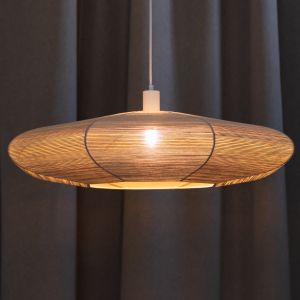
The mistake we see most often is an overhead light that is simply too strong. In a bedroom, ambient light is only a soft base with local scenarios layered on top. Choose shades made of dense, diffusing materials: papier-mâché, textile, knitted fibre. Soft bedroom light from a shade like this is warm and shadowy, and it won't glare even when you look up at the ceiling from your pillow.
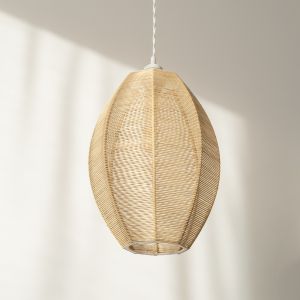
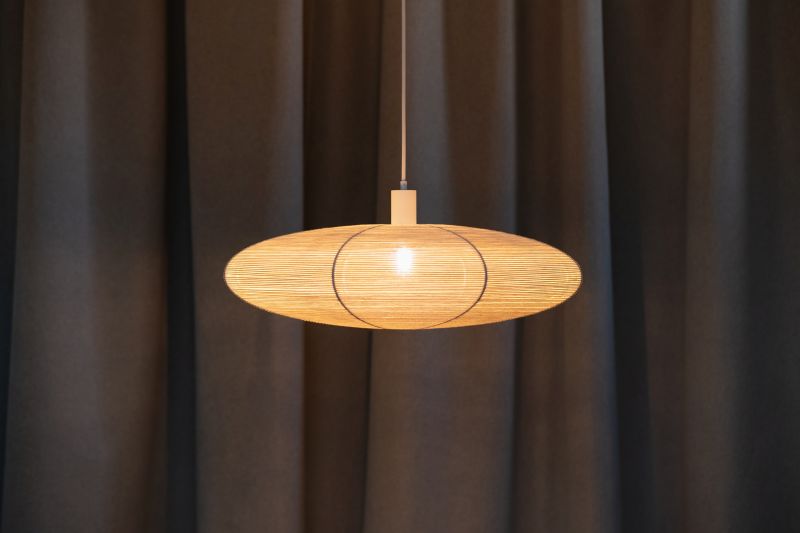
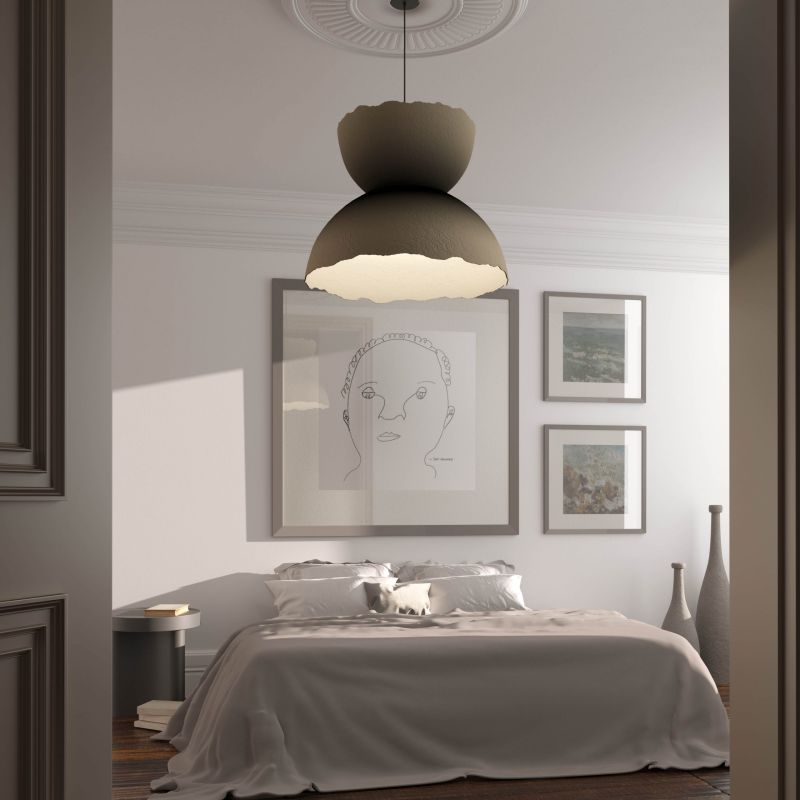
One example is a papier-mâché pendant with an uneven, torn-looking edge: the glow escapes downwards while the ceiling stays in half-shadow. A knitted chandelier works in a similar way — the fibre lets light through its whole surface, so the shade glows like a lantern. You'll find more pieces with this character of light among the bedroom chandeliers.
And a word about dimmers. This is not a luxury: the same fixture at a third of its power in the evening and at full power in the morning gives you two different scenarios without a single extra light.
By the bed, the main character is not always a lamp
The spot by the headboard works every single night: a book, a phone, a glass of water. There are three solutions that work here, and choosing between them is a matter of habit, not fashion.
First, a bedside light can hang from the ceiling. The nightstand stays free for a book and a cup, no cable tangles under your hand, and the point of light lands exactly where you need it.
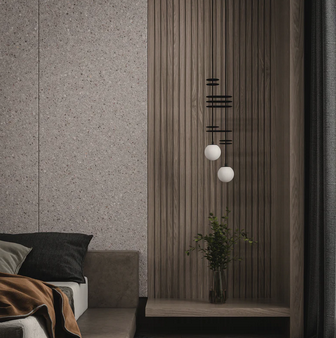
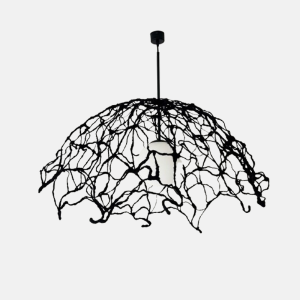
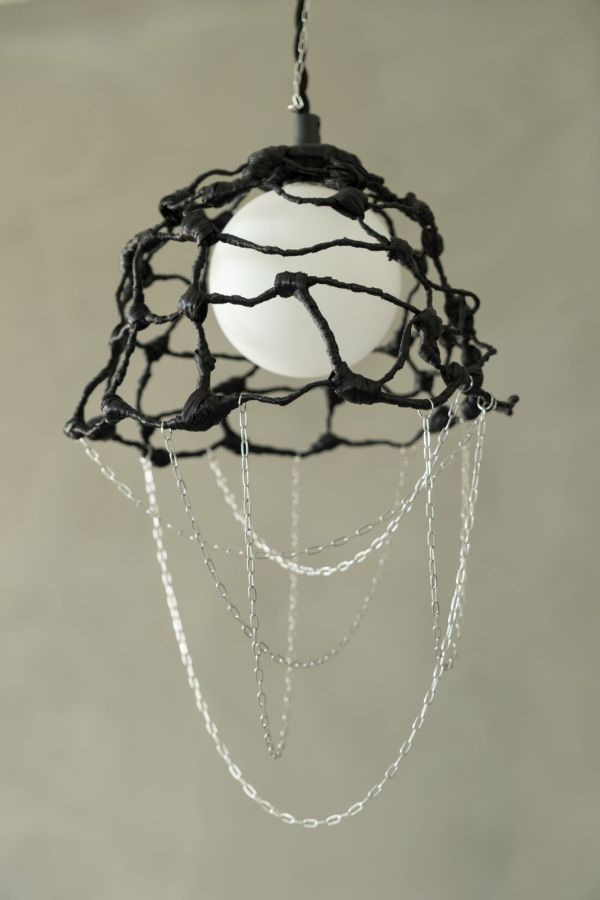
If you want an object with character rather than pure function, there are woven pendants with draped chains, where light falls through the frame in a graphic pattern. A piece like this works even switched off, as a sculpture above the nightstand.
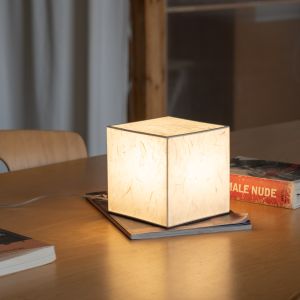
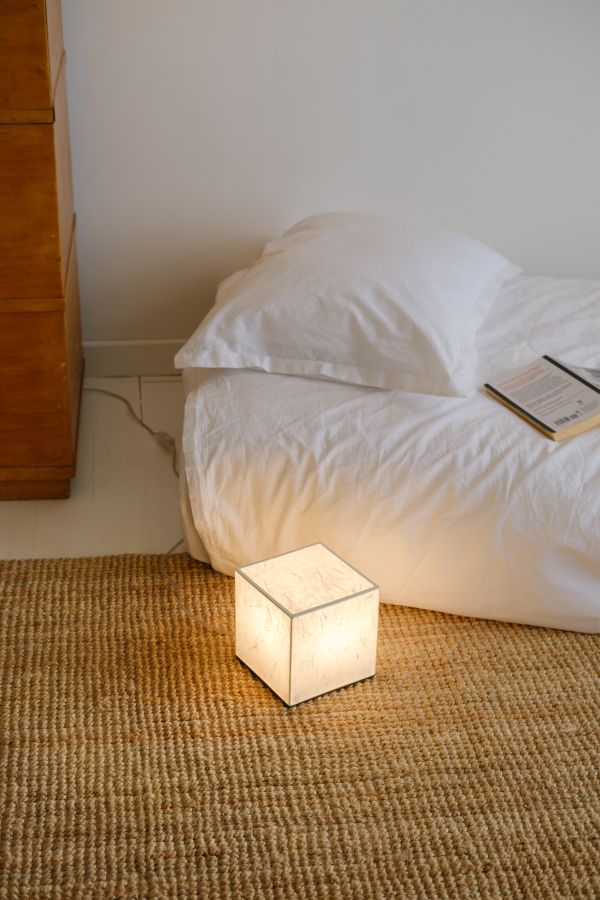
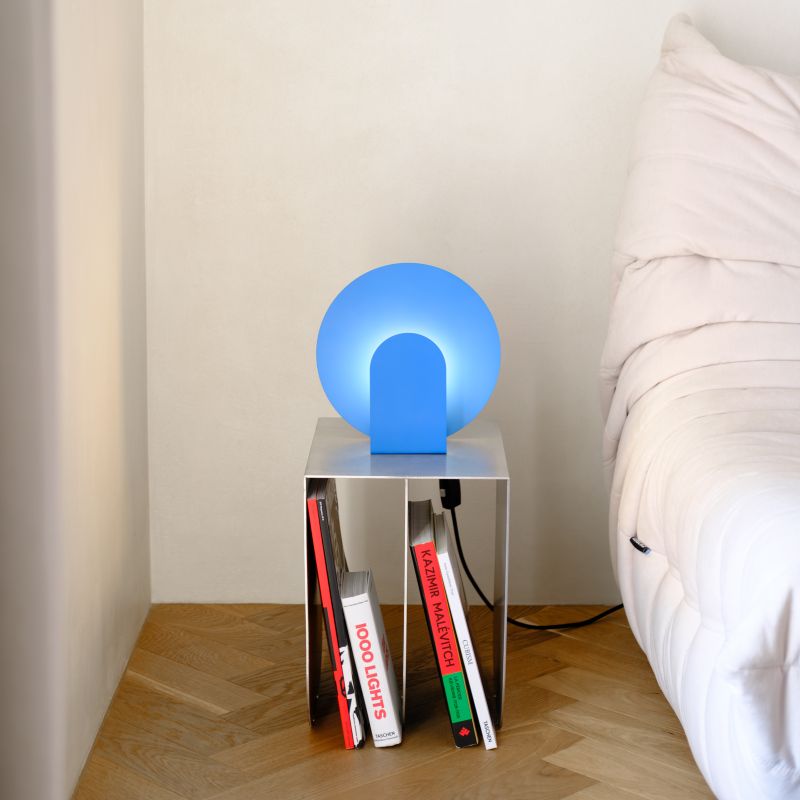
The second option is a table lamp on the nightstand or right beside the bed. A paper cube glows through its whole body, softly, like a torch through paper, and you can set it straight on the floor. A coloured metal lamp adds mood instead: switched on, it washes the corner with a warm tint of its own colour.
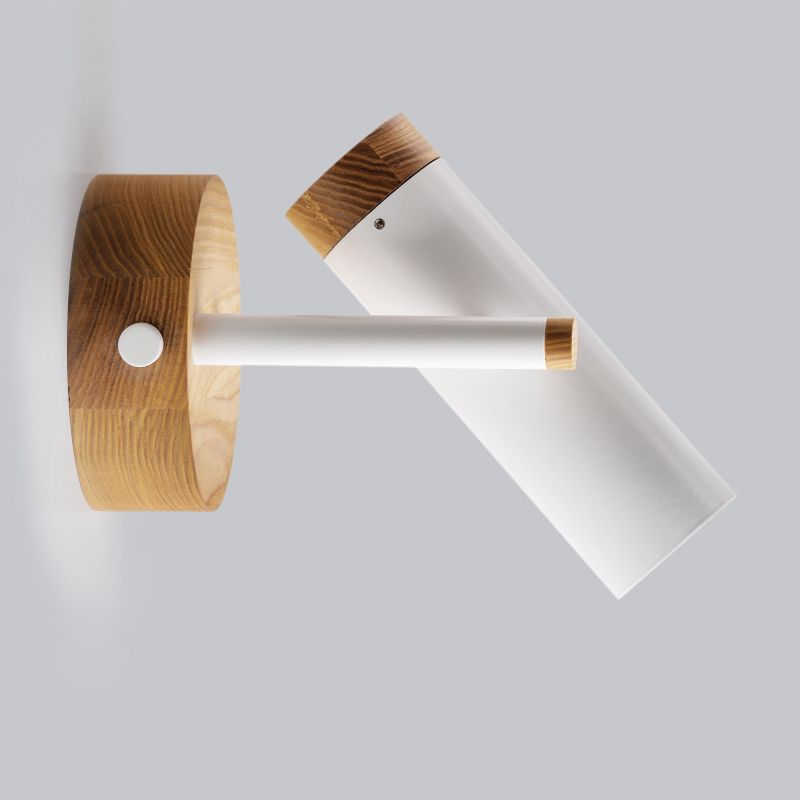
The third is a wall light, if what you really want is a directed reading beam. A pivoting shade throws a narrow ray onto the page and leaves the other half of the bed in the dark. Your partner sleeps; you finish the chapter. Look for models with a switch on the body among the wall sconces.
The mirror and dressing table: light on the face
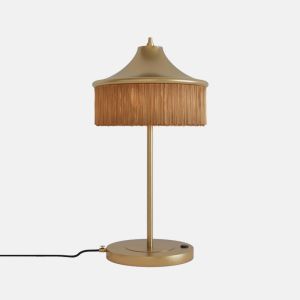
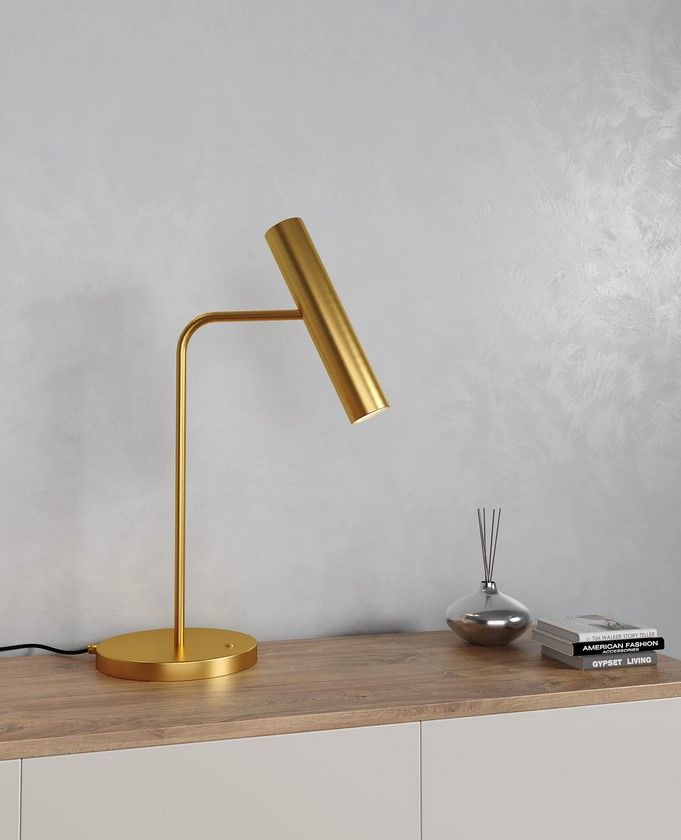
If your bedroom has a dressing table, the light around it is a story of its own. One rule: light the face, not the mirror. Overhead light is no help here — it drops shadows under the eyes. What works is a sconce above the mirror or a table lamp with a directed shade set beside it. A brass cylinder on a thin stem, for instance, can be turned exactly where you need it. More options live in the table lamps catalogue.
A reading chair: its own island of light
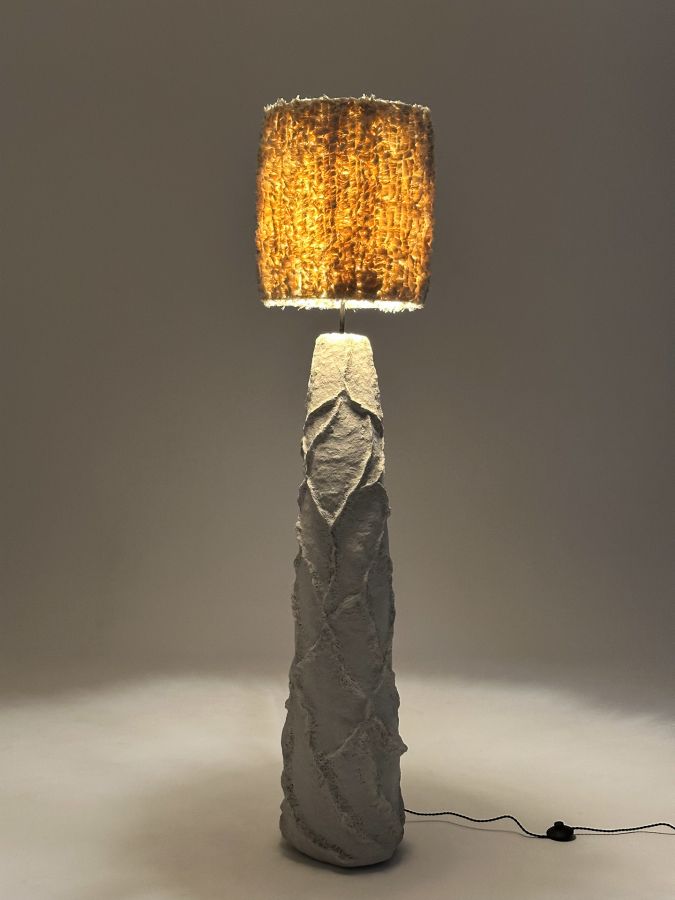
A bedroom armchair with a floor lamp beside it becomes a small room of its own. In the evening you can leave everything else off: a pool of warm light over the chair, the rest of the space sinking into dusk, and the brain reads it as a signal to rest. Sculptural pieces with textured shades play a double role here — light and object. Have a look at the designer floor lamps with different shade types.
The last layer is live flame
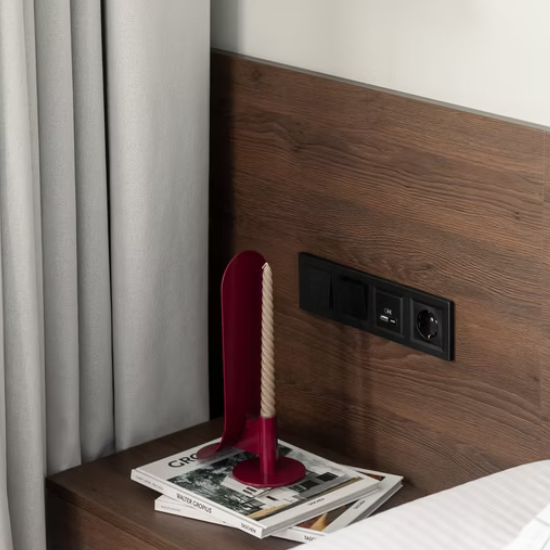
The slowest light in a bedroom is a candle. A steel candleholder with a curved screen frames the flame: the screen catches its reflections, and even one candle on the nightstand gives the room a depth no lamp can imitate. It's a scenario for the last fifteen minutes before sleep — which is exactly why it works.
Putting the scenarios together: a short checklist
Plan the light together with your bedroom furniture, not after it: the headboard height sets the sconce height, the nightstand depth sets the lamp's place. The right light temperature for sleep is 2700–3000 K, warm; save cooler bulbs for the kitchen and the study. Switch each scenario separately and put the ambient light on a dimmer. Then run the main test: lie down on the bed and look up. If you can see a bare bulb from the pillow, the scenario needs another pass.
FAQ
What light temperature is best for sleep? The warm range of 2700–3000 K. The closer to bedtime, the less light you need and the lower it should sit: overhead off, lamp or sconce on.
Can a bedroom do without overhead light at all? It can, and many bedrooms live that way — lamps, sconces and a floor lamp cover every scenario. A soft diffused base is simply convenient when you need to tidy up, pack a suitcase or make the bed.
How high should a bedside pendant hang? Aim for the bottom edge of the shade at the eye level of a person sitting up in bed, usually 100–130 cm from the floor. The light lands on the book without blinding whoever is lying next to you.