Garden Furniture Trends for Modern Terraces, Patios and Pools
- 9 Garden Furniture Trends for 2026: What's Shaping Terraces, Patios and Pool Areas
- Trend 1. "Indoor-Outdoor": The Terrace as an Extension of the Living Room
- Trend 2. Organic, Soft Forms Instead of Sharp Edges
- Trend 3. Earthy, Natural Tones
- Trend 4. Material Mix: The Warmth of Wood vs. the Technological Strength of Metal
- Trend 5. "Low Dining" and Multifunctional Furniture
- Trend 6. Ultra-Comfort: Deep Seating Instead of Rigid Chairs
- Trend 7. Eco-Consciousness: Recycled and Bio-Based Materials
- Trend 8. "Neutral Elegance" for the Pool Area
- Trend 9. "Aluminium Minimalism": Aesthetics and Durability
- How to Combine Several Trends in One Space
9 Garden Furniture Trends for 2026: What's Shaping Terraces, Patios and Pool Areas
A few years ago, a terrace or garden was an afterthought to the house — a place where you put the old living-room furniture once it stopped fitting the interior. In 2026 that logic has flipped. Leading design studios and market analysts keep pointing to the same shift: outdoor space has become a full extension of the home, where comfort and aesthetics matter just as much as they do indoors. The line between "indoor" and "outdoor" is fading in real time, visible in the choice of fabrics, shapes and color palettes at every budget level.
People now spend far more time on terraces and in gardens than they used to — not just for summer guests, but through the shoulder seasons too, with a blanket and a book.
We've pulled together nine directions shaping the look of gardens, terraces and pool areas this season — from furniture silhouettes to materials and color. This isn't an exhaustive list of everything happening in the industry, more a map of the ideas that keep showing up in landscape designers' and architects' projects this year. Some of them are already on display in MAIIMO's garden furniture collection, where these ideas take the shape of actual pieces you can order.
Trend 1. "Indoor-Outdoor": The Terrace as an Extension of the Living Room
The defining idea of the season is the disappearing line between house and yard. A terrace or garden is no longer treated as separate, "service" territory — it's a full living room under the open sky, with the same textures, the same level of comfort and the same attention to composition as the rooms inside. Where outdoor furniture used to be chosen mainly on the principle of "won't get ruined by rain," the first question now is how it will look next to the indoor sofa, in spaces where the living room flows into the terrace with no clear threshold.
In practice, this means outdoor rugs that mimic indoor textures and patterns, tightly woven textiles, and soft seating that matches the seat depth of an indoor sofa. Designers increasingly treat the terrace as its own room: they plan lighting for different evening scenarios, layer in cushions of different sizes and textures, and look for the balance between "too domestic" and "too outdoorsy" — because tipping too far either way instantly gives the space an artificial, staged feel.
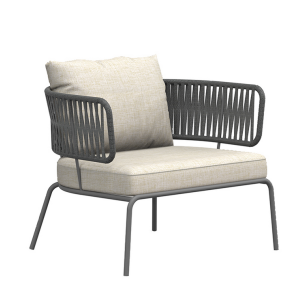
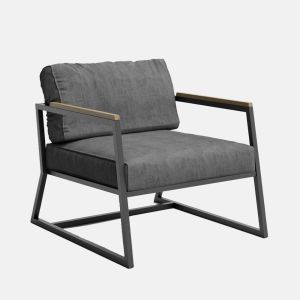
In MAIIMO's collections, this approach shows clearly in the Tuttu Monteur chair: deep, soft, with all the character of an indoor armchair, but fully adapted to humid climates thanks to quick-drying fillings. The Nordic Lounge chair carries a similar feeling with its Scandinavian restraint — minimal decoration, a strong focus on proportion. The Eleonor lounge chair rounds out this group with a distinctive woven texture that works as a textural accent among smoother surfaces. The easiest way to build a full seating area in this "living-room" spirit is with garden sofas — many models there share exactly that deep, lived-in seat depth.
Trend 2. Organic, Soft Forms Instead of Sharp Edges
Right angles and strict geometry are gradually stepping back. In their place: smoothness — rounded edges, wavy lines, asymmetrical "kidney-bean" shapes in tables and planters. It's part of the broader "dopamine decor" movement — interiors that feel visually relaxing and add a sense of motion rather than static rigidity. In a garden, already full of the organic lines of plants, furniture with a soft silhouette simply looks more at home than rigid rectangular shapes.
This shift affects more than the shape of the frame — it changes how furniture gets grouped in a space. Instead of symmetrical rows, you get a loose, casual arrangement of a few chairs at different heights around one coffee table.
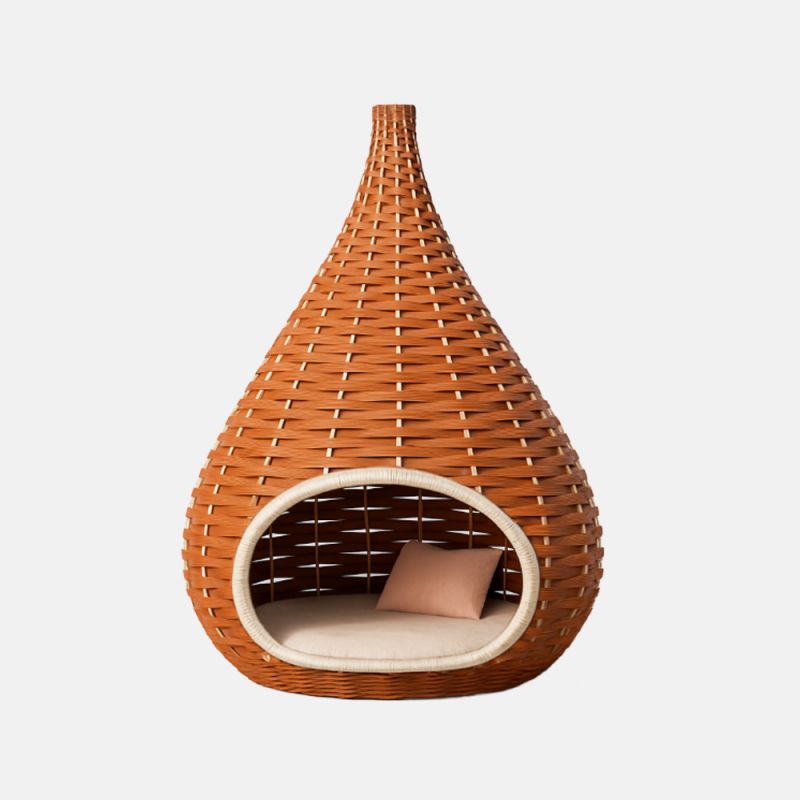
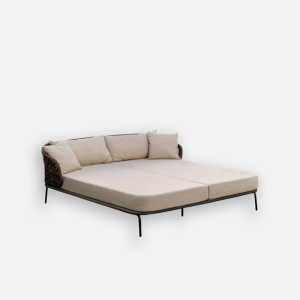
The Inzhyr hanging lounge sofa is maybe the clearest example of this approach: a rounded shape, a soft silhouette that instantly reads as the main accent of the space. The Forest sofa continues the same language of form with its soft-lined frame, as does the Geneva sofa with its rounded headrest, and the Fiji chair, where the curved backrest becomes the main visual focal point. If organic shapes interest you specifically in motion, take a look at swing chairs — the movement itself is exactly the kind of fluidity this trend is about.
Trend 3. Earthy, Natural Tones
The 2026 color palette is deliberately nature-inspired: calm, grounded, a step away from artificial brightness. Terracotta, rust, ochre, sage green, olive and sandy tones are all in fashion — colors that don't compete with garden greenery but reinforce it. It's the opposite of the bold accent colors that dominated past seasons; furniture now tends to grow into the landscape rather than stand out against it.
This choice of palette is closely tied to materials: natural weave texture, unpainted wood and tightly twill-woven textiles work better here than glossy surfaces or bold prints.
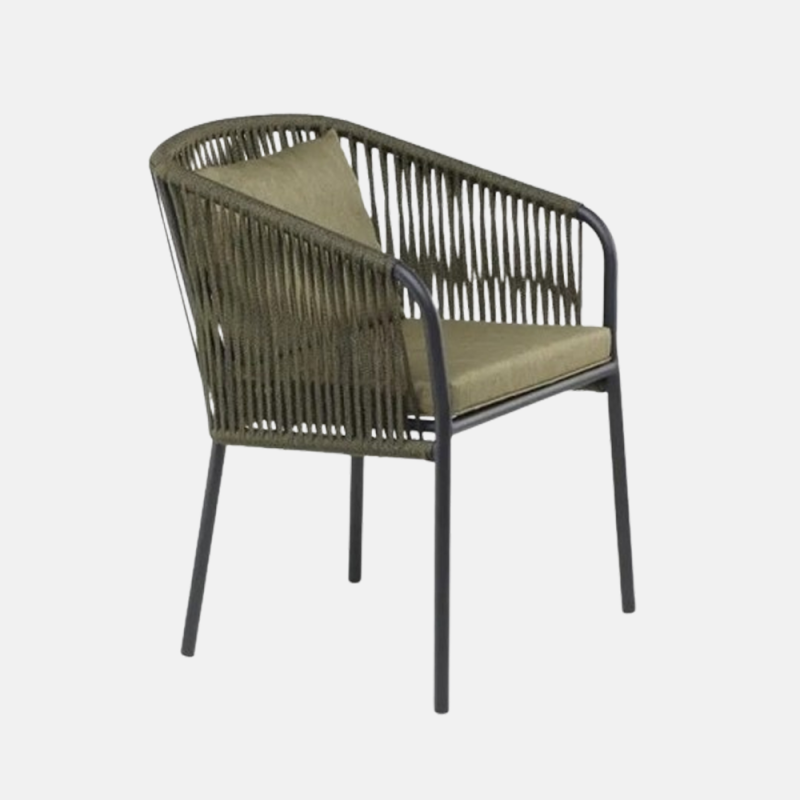
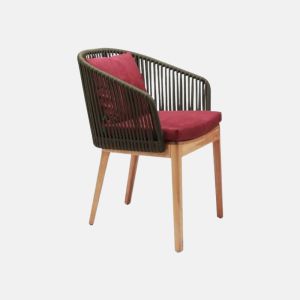
You can see this clearly in the Tvist collection, where the natural weave texture serves as the base for warm, dusty tones. The Komo chair and its lounge counterpart, Komo Lounge, follow the same color-and-texture logic — both lean on the material's natural texture rather than a bold print or lacquer finish. This earthy aesthetic of woven textures is at its fullest in our rattan garden furniture section, ranging from light sandy shades to deep caramel tones.
Trend 4. Material Mix: The Warmth of Wood vs. the Technological Strength of Metal
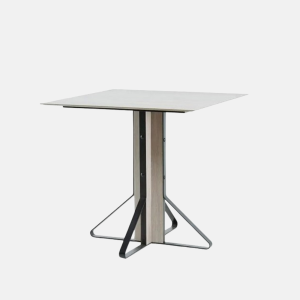
Texture contrast is another direction design studios are actively testing right now. Lightweight aluminum frames, which offer durability and moisture resistance, are paired with teak wood elements or rope weaving. The classic example of this approach is a dining table with an aluminum base and a certified wood tabletop, where the metal part handles function and the wood handles aesthetics and tactility.
This approach solves a practical problem that's long faced garden furniture: fully wooden constructions need regular maintenance, while fully metal ones often look too cold for a cozy space. Combining both in one piece delivers durability and warmth at once.
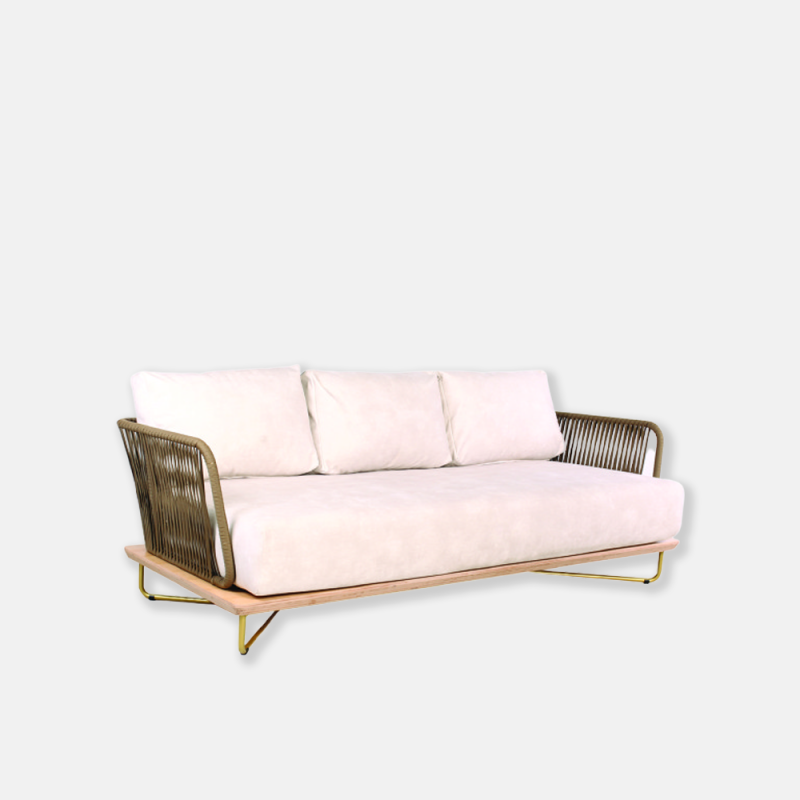
In MAIIMO's range, this idea is well illustrated by the Texas collection: the metal frame works as the "skeleton" of the construction, while wood or textile elements add warmth and tactility exactly where the body makes contact with the furniture. For the dining part of the garden, our garden tables section gathers models with exactly this kind of texture pairing, from compact coffee tables to large dining sets.
Trend 5. "Low Dining" and Multifunctional Furniture
Another notable direction is blending different ways of relaxing into one zone instead of strictly separating "dining" from "lounge." Designers are offering height-adjustable furniture: a table that rises for dinner and lowers for an evening cocktail or a board game, paired with deeper-seated sofas that work equally well for eating and for conversation after sunset.
This is especially relevant for small terraces, where there's physically no room for two separate zones. One convertible table and a few sofa modules can deliver both a dining function and a lounge function, depending on the time of day and the number of guests. This "one piece of furniture, several scenarios" principle is gradually becoming the standard for compact city terraces and balconies, where every square meter has to earn its place.
If you're planning a bar zone as part of this kind of multi-format space — say, for a quick aperitif before dinner — take a look at outdoor bar stools: a compact format that works particularly well in these hybrid terrace scenarios without taking up much room once it's pushed into a corner.
Trend 6. Ultra-Comfort: Deep Seating Instead of Rigid Chairs
The deep seating trend is essentially a move away from classic rigid outdoor chairs toward sofa-level comfort. Deep armchairs, modular sofas and water-repellent, quick-drying fabrics make it possible to build configurations for groups of four or eight without sacrificing comfort — unlike traditional woven chairs, where sitting for long stretches simply isn't comfortable.
This shift in logic comes from the fact that terraces are increasingly used not for a quick snack, but for proper leisure time: reading, watching a movie on a projector, long conversations with friends over a dinner that stretches across several hours. Furniture built for that kind of use has to hold up to hours of sitting just as well as an indoor sofa, not just a few minutes over lunch.
In MAIIMO's catalog, the ultra-comfort idea comes through best in the garden chairs category — that's where you'll find the models with the deepest seating and the most generous cushion fill. Outdoor poufs round out this kind of zone nicely: they add extra footrests or improvised seating without locking you into a fixed layout, which comes in handy when a group of guests turns out bigger than planned.
Trend 7. Eco-Consciousness: Recycled and Bio-Based Materials
A piece of furniture's environmental footprint has become as much of a selection criterion as its design or price. In 2026, that means concrete materials, not an abstract marketing-level "eco philosophy": recycled plastic, reclaimed wood, bio-based materials made from coffee grounds or wheat fiber that used to be discarded as production waste.
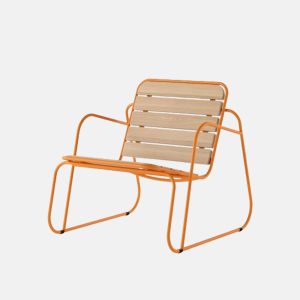
An interesting detail in this trend: garden chairs that look like natural wood but are made from 100% recycled plastic — visually, there's almost no difference, the texture and color mimic a wooden surface closely, while the environmental footprint of production is substantially smaller. It's a good example of how sustainability and aesthetics no longer have to be at odds — eco-friendly furniture used to look like a compromise, now it competes on equal footing in terms of appearance with classic materials.
If you're shopping for chairs specifically with sustainable materials in mind, our garden chairs section lets you compare options by material composition and finish type, while also checking which models pair best with the rest of your terrace furniture by color and texture.
Trend 8. "Neutral Elegance" for the Pool Area
Around the pool, this season's designers are choosing minimalist luxury: light, monochrome tones — beige, milky white, light gray — for both the coping and the furniture. Off-white umbrellas and loungers create a high-end resort effect without excess decoration, where clean lines do the work rather than bold details.
The key to this trend is consistency of palette: when every element of the relaxation zone sticks to one neutral range, the space reads as a single composition rather than a collection of random pieces.
For this kind of space, MAIIMO's catalog is worth starting with sun loungers — that's where you'll find the models in a calm, neutral palette designed for long stretches lying by the water. Garden umbrellas in the same tone complete the composition, supporting the overall consistency of the relaxation zone and avoiding visual clutter.
One practical tip worth adding here: when choosing furniture for an open relaxation zone, it's best to avoid cheap "fake wicker" plastic weave from the start — it picks up dirt quickly and tends to fail within a season or two of regular use. Investing instead in powder-coated aluminum frames and quality quick-drying textiles is the same "gold standard" of durability that every design studio working with private pools and hotel properties keeps coming back to.
Trend 9. "Aluminium Minimalism": Aesthetics and Durability
Aluminum has firmly become the main "skeleton" of modern terrace furniture, pushing more demanding materials into the background. It's a choice in favor of architectural simplicity: aluminum doesn't rust, which matters in a damp climate, it's light enough to move around even for one person, while still offering strong structural integrity. Thanks to powder coating, frames can take on practically any color — from matte anthracite to a soft sage tone — giving designers far more freedom than painted metalwork ever offered before.
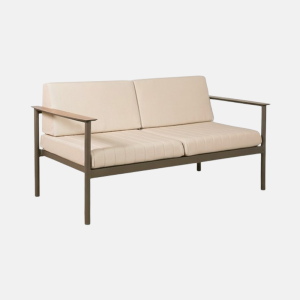
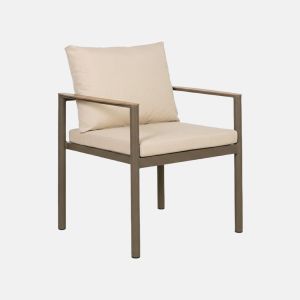
In practice, that means powder-coated modular sofas that read as a light architectural structure with minimal cushioning, dining sets with ultra-thin frames that don't visually overwhelm a compact courtyard, and combinations of aluminum with teak wood in armrests or tabletops — a contrast of cold metal and warm wood back at the height of popularity among architects.
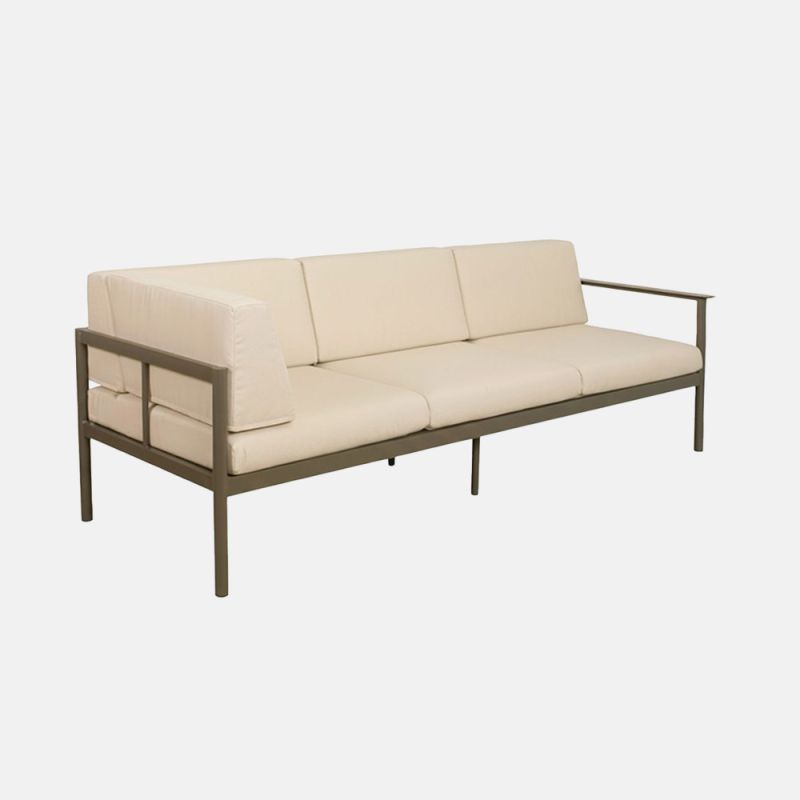
The Atlas collection is one of the clearest examples of this direction in MAIIMO's catalog: a lightweight aluminum frame, a clean silhouette and minimal visual weight. For a full relaxation zone, this kind of piece needs minimal upkeep — just water and a soft sponge — and looks just as good on a terrace as it does by a pool. Garden beds can round out the composition in the same minimalist spirit, carrying the same architectural approach to form as aluminum lounge groups.
How to Combine Several Trends in One Space
The nine directions we've covered rarely exist on their own — in real projects, they overlap and reinforce each other. A terrace with a flexible low dining setup can easily have an aluminum frame and an earthy textile palette at the same time; these aren't mutually exclusive choices, they're different layers of the same composition. So instead of picking "one trend" and sticking to it, it's worth looking at your own space and how you actually use it.
If you have a small balcony or a compact terrace, start with multifunctional furniture (Trend 5) and light aluminum (Trend 9) — they give you the most function for the least visual weight. For a larger garden or backyard, ultra-comfortable sofas (Trend 6) paired with organic forms (Trend 2) tend to work better — there's enough room for soft, voluminous silhouettes without the space feeling overloaded. And for a pool area, it's worth sticking to a consistent neutral palette (Trend 8), adding only small accents of texture or color so as not to break the sense of resort-like calm.
The MAIIMO team keeps a close eye on these directions and regularly updates the garden collection range to reflect current materials and silhouettes — so the catalog always has options that fit not just the current season, but the real conditions of outdoor use in Ukraine's climate.