Lizhnyk: From the Carpathians to Modern Interiors — A Journey of Tradition, Warmth and Style
- Lizhnyk: From the Carpathians to Modern Interiors — A Journey of Tradition, Warmth, and Style
- What Is a Lizhnyk, Exactly?
- From Tradition to Trend
- THE ART OF CREATION: FROM SHEEP TO MASTERPIECE
- How a Lizhnyk Differs From a Kilim or a Sheepskin Rug
- LIZHNYK IN MODERN INTERIOR: NOT JUST WARMTH, BUT STYLE
- Monochrome — Calm and Depth
- Geometry and Abstraction — The Modern Face of Tradition
- Multifunctionality: From Blanket to Carpet
- Sustainability, Eco-Friendliness, and the Spirit of the Carpathians
- Sizing and Care, in Brief
- Frequently Asked Questions
- Lizhnyk — An Emotion You Can Touch
- Lizhnyk — Your New Interior Must-Have
Lizhnyk: From the Carpathians to Modern Interiors — A Journey of Tradition, Warmth, and Style
In a world where we increasingly seek authenticity, meaning, and connection with nature, traditional items gain a new resonance. One such treasure is the lizhnyk — a Hutsul woolen product that combines functionality, aesthetics, and a deep cultural heritage.
What Is a Lizhnyk, Exactly?
A lizhnyk is a thick, hand-woven wool blanket from the Carpathian Mountains, traditionally made by Hutsul weavers on narrow wooden looms, from the wool of mountain sheep grazed on the same high pastures for generations. It is heavier and shaggier than a typical throw — closer in weight to a rug, which is exactly why it doubles as one. On a bed it works as a cover; on a sofa, a blanket; on a floor or a wall, it behaves like a soft, textured rug. What sets it apart from a factory-made throw is the finish: the surface pile is left slightly uneven on purpose, a signature of hand-weaving rather than a flaw. No two are identical, and it was often part of a family’s dowry — a textile with a role in someone’s life long before it became decor.

From Tradition to Trend
So what is a lizhnyk? It is not just a woolen blanket from the Carpathians — it is the soul of the mountains, encoded in ornaments and texture. Created by hand using ancient weaving techniques, it served the Hutsuls as a source of warmth during harsh winters, and today — as an element of coziness in homes around the world.

These items were part of family history, a symbol of comfort and prosperity. And although lizhnyks were previously used primarily for utilitarian purposes — for warmth, today they are winning the hearts of designers as decorative accents, art objects, and furniture elements. This is textile with character.
THE ART OF CREATION: FROM SHEEP TO MASTERPIECE
Every lizhnyk travels a path from raw, steaming wool to a soft, warm fabric — a path imbued with love, patience, and the knowledge of generations.
- Natural sheep’s wool is the heart of the lizhnyk. The sheep graze on the mountain meadows of the Carpathians; their wool is warm, durable, and eco-friendly.
- Washing and drying are done according to old traditions: the wool is washed in rivers and dried under the sun — not just cleansing, but a sacred ritual of purification and energetic fulfillment.
- Carding and dyeing are the next stages, where the wool turns into a fluffy, obedient thread. The dyes are mostly natural, made from bark, herbs, and flowers.
- Weaving is the peak of mastery. Patterns are created by hand, thread by thread, with respect for tradition and creativity inherent in modern art.
No lizhnyk is the same. It is like a living organism, unique in every fiber.
How a Lizhnyk Differs From a Kilim or a Sheepskin Rug
The three get lumped together often enough that it is worth being precise. A kilim is flat-woven from tightly pulled wool or cotton threads — geometric, thin, and made to lie flat underfoot; it does not work well as a blanket. A sheepskin is a single hide: soft, but without structure, pattern, or much size to speak of. A lizhnyk sits between the two — it has the pile and weight of a rug, the pattern-work of a woven textile, and a warmth a sheepskin cannot match at that size. That combination is also why it moves so easily between roles, while a kilim mostly stays on the floor and a sheepskin mostly stays draped over one chair.
LIZHNYK IN MODERN INTERIOR: NOT JUST WARMTH, BUT STYLE
Today, the lizhnyk goes far beyond ethnic décor. It integrates into minimalism, Scandinavian style, boho, loft, and even high-tech. Its texture and natural palette are the perfect addition to restrained spaces.

Monochrome — Calm and Depth
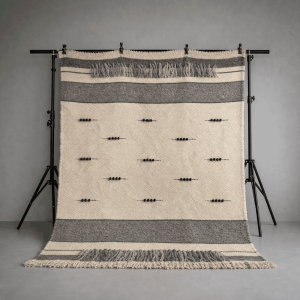
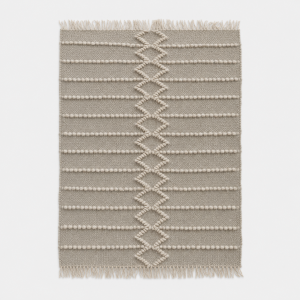
Lizhnyks in shades of gray, sand, white — ideal for admirers of calm aesthetics. They do not shout, they whisper. Their beauty lies in tactility, in the play of shadows that emerges due to the varying height of the pile.

Geometry and Abstraction — The Modern Face of Tradition
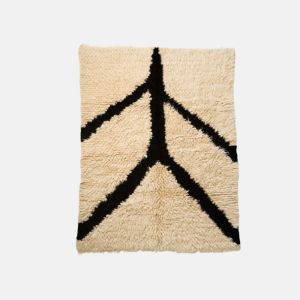
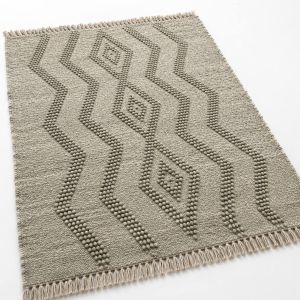
Lizhnyks with clear lines, circles, rectangles add structure. Abstract compositions are like paintings that can be hung on the wall. They do not just decorate — they speak.
-min.jpg)
Multifunctionality: From Blanket to Carpet
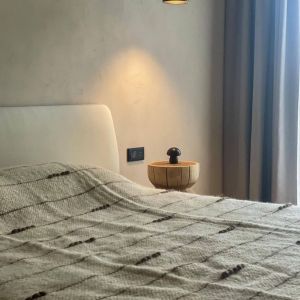
- On the bed — as a cover that creates the feeling of an embrace.
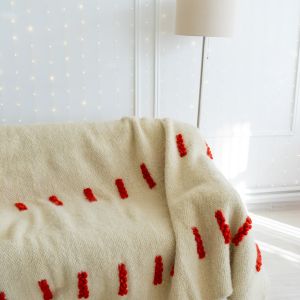
- On the sofa — as a warm blanket and stylish element.
- On the floor — a soft carpet that brings coziness.
- On the wall — an art object that replaces painting.
-min.jpeg)
Lizhnyks are not just textiles. They are design objects with deep meaning.
Sustainability, Eco-Friendliness, and the Spirit of the Carpathians
In a world of fast fashion and disposable solutions, the lizhnyk is an example of slow design. It is handmade from natural materials, durable, and completely biodegradable. By choosing a lizhnyk, you support not only an eco-friendly choice but also the artisans who preserve the living culture of the Carpathians.
-min.jpeg)
It is an item that not only decorates the home, but has a history. And also — a future.
Sizing and Care, in Brief
Lizhnyks typically run from around 150×200 cm up to 200×220 cm — roughly a large throw up to a full bed cover or small area rug. For a sofa throw or wall hanging, the smaller end works better; for a bed cover or floor rug, size up. Care is simple: hand wash in cool water with a mild detergent, avoid wringing, and dry flat away from direct heat — for the full routine, including moth prevention and off-season storage, see our guide to caring for a wool lizhnyk.
Frequently Asked Questions
What is a lizhnyk used for?
Traditionally a blanket, though today it is just as often a floor rug, a sofa throw, or a wall hanging — the weight and pile work for all three.
Is a lizhnyk the same as a regular wool blanket?
Not quite. A standard wool blanket is usually machine-woven and flatter; a lizhnyk is hand-woven, thicker, and closer in structure to a rug, which is why it can double as one.
Is a lizhnyk itchy or scratchy?
Traditional Carpathian wool is coarser than merino. A boucle-finish lizhnyk is noticeably softer, or use it over a sheet rather than directly against skin.
Can a lizhnyk actually be used as a rug?
Yes — that is one of its original uses. The pile and weight hold up well underfoot, though like any wool rug it is better suited to lower-traffic spots than an entryway.
Lizhnyk — An Emotion You Can Touch
It warms not only the body, but also the soul. In every knot, in every fiber — the warmth of human hands, the spirit of the mountains, the breath of wind from the highland meadow. A lizhnyk is a blanket with a story that you unfold in your own interior.
-min.jpg)
Lizhnyk — Your New Interior Must-Have
If you're looking for something more than just a beautiful item — choose a lizhnyk. It’s a connection to ancestors, to nature, to art. It’s something that holds meaning. And style.
If you are looking for something with more behind it than a name on a tag, browse Ukrainian handcrafted wool area rugs — each one carrying a little of where it came from.