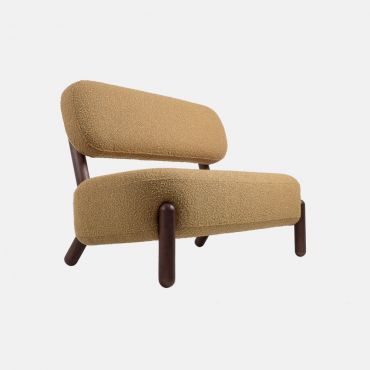
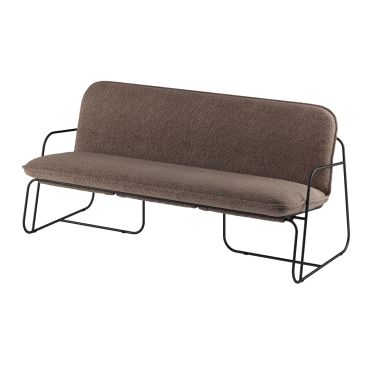
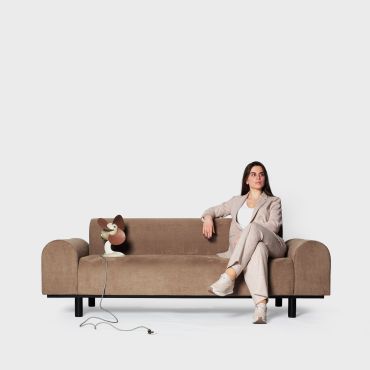
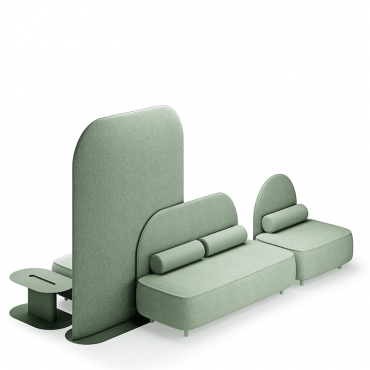
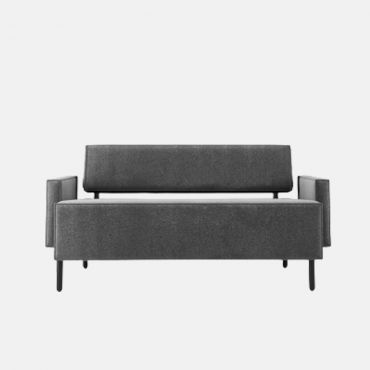
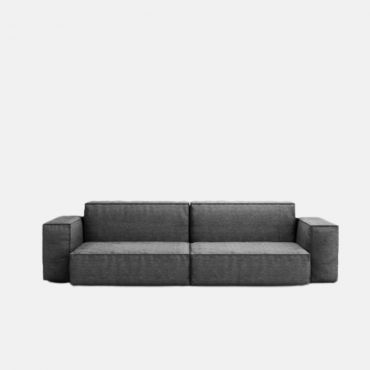
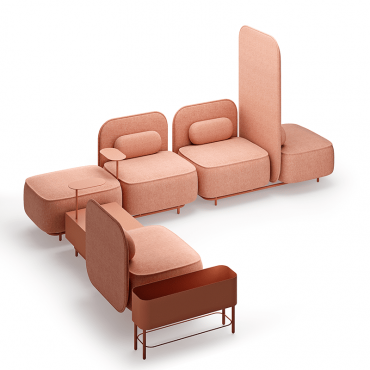
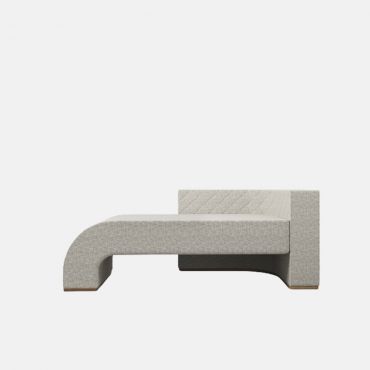
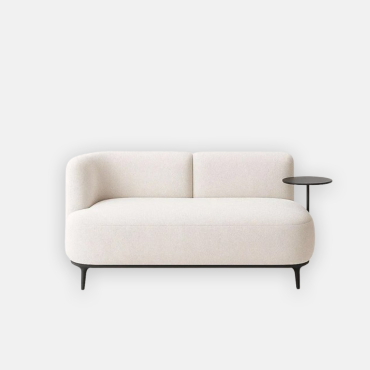
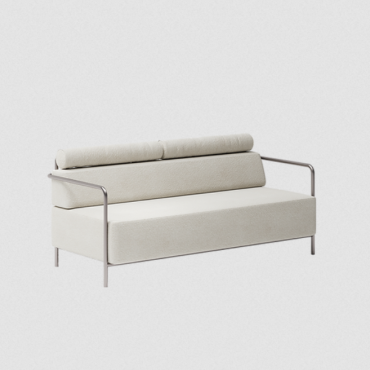
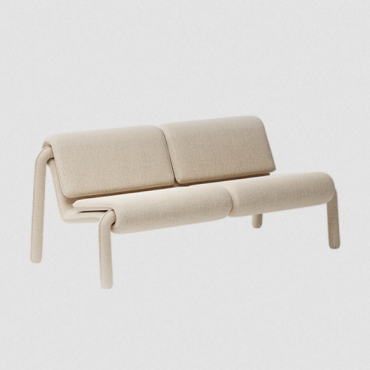
Sofa for the Living Room: How to Choose Shape, Size and Character
A sofa may look like a simple piece of furniture: a soft seat, a back, sometimes armrests, enough room for one or several people. In an interior, though, it works with much more nuance. A large classic couch quickly becomes the center of a room, sets the scale and often takes over the whole composition. A sofa can act differently. It can be the main accent in a compact living room, a companion to a pair of armchairs, a reading place by the window, a quiet pause in the bedroom or a calm seat in a home office.
For MAIIMO, a sofa is not a compromised “small couch”. It is a separate furniture form with its own role. It matters where you want softness, but do not want to overload the space. It works in open-plan apartments, bedrooms, living rooms that already have a larger couch, niches near bookshelves, private corners of the house and places where you need a few quiet minutes for yourself.
If you want to buy sofa pieces not as random catalogue items, but as part of a considered interior, start with the scenario rather than the color. Who will use it? Is it a place for conversation, reading, short rest, waiting, morning coffee, watching a film or working with a laptop? The answer affects seat depth, back height, cushion softness, fabric type, width and even whether you need a side table, a floor lamp or a pouf next to it.
What a sofa is and why it is not just a small couch
In search behavior, people often use several names for the same intention: sofa couch, sofa, small couch, lounge sofa, soft bench with a back. In everyday language, these words overlap. For a good choice, the important difference is not dictionary purity, but the feeling the piece creates in the room.
A couch is usually bought as the main seating place in a living room. It has to handle long evenings, guests, family scenarios and, quite often, a sleeping function or a deep seat. A sofa can be more intimate. It may be lower, lighter in silhouette, narrower or, on the contrary, more sculptural. It does not always have to “close” the whole lounge area. Its strength is precision.
That is why a sofa works so well in designer interiors. It does not simply fill an empty spot. It creates a specific gesture: it invites someone to sit by the window, softens a strict study, adds warmth to an entrance hall, turns a bedroom into more than a room for sleep. If a classic couch often answers the question “where will everyone sit?”, a sofa answers another one: “where will the quiet pause be?”.
On the soft furniture page, you can see the wider context: armchairs, sofas, poufs and other pieces for a soft zone. The sofas page remains a separate direction for cases when you need larger scale and a full couch arrangement.
When to choose a sofa instead of a classic couch
A sofa is especially useful in three scenarios. The first is a small room where you still want a soft place to sit. In a compact living room, a large couch may look practical at first, but visually it often eats up the air. A sofa leaves more room for circulation, light, a table, an armchair or plants. It does not turn the room into a furniture warehouse and does not force everything else to adjust to it.
The second scenario is a room that already has a main couch, but needs another soft focus. In a large living room, a sofa can stand near a bookcase, beside a fireplace, opposite a panoramic window or in the quieter part of the room. In this case, it does not compete with the main couch. It adds depth to the layout and makes the space feel more layered.
The third scenario is a bedroom, study or guest room. Here, living room sofa is no longer the only useful phrase, because the piece moves easily into private zones. In a bedroom, it can stand at the foot of the bed, replace a bench or create a place for reading. In a study, a sofa makes the room less official. It is no longer only a work area, but a place where you can pause, think and talk.
When choosing between a couch and a sofa, ask yourself one simple question: do you need the main seat for the whole household, or a more focused soft zone? If it is the first, larger couches will often be better. If it is the second, a sofa can be the more precise, lighter and more beautiful answer.
Materials, seat comfort and the feeling of a soft sofa
A good soft sofa starts not with the photo, but with the way the seat feels. Some models invite you to sink in after a long day. Others are more gathered, resilient and architectural, holding their shape better for conversation, waiting or work-adjacent spaces. None of these types is universally right. The right one is the one that matches your rhythm.
For a living room where the sofa will stand next to a coffee table and be used every day, a balanced seat is important: soft enough to relax, but not so deep that standing up becomes awkward. For a bedroom or lounge corner, you can allow a softer, lower and more relaxed form. For a study or commercial interior, denser seats usually work better because they look composed and hold their silhouette longer.
Fabric matters too. Light upholstery adds air and works well with natural wood, stone and warm white walls. A darker fabric creates depth, grounds the room and can make a beautiful contrast with a light rug or pale walls. Textured fabrics add tactility; smoother fabrics look more restrained. If the sofa will be used actively every day, it is worth checking abrasion resistance, care instructions and how the textile behaves in real life.
At MAIIMO, the point is not only that a piece “looks good”. It should live with the space. A sofa has to be expressive enough to be noticed, but not so loud that you want to remove it from the room after six months. Neutral tones, natural textures, clean lines and good seat comfort often outlast fast decorative effects.
How to combine a sofa with tables, armchairs, poufs and lighting
A sofa rarely lives alone. Even a compact model usually needs something nearby: a place for a cup, a book, a phone or a vase. In the living room, coffee tables are the natural pair. They gather the soft zone into one composition and help the sofa feel like the center of a small scenario, not a random seat by the wall.
If the room is small, you can use side tables instead of one larger coffee table. They work near an armrest, by a window or between a sofa and an armchair. A side table is easy to move and visually lighter. For a bedroom or a quiet reading corner, bedside tables can also be useful, especially when the sofa is part of a private resting area.
To make the composition feel complete, support the sofa with other soft pieces. Armchairs create dialogue: the room stops facing only a TV or one wall and becomes a place for conversation. Poufs make the zone more flexible. They can be an extra seat, a footrest or a soft accent. Rugs help define the area visually, especially in open-plan spaces.
Lighting completes the scenario. Next to a sofa used for reading or evening rest, floor lamps work beautifully. They give local light and do not require complicated installation. If the sofa stands near a wall, wall sconces can be a clean solution: they keep the table surface free and add a more architectural rhythm.
The main principle is simple: you do not need to add everything at once. A sofa, one table and the right light can already create a complete zone. If the space is larger, add an armchair, pouf or rug. If the room is compact, leave air and do not turn the soft area into a dense block of furniture.
Convertible sofa, sofa bed and functional scenarios
Searches such as convertible sofa, sofa bed and small sleeper sofa show that some buyers are looking not only for a beautiful seat, but also for an extra function. That makes sense: in compact apartments or guest rooms, one piece often has to work in several modes. Still, it is important not to mix up the scenarios.
If you need a proper everyday sleeping place, check the mechanism, mattress or filling, dimensions when opened and the convenience of daily folding. Not every sofa needs to become a bed, and not every sofa bed will be the best solution for permanent sleep. Sometimes a full sleeper couch or a separate bed is the more honest choice, while the sofa stays a daytime resting piece.
If you need an occasional guest option, a short resting place or a flexible piece for periodic use, a convertible function can be useful. In that case, measure not only the space where the sofa stands when closed, but also the area in front of it. This is where mistakes often happen: the piece looks perfect against the wall, but once opened it blocks a passage, a door, a wardrobe or access to the table.
For the MAIIMO page, these keywords should be used carefully and honestly. If a specific model has a transformation mechanism, it should be shown in the product card. If not, the text can explain the difference between a decorative sofa, a convertible sofa and a sofa bed, without creating the expectation that every model in the category is meant for sleep.
How to choose the right sofa size
Before buying, measure not only the wall width, but the whole usage zone. A sofa needs space around it: a passage, room to open doors, distance to a table and a comfortable side approach. In a small room, it is better to keep 60-80 cm for the main walkway and around 35-45 cm between the seat and the coffee table, so it is easy to sit down, place a cup and move without hitting your knees.
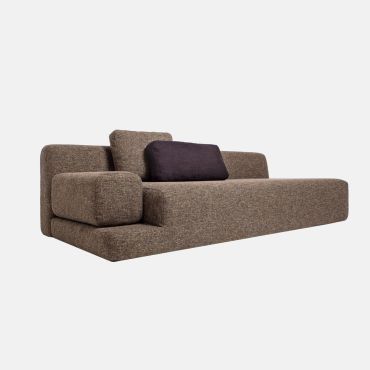
Back height depends on how you will use the sofa. A low back looks light and modern, does not block windows and does not visually divide the room. A higher back gives more body support and creates a more sheltered feeling. Armrests add comfort, but they increase the total width, so in compact rooms every 10-15 cm matters.
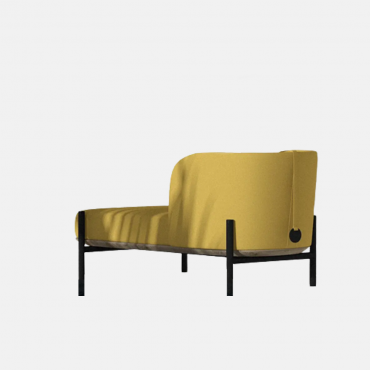
If the sofa will stand in the center of the room rather than against a wall, pay attention to the back side. It should look finished, because it will be visible from different angles. This is especially important in open-plan interiors. A sofa can provide seating, but it can also softly zone a kitchen-living room, separating the lounge area from dining or work.
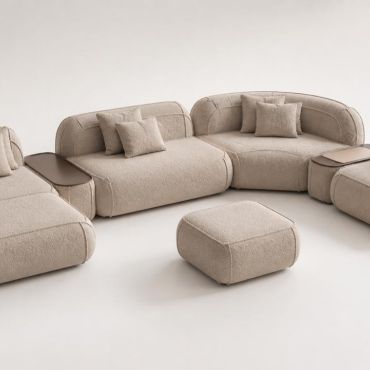
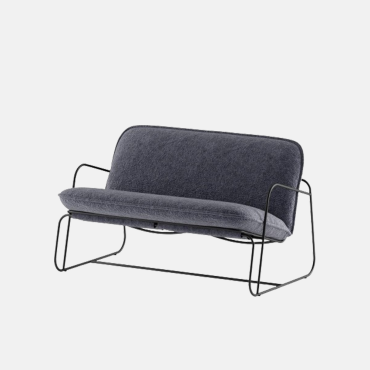
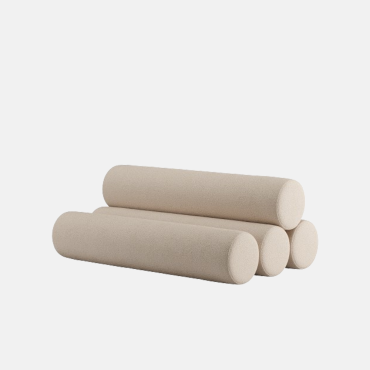
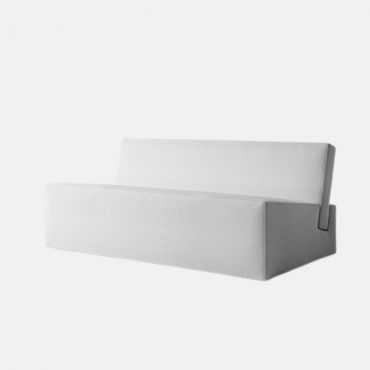
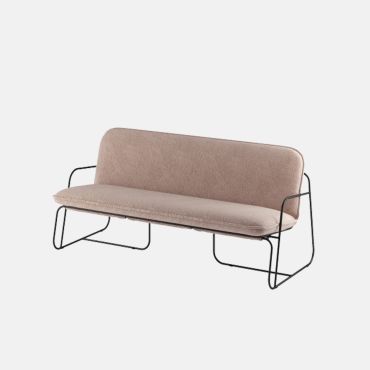
Color and shape also affect how large the piece feels. A light rounded sofa looks softer and visually lighter even if it takes up the same floor area as a darker model with sharp straight lines. Legs open the floor and add air. A solid base feels more monolithic, but it can be the right choice if you want a more architectural object.
How to buy a sofa at MAIIMO
To buy designer sofa pieces successfully, start with a simple list: room, dimensions, scenario, desired seat feel, color palette and nearby furniture. If you already have a coffee table, rug or armchairs, the sofa should be chosen with those elements in mind. If the soft zone is being created from scratch, the sofa can become the piece that defines the character.
MAIIMO works with Ukrainian design, furniture production experience and a curated approach to the assortment. This means the category page should not be just a list of items. It should help you understand which model will live naturally in your interior: not too massive, not random, not only beautiful in isolation, but relevant next to your materials, light and daily habits.
Before ordering, clarify available fabrics, production time or stock, delivery conditions, individual selection options and upholstery care. If you are choosing between two sizes, the safer one is often the one that leaves more air. A sofa should make the room more comfortable, not force the room into unnecessary compromises.
For online selection, it helps to have photos of the room, wall measurements, passage widths and approximate tones of the materials already present. This makes it easier to understand whether the chosen sofa will look natural. Sometimes the difference between “a beautiful object” and “a beautiful object for this exact room” is only a few centimeters, the tone of fabric or the height of the legs.
Where a sofa works best
In the living room, a sofa can be an independent piece or part of a larger soft group. It suits small apartments where space matters, but it is also useful in large rooms that need an additional, more private zone. In a bedroom, it adds comfort without making the room formal: a place for a book, coffee, clothes or a quiet call.
In a study, a sofa softens the working mood and creates a place for informal conversation or short pauses. In an entrance hall or spacious corridor, it can work as a visual accent, but size is crucial. For a narrow space, choose a clean silhouette. For a larger hall, a more expressive form can work well near a mirror, console or light.
Sofa color: neutral base, accent or tone-on-tone
Choose sofa color next to the floor, walls, curtains, rug, wood and metal already present in the room. The same beige may look warm and soft next to oak flooring, but too yellow beside cool gray stone. Gray can be a calm base, or it can make the room flat if there is not enough texture. Green, terracotta, deep blue or graphite can work as accents, but only when the rest of the room gives them enough space.
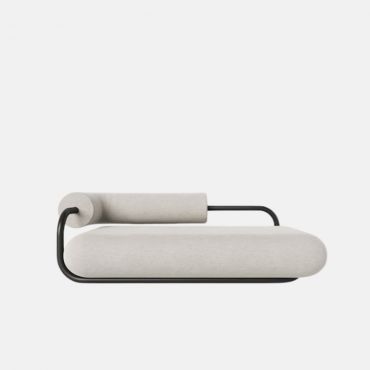
For a long-lasting interior, complex natural tones usually win: milk, warm gray, sand, olive, clay, cocoa, misty blue, soft black. They are not loud, but they have character. Such a sofa does not tire the eye and is easier to combine with wood, stone, ceramics, textiles and plants. If you want a more expressive model, it is often better to make the accent not only through color, but through form: a rounded back, an interesting base, a visible seam or a special textile texture can look calmer and more refined than a simply bright shade.
A tone-on-tone sofa is a choice for those who love quiet interiors. The piece does not disappear if it has good texture, volume and lighting. It becomes part of the room’s architecture. An accent sofa works differently: it needs enough visual space around it. If a bright model stands between a wardrobe, heavy curtains, an active rug and too many patterned cushions, the accent becomes noise.
Practicality matters too. A very light sofa can be beautiful, but it requires discipline in care. A very dark one can hide some marks, yet dust, lint and fabric traces may be more visible. If the model is for active daily use, look for balance: the color does not have to be dark, but the fabric should be durable and the tone should not be too demanding.
Common mistakes when choosing a sofa
The first mistake is buying only by photo. A model may look compact online, but in a real room it can be too deep or too low. Or the opposite: it may look soft and relaxed, but have a more formal seat. Before ordering, look at width, seat height, depth, back height and overall proportion. If possible, compare these parameters with furniture you already use.
The second mistake is ignoring movement through the room. A sofa may fit perfectly on a plan, but interfere with balcony doors, wardrobe access or the route to a table. This is especially important in compact apartments, where every piece affects daily movement. It is better to leave a little more empty space than to have a beautiful composition that irritates you in everyday life.
The third mistake is confusing decorative function with sleeping function. If someone searches for sofa bed or convertible sofa, they often want two objects in one. That is possible, but not always necessary. If the main task is a beautiful place to rest, extra transformation can complicate the construction and change the seat. If the main task is sleep, sleeping comfort has to come first and decoration second.
The fourth mistake is choosing the sofa separately from lighting. In a showroom or photo, fabric appears under one light; at home, it changes. Northern light makes colors cooler, warm lamps add yellow, directed light can emphasize texture, and weak light can flatten the piece. If the sofa belongs to an evening zone, plan local lighting from the beginning.
The fifth mistake is using too many cushions. Decorative cushions can support color and make a sofa feel warmer, but if they take half the seat, the object loses its purpose. For a small sofa, two or three well-chosen cushions are better than a whole set of random textiles. A designer piece does not need excessive decoration when its form, fabric and proportions already work.
How to evaluate quality before buying
Sofa quality has several layers. The first is construction. It should feel stable, without wobbling, imbalance or accidental assembly. The second is filling. A good seat should not lose its shape immediately, but it should not be too hard if the model is intended for rest. The third is upholstery. Even seams, neat corners, proper fabric tension and the absence of unwanted waves are all important.
Look separately at the back. Even if the sofa will stand against a wall, a quality piece should look finished from all sides. This matters even more if the layout may change. Today the sofa stands in a corner; next year you may move, rearrange the room or place it in the center. A finished back gives you more freedom.
Small details also matter: how the fabric wraps around the armrest, whether technical elements are visible, whether cushion density is consistent, whether the base makes noise, whether the legs stand evenly. In designer furniture, these details create the feeling of calm quality. They are not always obvious in the first photo, but they are very clear in daily use.
When choosing where to buy sofa pieces, do not look only for the lowest price. A cheaper model may look similar in a catalogue, but the difference will appear in fabric, seams, seat feel, construction stability and the way the object ages. A sofa is not one-season decor. It touches the body every day, so it should be pleasant not only to the eye, but also to the hands, the back and the rhythm of the home.
Sofa in a Ukrainian designer interior
Ukrainian interiors have become much more attentive to calmness, texture and local production. There is less desire to copy ready-made images and more desire to build spaces with their own character. In such an interior, a sofa can become a precise object: not overly formal, not random, not mass-produced in feeling, but gathered around real life.
In an apartment with wooden flooring, it can support a warm natural palette. In a minimalist space, it can add softness so the room does not become cold. In a more classic interior, it can bring a contemporary line without fighting the architecture. In a new apartment, it can quickly create the feeling of home when the walls still feel too new and the space needs textile, softness and human scale.
For MAIIMO, it matters that a sofa is not separate from the culture of production. Ukrainian furniture is not only a symbolic choice; it is also a practical possibility to have a piece closer to local spaces, real apartments, familiar layouts and materials. When production, design and communication are near each other, it is easier to discuss fabrics, sizes, timelines and how the piece will work in your interior.
FAQ
What is a sofa?
A sofa is a soft furniture piece for sitting and resting, usually more compact or lighter in feeling than a classic couch. It can have a back, armrests, cushions and different seat depths. In a modern interior, a sofa often works as an intimate zone for a living room, bedroom, study or lounge space.
What is the difference between a sofa and a couch?
A couch is often the main seating piece in a living room, while a sofa can be lighter, more compact or more decorative in its role. The difference is not always strict, so sofa couch searches often describe similar pieces. For the choice, size, seat comfort, function and room scenario matter more than the exact word.
When should I choose a sofa couch?
A sofa couch is a good choice when you need a soft place to sit, but a large couch would feel too massive. It works in a small living room, bedroom, study, guest room or second lounge zone. This type of piece adds comfort without overloading the space.
Is a sofa suitable for a living room?
Yes, a living room sofa is especially useful when the room is compact or when you want to create a separate soft zone. It can be combined with a coffee table, armchair, pouf, rug and local lighting. In a larger living room, a sofa can complement the main couch.
Can a sofa be convertible?
Yes, a convertible sofa exists, but not every model has a transformation mechanism. If you need a sleeping place, check the dimensions when opened, the convenience of the mechanism, the mattress or filling and how often it will be used. For everyday sleep, the model needs careful evaluation.
What is better: a sofa bed or a classic couch?
A sofa bed works better where you need an extra function for guests or a small space. A classic couch is often more comfortable for a large family living room and long daily use. The choice depends on what matters most: compactness, transformation, seat comfort or main lounging function.
What sofa size should I choose for a small room?
For a small room, choose a sofa that keeps passages comfortable and does not block light. Measure not only the wall, but also the space in front of the seat, the distance to a table, doors and wardrobes. A cleaner model on legs often feels lighter visually.
Which fabric is best for a soft sofa?
For a soft sofa, consider not only color, but also durability, texture and care. Light fabrics add air, darker ones create depth, textured textiles make the room warmer. If the sofa will be used every day, check upholstery practicality before ordering.
What should I combine a sofa with?
A sofa can be combined with a coffee table or side table, armchair, pouf, rug, floor lamp or wall sconce. In a small room, one table and local light may be enough. In a larger living room, you can build a full soft group with several pieces.
Where can I buy a designer sofa in Ukraine?
You can buy designer sofa models in Ukraine at MAIIMO if you value not only the product itself, but design, material quality, Ukrainian production and a coherent interior. Before buying, define the room, dimensions, usage scenario and desired seat feel so the model works naturally in your space.