Kids Montessori Beds
Being independent from childhood
Kids Montessori beds bring a quiet kind of freedom into a child's room: the child can get up, settle down, reach for a book near the pillow and feel that the space belongs to them. At MAIIMO, Montessori beds for kids are not treated as temporary furniture for a short stage, but as a thoughtful part of the room, with calm proportions, warm materials and a design that can grow with everyday life.
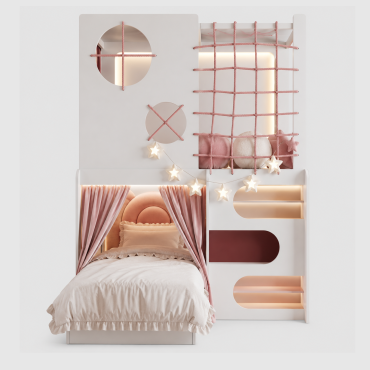
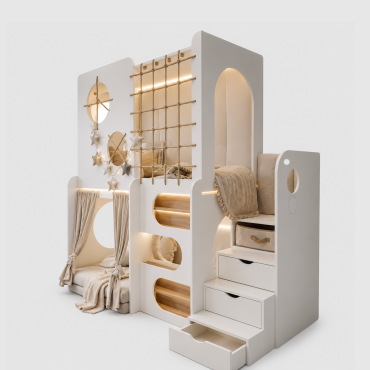
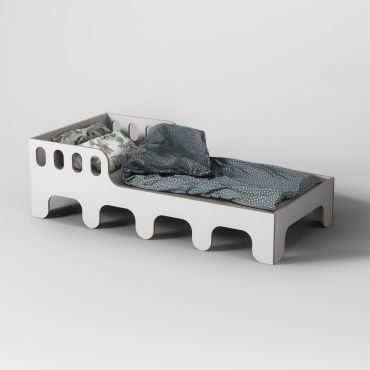
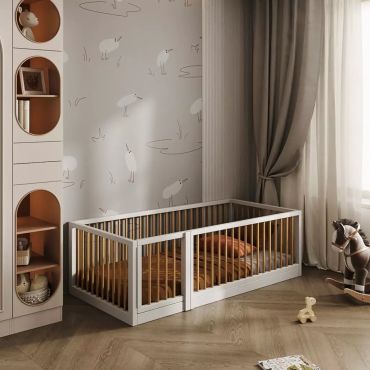
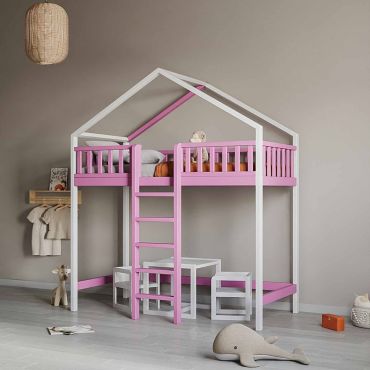
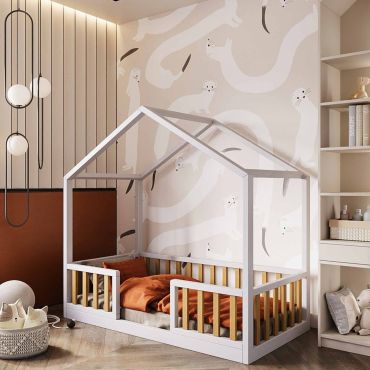
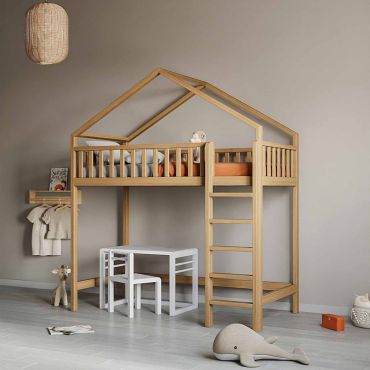
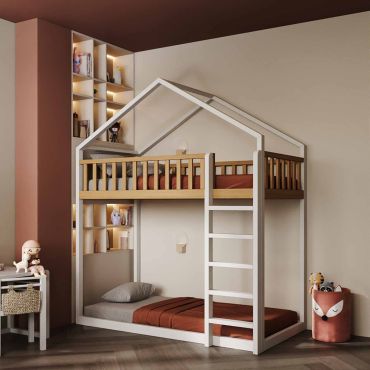
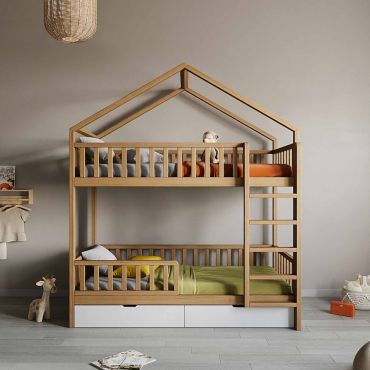
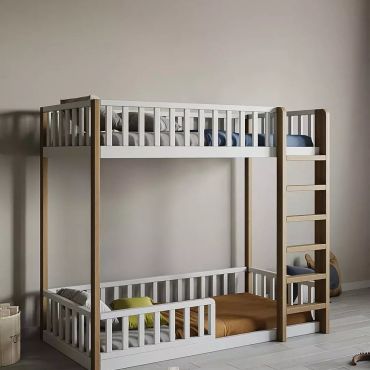
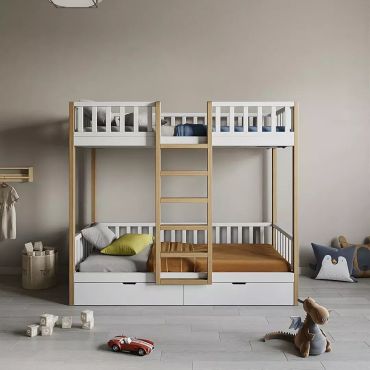
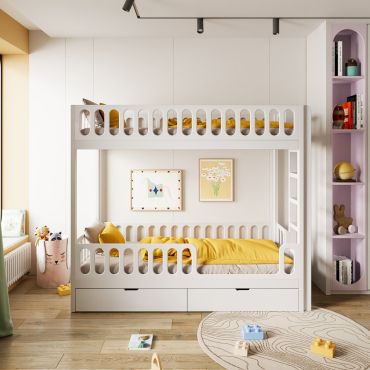
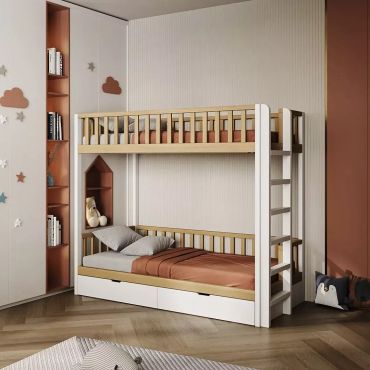
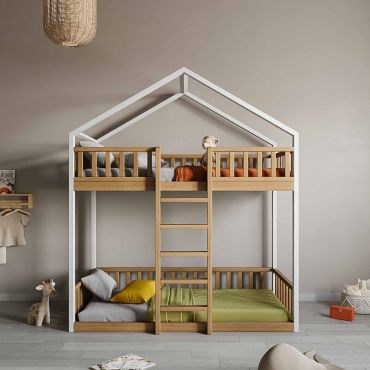
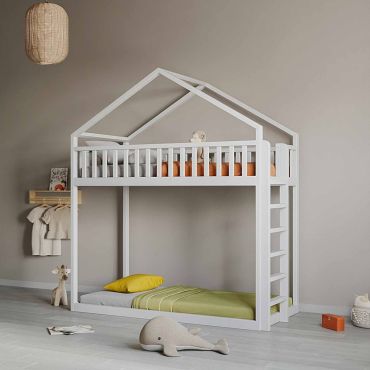
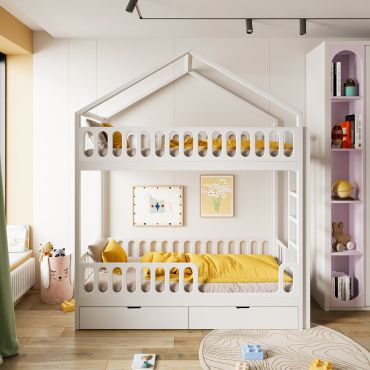
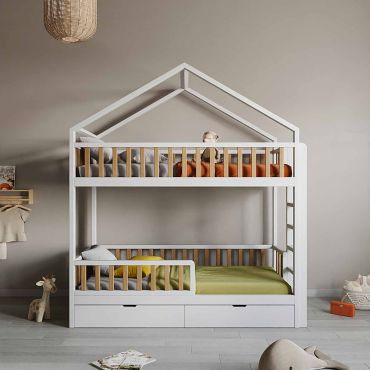
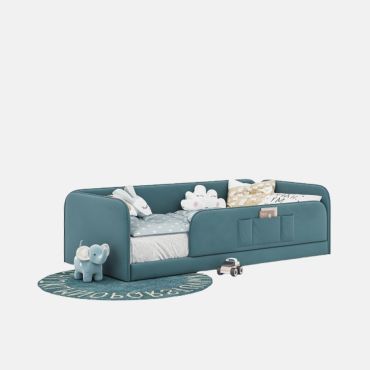
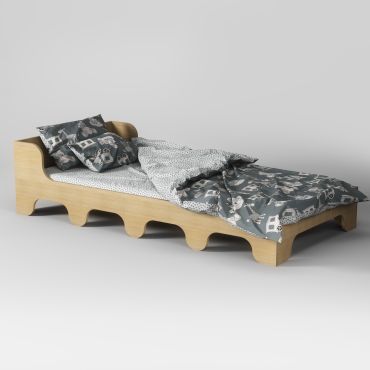
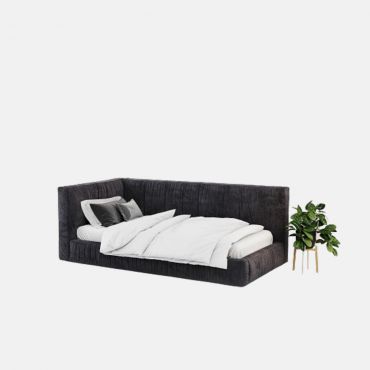
Kids Montessori beds for independent sleep and a calmer child's room
Kids Montessori beds start with an idea, not a shape: a child should see the bed as accessible, clear and safe. A low profile removes unnecessary fear around height, and the room stops being a place where only adults decide how everything works.
In a well-planned interior, Montessori beds for kids do not look like a teaching experiment. They look like quiet, warm, visually light furniture that supports daily rhythm: waking up, resting during the day, reading before sleep, trying to pull up a blanket without help.
For parents, kids Montessori beds often become a gentle transition from a baby cot to a more grown-up room. There is no sudden feeling of adult furniture dropped into a child's world. There is a scale that matches the child's body, movement and habits.
At MAIIMO, Montessori children beds are best considered as part of the whole room. The bed becomes the calm center, while low shelves, a soft rug, a small table, a chest of drawers and warm evening light build the rest of the story around it.
How Montessori beds for kids differ from classic children's beds
Montessori beds for kids differ first of all in height. With a classic bed, a child often depends on an adult: to climb in, climb down, fix the blanket, reach a toy. In a Montessori room, the sleeping place comes closer to the floor, and that simple shift changes behavior.
When a kids Montessori bed is low, the child gets a small island that feels understandable. They can approach the bed, sit on the edge, learn the boundary of the sleeping place and feel their own body in the room.
Classic models often use protection through restriction. Kids Montessori beds work differently: through accessible height, calm geometry, a stable base, rails where they are genuinely useful and fewer decorative details that interrupt movement.
Montessori children beds do not have to be plain or severe. They can be beautiful: a wooden frame, a soft headboard, a house-like silhouette, a textile mood. The important thing is that beauty does not make the bed harder for the child to use.
Low height and freedom of movement
A low kids bed reduces the distance between the child and the floor. That matters for safety, but it also matters emotionally: the sleeping place feels like something the child can use without waiting for permission.
In a small room, a floor bed for kids visually lightens the space. The low line does not block the wall, keeps more air above the furniture and leaves room for a shelf or a lamp without making the room feel crowded.
For active children, a Montessori style bed works as a calm base. A child can read there, play with a soft toy, rest in the afternoon or hide under a blanket. The bed becomes more than a night-time object; it becomes part of the room's everyday life.
Rails, boundaries and the feeling of safety
A child Montessori bed does not always need high rails on every side. If the child already moves confidently, a partial rail or a gentle boundary near the headboard may be enough. If the transition is new, a rail can give both child and parents more ease.
When protection during sleep is the main concern, compare kids Montessori beds with kids beds with rails. The Montessori model gives freedom through low height, while a bed with rails works more strongly as a physical boundary.
The best solution for a kids Montessori bed depends on age, sleep and temperament. Some children love an open edge because it feels free. Others sleep better with a low rail that reads like a soft outline rather than a barrier.
How to choose Montessori beds for kids by age, size and room
Montessori beds for kids should not be chosen by a photo alone. Age, sleep habits, night movement, the need for a parent to sit nearby while reading and the final height of the sleeping place all matter more than a perfect image.
For younger children, a Montessori toddler bed needs to feel especially predictable: no sharp corners, a reliable base, a sleeping place that does not slide and a height that lets the child sit down without jumping.
For older children, kids Montessori beds can be closer to a single-bed format. The key is not to make the room feel too babyish: a clean shape, natural wood, calm textiles and balanced proportions can grow with the child.
If you are still comparing different types, start with the parent category kids beds. It helps show where kids Montessori beds make sense, and where a classic model, a house bed, a soft bed or a bed with rails may work better.
Sleeping size and room to grow
Kids Montessori beds should not be bought too tightly to the current height of the child. Children grow fast, and a bed with a solid frame and a good base can serve longer than one season. Extra length gives freedom to move and keeps the room from needing a rushed update.
The sleeping surface in a Montessori style bed should keep the bed accessible. If the whole construction becomes too high, the main advantage is weakened: the child again needs help to sit down or get up comfortably.
For a room where parents often read next to the child, a kids Montessori bed works better with comfortable width. A few extra centimeters can change the evening ritual: you can sit on the edge, lean on the pillow and stay close without balancing against the wall.
Age and readiness for independent sleep
A Montessori toddler bed needs careful thinking. A low profile does not automatically make a model suitable for every child at every age. Check the manufacturer's recommendation, the height, the rail design and how the child moves during sleep.
After a cot, Montessori beds for kids can feel like a softer transition than a high classic bed. The child does not feel moved into a large adult object, but gradually gets used to a place where they can lie down and get up on their own.
For preschool age, kids Montessori beds often feel most natural. At this stage, the child actively uses the room, chooses books, toys, pillows and blankets. The bed becomes part of small independence, not just a place where the child is put to sleep.
Materials, texture and construction in kids Montessori beds
Kids Montessori beds look strongest in natural materials. Wood brings warmth that paint or decoration cannot fully replace. It does not shout, it does not distract, it does not turn the room into a theme park. It simply holds form and calm.
In wooden models, a Montessori style bed feels especially honest: visible texture, a clean silhouette, an understandable construction. If the bed is painted, the finish should be safe for children's use and free of harsh smell.
Soft details can also be right. If a child likes sitting in bed with a book or leaning against a backrest, a child Montessori bed with a soft headboard gives more comfort. For comparison, see soft kids beds, while keeping the category meaning separate.
The construction of a kids Montessori bed must be stable. A low bed should not wobble, creak or slide during active movement. Children's furniture lives harder than adult furniture: children sit sideways, lean on frames, play around the bed and bring half the room into the sleeping area.
House frame, open frame or simple low base
Kids Montessori beds can have very different silhouettes. An open low frame is the calmest and most flexible for an interior. A house bed adds playfulness, but it needs restraint so the shape does not become visual noise.
If the child dreams of a roof, garland or fairy-tale outline, compare Montessori beds for kids with kids house beds. A house bed works more strongly with imagination, while Montessori logic is about access, scale and independence.
A successful kids Montessori bed does not fight the room. If the space already has active wallpaper, a colorful rug or many toys, choose a calmer frame. If the room is quiet, the bed can carry a little more character.
Montessori children beds in a finished interior
Montessori children beds work best in a room where everything has an understandable height. A low bed, an accessible shelf, a small table, a light chair and baskets for toys tell the child that the room is not just beautiful, but made for their movement.
If you are planning the room from scratch, Montessori bedroom furniture does not have to look like a set. It is better when pieces share a logic: low, comfortable, tactile and visually calm. For a wider selection, browse kids furniture.
A soft rug near a child Montessori bed adds warmth and creates a boundary between sleep and play. It should not be too slippery or too thick. A child's room loves beauty that does not interrupt movement.
A small table and chair near a kids Montessori bed support the same idea of independence. The child can draw, build a puzzle or leave a book for tomorrow. For this scenario, see kids tables and chairs.
Interior styles where kids Montessori beds look their best
In a Scandinavian room, kids Montessori beds love pale wood, white textiles, milky walls and plenty of air. The point is not decoration, but the feeling of morning light. The bed can be almost quiet, and that is why the room feels calm.
In modern minimalism, Montessori beds for kids rely on clean lines. No unnecessary cutouts, no aggressive colors, no details that tire the eye quickly. Character can come from a throw, a poster, a night lamp or one colored pillow.
In a japandi room, a Montessori style bed feels almost made for the mood: low height, natural wood, a soft palette and space between objects. It does not ask the child to be a tidy adult; it simply keeps the room visually quiet.
In an eclectic child's room, a kids Montessori bed can be the calm base for stronger details. Patterned wallpaper, a colored chest, posters and soft toys work better when the bed does not try to become the main show.
In a soft contemporary interior, kids Montessori beds pair well with rounded shapes, warm beige or green tones, boucle, linen, wood and gentle light. The mood is tender, but not sweet in a forced way.
Light, storage and space around the bed
Kids Montessori beds are sensitive to what stands nearby. If a heavy tall cabinet sits next to a low sleeping place, the bed can visually disappear. Low chests, open shelves, light baskets and soft lighting work better.
A lamp near a kids Montessori bed should give a gentle glow, not a spotlight. It helps when the child can reach the switch or when the light supports the evening ritual: book, water nearby, quiet talk, sleep without a harsh jump into darkness.
Storage near a child Montessori bed should not become a warehouse. A few things are enough: two books, a soft toy, a blanket, a small box for little treasures. Montessori logic loves choice, but it does not love chaos.
If the room is narrow, a floor bed for kids should still leave a comfortable approach on at least one side. The child should not squeeze into bed. Parents also need space to make the bed, adjust bedding and sit nearby.
In a larger room, kids Montessori beds should not be lost in emptiness. A low model needs a visual anchor: a rug, a wall behind the headboard, textiles, a low shelf or a calm group of pictures.
Custom decisions for kids Montessori beds
Kids Montessori beds do not always have to be standard. If the room has a niche, a sloped ceiling, unusual proportions or a specific design project, custom parameters can make sense. The point is not to complicate the bed for effect.
A custom Montessori style bed is useful when you need exact length, a particular rail height, a different wood tone or a fit with existing furniture. In a child's room, centimeters matter: wardrobe doors, the path to the window, space for a play rug.
If parents want a kids Montessori bed with drawers, it is worth checking the trade-off. Storage under the bed saves space, but it can lift the construction higher. If drawers remove the low access, the Montessori idea becomes weaker.
Color for kids Montessori beds should be chosen for the room, not for a passing trend. White makes the space lighter, natural wood adds warmth, and darker tones can look more grown-up but may feel heavy in a small room.
A custom Montessori style bed should pass a simple test: can the child use it every day without explanation? If the answer needs a long instruction, the construction is too complicated.
When kids Montessori beds may not be the best choice
Kids Montessori beds should not be chosen only because the concept is beautiful. If a child sleeps anxiously, wakes up from the smallest movement or needs a clearer physical boundary, a model with rails or a more enclosed construction may be better at first.
If the room has cold floors, drafts or poor ventilation, a floor bed for kids needs extra thought. Low height should not mean sleeping in the coldest zone of the room. A slightly raised low bed can be a better compromise.
If parents expect a kids Montessori bed to teach independent sleep by itself, expectations should soften. The bed supports a ritual, but it does not replace routine, a calm evening, consistency and time to adjust.
If the room already has many strong details, Montessori beds for kids should be as calm as possible. Roof, rails, drawers, active color, prints and garlands in one model can make the room tiring.
How not to make a mistake with a kids Montessori bed
The first mistake is buying a kids Montessori bed only because of a beautiful photo. A photo does not show whether the child can sit comfortably, whether the final height is right, whether the frame is stable or whether there is enough space near the wardrobe.
The second mistake is treating Montessori beds for kids as a universal answer. One child feels free with an open edge; another needs a clearer boundary. Style matters, but temperament, sleep and evening habits matter too.
The third mistake is forgetting cleaning. A floor bed for kids should be comfortable not only for sleep, but also for care. Check whether you can clean around the frame and whether the base can be ventilated.
The fourth mistake is buying a theme too quickly. If the child loves cars, you can look at kids car beds, but a kids Montessori bed is chosen for another reason: calm, access and visual longevity.
The fifth mistake is leaving no room for growth. Kids Montessori beds should grow with the space: today a basket of blocks, tomorrow a shelf of books, later a small study corner.
What to check before buying a kids Montessori bed
Before buying a kids Montessori bed, check not only the sleeping size, but the full height of the construction. That final height decides whether the child can truly use the bed independently.
For a child Montessori bed, the base matters. It should be even, stable and well ventilated. If the base is solid, check air circulation. If it uses slats, check the spacing and the manufacturer's recommendations.
In kids Montessori beds, corners and edges matter. Furniture in a child's room is touched, leaned on, bumped into and used with energy. Rounded edges and careful finishing are not minor details.
If a kids Montessori bed has a rail, check not only its height, but also the entry point. The child should be able to get into bed without climbing over the rail. A good rail protects during sleep without removing independence.
For kids Montessori beds, the smell of materials after unpacking is also important. A child's room is not the place for harsh finishes, especially when the bed sits low. Choose makers who are clear about materials and coatings.
Care and daily use of a Montessori style bed
A Montessori style bed lives close to the floor, so it needs regular care. It is not complicated, but it matters: ventilate the sleeping area, wipe the base, check the fixings and avoid placing the bed against a cold damp wall.
A wooden child Montessori bed is best cleaned with a soft cloth and no harsh chemicals. A child's room should not smell sharp. If the surface has a natural finish, care should support the material rather than strip it away.
Textiles near kids Montessori beds deserve the same attention as the frame. Bedding should stay in place, blankets should not slide underfoot, and pillows should not take over half the child's space.
If a floor bed for kids stands very low, air circulation becomes especially important. A ventilated base is better than a solid plane where moisture can collect.
Why buy kids Montessori beds at MAIIMO
At MAIIMO, kids Montessori beds are not treated as a random set of models, but as part of a broader view of the child's room. We look at shape, materials, proportions, production and how the bed behaves in a real interior.
MAIIMO works with Ukrainian brands, local workshops and its own production solutions, so Montessori beds for kids can be chosen not only by image, but by quality of execution. That matters when furniture is tested every day by child energy.
If you are choosing a kids Montessori bed for a finished project or planning a room from scratch, the MAIIMO team can help connect it with the rest of the space. Sometimes changing shelf height, textile color or lighting format is enough for the bed to finally belong.
For a boy's room, a kids Montessori bed can be a calm base without too much theme. If you need a wider age and style selection, see beds for boys. For a girl's room, kids Montessori beds pair easily with soft textiles, wood and pale tones; see beds for girls.
The point at MAIIMO is to help you find a child Montessori bed that can live with real family life. Sleep, play, books, mornings with pillows on the floor, evenings with a night light. That is what a child's room is made of.
The child's feeling in a room with a kids Montessori bed
A well-chosen kids Montessori bed changes not only the layout, but the emotional tone of the room. The sleeping place stops feeling like a high territory of adult rules. It becomes closer, clearer, almost like a small home inside the home.
In the evening, kids Montessori beds can make the sleep ritual quieter. There is less lifting, less catching the blanket, less worry about the edge. Fewer unnecessary movements mean more calm before sleep.
In the morning, a child Montessori bed gives the day a different start. The child can get up, stretch, take a book or come to the parents without feeling that someone needs to release them from the bed.
How kids Montessori beds grow with the room
Kids Montessori beds do not have to remain furniture for only one short stage. If the shape is calm, the material is natural and the size is chosen well, the bed can move through several years with the child, from the first independent sleep to a preschool room.
In the first years, a kids Montessori bed works as a low and understandable base. A soft toy sits nearby, a basket of blocks lives on the floor, a small shelf appears by the wall. Later, these details change, while the bed stays as the calm anchor.
As the child grows, a child Montessori bed should not feel too babyish. Changing the textiles, removing playful decor, adding a wall light or a more grown-up shelf can be enough. A good shape does not ask for a full room reset.
That is why kids Montessori beds should be chosen with taste in mind, not only with size in mind. A very themed design can tire quickly, while a clean wooden frame, a soft tone and a comfortable low height can stay relevant for much longer.
FAQ: how to choose a kids Montessori bed
What age are kids Montessori beds suitable for?
Kids Montessori beds are usually considered when a child is ready for more independent sleep and can safely use a low sleeping place. The exact age depends on the model, height, rails and how the child moves at night.
For the youngest children, a Montessori toddler bed should be chosen only after checking the maker's guidance. Low height does not replace safe construction, a stable base and careful planning around the bed.
How is a kids Montessori bed different from a classic children's bed?
A kids Montessori bed is lower and more accessible. In a classic model, the child often depends on an adult; in a Montessori approach, the child can lie down, get up and gradually feel their own sleep rhythm.
A child Montessori bed also works as part of the child's space, not as a separate large object. It supports low shelves, a soft rug, accessible toys and a room designed around the child.
Do kids Montessori beds need rails?
Kids Montessori beds can have rails or stay open. If the child is small, moves a lot during sleep or is just transitioning, a partial rail can bring more calm.
With rails on a kids Montessori bed, balance matters. Protection should not turn into a cage. A good rail leaves a clear entry point and still lets the child sit down independently.
What height is best for a low kids bed?
For a low kids bed, the final height of the whole sleeping place matters. If the construction becomes too high, the Montessori idea weakens and the child may need help again.
A kids Montessori bed should feel low for the child, not just look low in a photo. Check the frame, rail and sleeping surface together because they work as one system.
Are Montessori toddler beds suitable for very young children?
Montessori toddler beds may suit some children, but not every construction is right for every age. For younger children, check the manufacturer's guidance, sleeping height, rail type and distance to other furniture.
If you are considering Montessori beds for kids at an early age, do not rush because the concept looks beautiful. Safety, ventilation, stability and the child's sleep behavior come first.
How do you combine Montessori bedroom furniture in one room?
Montessori bedroom furniture works well when every piece supports the same idea: the child can see, reach, open, put away and return things without constant adult help.
Near a kids Montessori bed, low shelves, a light table, a child-height chair, baskets and a warm rug make sense. It does not have to be a matching set; the room simply needs to be usable for the child.
Which is better: a kids Montessori bed, a house bed or a bed with rails?
A kids Montessori bed is best when the main goal is independence, low height and a calm room. A house bed brings more play and image; a bed with rails gives a stronger physical boundary.
In real rooms, kids Montessori beds can borrow traits from house beds or rail beds, but the main idea should stay clear: the child should use the bed easily without extra adult control.
Can a kids Montessori bed work in a small room?
A kids Montessori bed often works very well in a small room because the low line does not take visual height. The room feels lighter, and the wall above the bed can hold a shelf, lamp or calm decor.
For a small room, kids Montessori beds are best without a bulky frame. The cleaner the shape, the easier it is to add storage, a play rug or a small table nearby.
What materials are best for a child Montessori bed?
For a child Montessori bed, strong, safe and tactile materials work best: wood, quality plywood, durable finishes and soft textile elements where they do not make care difficult.
Materials for kids Montessori beds should handle daily life. A child sits on the edge, leans on the frame, brings toys, knocks blocks against the wood. Beauty has to be sturdy here.
How do you know a child is ready for an independent Montessori bed?
A child is ready for an independent Montessori bed when the new sleeping place feels interesting and calm rather than stressful. The child can approach it, sit, lie down and get up without treating the bed as a dangerous height.
Before switching to kids Montessori beds, watch the evening routine for a few days: how the child falls asleep, moves at night and looks for an adult nearby. A good bed supports readiness, but should not force it.